IDPC Co-Chairs

Professor Berna Burçak Başbuğ
Burçak graduated in 1st rank from Ankara Atatürk High School in 1994. She persuaded and completed her BSc, MSc and PhD studies, respectively, from the Middle East Technical University (METU) Statistics Department in 1999, the University of Warwick-UK in 2002 and London School of Economics and Political Science in 2007; all with a focus of earthquakes in Türkiye.
Currently, she is a Full-Professor of Statistics and Disaster Science at METU in Ankara. She was the Course Director of MSc Disaster Management and Resilience at Coventry University in the United Kingdom between August 2019 and August 2020.
Prior to that she was the Director of the METU Disaster Management Centre between 2008 and 2018.
Burçak has numerous memberships and engagements in research and disaster-related organisations:
- member of the Chatham House, London;
- editorial board member of the ODI journal ‘Disasters’, London;
- a reviewer of many academic journals in the field of disaster, emergency and crises management;
- member of the Earthquake Engineering Research Institute (EERI), Oakland-CA;
- Japan International Cooperation Agency (JICA) Alumni in Urban Disaster Risk Reduction having been trained in Kobe-Japan;
- Higher-Consultancy Board Member of Ankara City Council.
Since 2019, Burçak serves as an Academic Partnership Director of the ICPEM (Institute of Civil Protection and Emergency Management) based in London. She received the title Senior Fellow of the Higher Education Academy (SFHEA) in the UK in 2019. She worked as a visiting worker between 2022 and 2023 at the UK Health and Security Agency (UKHSA).
Burçak has 27 years of experience in disaster risk reduction, disaster risk management, policy development, education, statistics, catastrophe insurance working with national and international stakeholders such as AFAD (Disaster and Emergency Management Authority-Türkiye), the World Bank, UNDRR, UNICEF, UNESCO, JICA. She has been publishing peer-review journal papers, book chapters, acting as the PI of national and international projects, supervising undergraduate and graduate students in fields of disaster risk management, statistics and related subjects. She has been teaching excessively in survey sampling, applied statistics, experimental design, probability, disaster risk management and disaster risk reduction modules in Turkiye and in the UK.
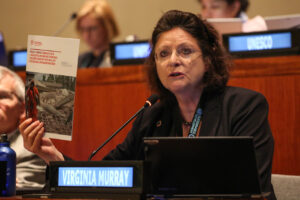
Professor Virginia Murray
Professor Virginia Murray is a public health doctor committed to improving health emergency and disaster risk management. She is currently the chair of the UNDRR/ISC Hazard Information Profile Steering Group for the 2025 update, which were first published in 2021 and now updated, and offer standardized definitions and key characteristics for a wide range of hazards. She is currently a member of CODATA Executive Committee and co-chair of CODATA’s International Data Policy Committee.
She was a member and then vice-chair of the UN International Strategy for Disaster Reduction (UNISDR) Scientific and Technical Advisory Group (STAG), 2008-2017, supporting as required negotiations for the Sendia Framework for Disaster Risk Reduction 2015–2030 by the UN member states. She was co-chair of the WHO Thematic Platform Health and Disaster Risk Management Research Network (2018-2025), and by working in collaboration with this network, she is one of the editors of the WHO Guidance on Research Methods for Health and Disaster Risk Management, published in October 2021, with a second edition due for publication in 2026. She was appointed as Head of Global Disaster Risk Reduction for UK Health Security Agency (2014-2025) and previously worked in public health and medical toxicology since the 1980s. She is a visiting/honorary Professor and fellow at several universities. Virginia was appointed an International Science Council Fellow in 2023.
IDPC Sub-groups’ Leads
Data Policy and AI
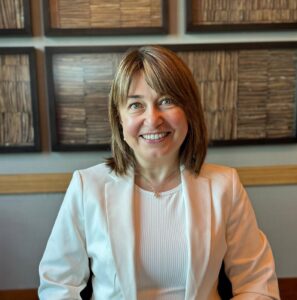
Perihan Elif Ekmekci
Prof. P. Elif Ekmekci, MD, PhD, is a physician–scholar whose core expertise lies in bioethics, grounded in formal training in medicine and public health, including advanced academic training at Harvard University and Imperial College London. She is Deputy Dean of the School of Medicine and a Chair in the Department of History of Medicine and Ethics at TOBB University of Economics and Technology. Her work is focused on ethics, particularly research ethics, data ethics, and AI ethics, with recent publications addressing the ethical governance of artificial intelligence and health data, as well as responsible research and innovation within open science frameworks.
Her research spans the history of medicine and ethics, contemporary challenges in health legislation, and the regulation of emerging technologies, particularly within the European Union policy context. She has contributed to health policy and legislation related to migration and refugee health and has served in senior advisory capacities at national and international levels. She is an International Chair in Bioethics at the WMA Cooperation Center and a member of the European Commission Knowledge4Policy platform.
Prof. Ekmekci serves as Chair of an Institutional Review Board (IRB) and is actively involved in international ethics and data governance initiatives as a member of the International Data Policy Committee (IDPC) of CODATA, an Associate Member of EUREC, Chair of ERA4Health Ethics and RRI Advisory Board, and Co‑Chair of the CoARA Ethical, Integrity and Research Practice (ERIP) Working Group. Her work is characterized by strong international collaboration, scholarly publications, editorial service, and sustained engagement in teaching, academic leadership, and ethics governance across medicine, public health, AI, and data‑driven research: her LinkedIn account and knowledge4policy account.
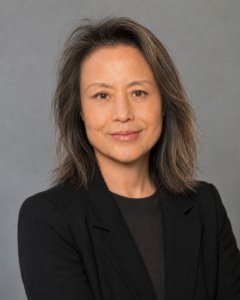
Jennifer Qian
Dr. Jennifer Qian is a scholar of learning sciences, technology, and pedagogy in the School of Education at Louisiana State University, USA, where she leads the Educational Technology program.
A central strand of Dr. Qian’s current scholarship examines the educational implications of artificial intelligence, including AI models, AI policy in education, AI literacy, AI pedagogy, and human–AI collaboration. Her work explores how AI programs, prompt engineering, AI-integrated instructional design, virtual and immersive learning environments, and human–AI collaboration can support teaching, learning, and workforce preparation.
Dr. Qian’s book publications include Synthetic Intelligence in Education: Transforming Pedagogy with AI, Teaching, Learning, and Leading with Computer Simulations, Advancing Educational Research with Emerging Technology, Technology Leadership for Innovation in Higher Education, and Integrating Multi-user Virtual Environments in Modern Classrooms.
She serves as Editor-in-Chief of the International Journal of Innovative Teaching and Learning in Higher Education and is a member of the Editorial Board of the British Journal of Educational Technology and the Journal of Computing in Higher Education. Dr. Qian holds a Doctor of Education in Educational Technology from Lehigh University, USA. More information about Dr. Qian’s work is available at https://www.lsu.edu/chse/education/about/faculty-staff/qian-jennifer.php

Jacintha Toohey
Dr Jacintha Toohey is an academic at the University of KwaZulu-Natal (UKZN) School of Law, South Africa. Jacintha works in the areas of research ethics, human rights, law and policy in the research landscape. With over 20 years of experience, her work has been focused on ethical-legal related challenges facing research institutions, particularly in low- and middle-income countries.
Jacintha is a published scholar and has contributed to important initiatives like the EU Horizon 2020 TRUST project linked to the TRUST CODE: Global Code of Conduct for Equitable Research Partnerships and Fair Research Contracting Toolkit and guidelines. She holds an LLB, LLM (UKZN) and PhD from the University of Central Lancashire, UK, along with Diplomas in Project Management and Information Studies. She brings over two decades of experience spanning academic law, international research programme leadership, and capacity-strengthening across Africa and globally. Jacintha also serves on research ethics committees, reviewing research applications where it concerns privacy protection, intellectual property, informed consent, and equitable research contracting, alongside work on human rights and ethical issues in health research. At UKZN, she teaches Bioethics and Human Rights, bridging the gap between policy, academia and practice.
Data Policy for Times of Crisis Facilitated by Open Science

Ingvill Constanze Ødegaard
Dr Ingvill Constanze Ødegaard is a Norwegian professor and political scientist with 30 years of leadership and management experience across research institutes and infrastructures, universities, and international research projects. Her research and teaching span democracy and minority rights; children’s rights; Children Born of War (CBOW); intercultural communication; the Sustainable Development Goals; diversity and inclusion; vulnerable populations; research methods; ethics; and open science.
Over the past 25 years, Ingvill has been a pioneer in the development of the research area on Children Born of War (CBOW). In 2008, she founded the International Network for Interdisciplinary Research on Children Born of War (INIRC-CBOW) to strengthen the evidence base through improved data collection and sharing. Since 2020, she has also served as Chair and Managing Director of the Children Born of War Project Foundation. She works with researchers across disciplines, national governments and politicians, IGOs, NGOs, civil society, and humanitarian actors to consolidate and expand knowledge on CBOW and to support evidence-based policy. Ingvill is committed to cross-disciplinary, cross-national, and cross-sector collaboration and regularly shares lessons learned from the CBOW research community to flag the importance and necessity of open science to support vulnerable population groups. She has been an active member of the Research Data Alliance (RDA) since 2014 and was a member of the OECD expert group on digital skills for data-intensive science (2018–2020).
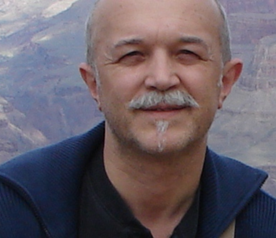
Urbano Fra Paleo
Urbano Fra Paleo is a geographer dedicated to studying disaster risk governance, with particular emphasis on analyzing patterns, processes, and institutional frameworks to reduce risk. He has recently contributed to the UNDRR Hazard Information Profiles (HIPs) and to the Global Disaster-Related Statistics Framework, as well as to the UNECE Set of Core Disaster-Risk-Related Indicators.
Prior to joining the University of Extremadura (Spain) as Full Professor of Human Geography, Urbano Fra was Associate Professor at the University of Santiago de Compostela (Spain) and Research Associate at the University of Denver (USA). He has also been a Visiting Professor at the UN-mandated University for Peace (Costa Rica), a Researcher in Residence at the Organisation for Security and Cooperation in Europe (OSCE) in Prague, and a Visiting Professor at the Disaster Prevention Research Institute (DPRI), Kyoto University, Japan, among other research centres. In 2023 he conducted a study visit to the European Parliament in Brussels. In 2005, he was a Fellow of the American Geographical Society Library at the University of Wisconsin-Milwaukee.
Urbano Fra is member of the UNDRR European Science and Technology Group (E-STAG), Vice-chair of the Task Force on Measuring Hazardous Events and Disasters, United Nations Economic Commission for Europe (UNECE), and external expert of the European Commission’s Scientific Committee on Health, Environmental and Emerging Risks (SCHEER). He has been a member of the European Academy, and of Sigma Xi, The Scientific Research Society, since 1997.
Urbano Fra has edited the volumes Building safer communities. Governance, spatial planning, and responses to natural hazards (IOS Press, 2009), Risk governance: The articulation of hazard, politics and ecology (Springer, 2015), and Family Farms and the Conservation of Agrobiodiversity in Cuba: Food Security and Nature (Routledge, 2023) with Leonor Castiñeiras.
Professor Fra holds a PhD in geography from University of Santiago de Compostela (1996) and a diploma in environmental engineering from EOI Business School.
Data Policy and Sustainable Development Goals Beyond 2030 Agenda

Nidhi Nagabhatla
Prof. Dr. Nidhi Nagabhatla is a globally recognized expert in sustainability science, currently serving as Senior Fellow and Cluster Coordinator – Nature, Climate, and Health at the United Nations University – CRIS (Belgium) and she also holds the position of Adjunct Associate Professor at McMaster University, Canada (profile). With over 25 years of strategic leadership and research experience, Nidhi has led pioneering initiatives at the nexus of climate, water, food, health, and environmental governance. She also served as Director of the’ Water Without Borders’ in partnership with McMaster University, Canada, with her work characterized by the design and delivery of transdisciplinary, impact-driven programs across Asia, Africa, Europe, and North America.
She has held key roles with global institutions such as IWMI, WorldFish, and IUCN, shaping research, innovation, and capacity-building agendas in support of resilient and equitable development pathways.
Dr. Nagabhatla’s research and policy affiliations (current and past) include Oxford University (UK), Leibniz University (Germany), Universidad Mayor De San Andrés (Bolivia), and Imo State University (Nigeria). She is also bestowed with an honorary professorship by Amity University (India), recognizing her work in the field of ecosystem governance and nature-positive planning. A prolific scholar, she has authored and edited over 300 publications advancing the science-policy interface in sustainability, including a recent volume on Nature-Based Solutions and Ecosystem-based Disaster Risk Reduction (Eco-DRR) (Springer link). She served as Chair of the Partnership for Environment and Disaster Risk Reduction (PEDRR), a UN-supported global platform for advancing Eco-DRR knowledge, training, and policy advocacy. She is also closely involved as a ‘Task Force‘ expert with the UN Decade on Ecosystem Restoration (2021-2030).
More about her and her work at
https://cris.unu.edu/clusters/natureclimateandhealth
https://www.linkedin.com/in/nidhi-nagabhatla/
https://www.researchgate.net/profile/Nidhi-Nagabhatla
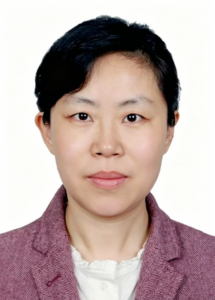
Lili Zhang
Dr. Lili Zhang is a Senior Research Scientist and Deputy Director of Cloud Systems and Tech. Lab at the Computer Network Information Center, CAS, and a Master’s Supervisor at the University of CAS. She graduated from Peking University and was a visiting scholar at Columbia University from 2017 to 2018. Her research integrates open science, open data technologies, and information economics, with a strong focus on developing interoperable data governance solutions.
Dr. Zhang has sustained engagement with global data initiatives. She has served on the ISC CODATA International Data Policy Committee since 2018 and currently participates in the IPCC TG-Data team. Dr. Zhang has led several research projects, including those funded by the National Natural Science Foundation of China and the Chinese Academy of Sciences. Over the past decade, she has authored over 30 papers, co-authored three books, and filed several patent applications. She has contributed to the CODATA Beijing Declaration on Research Data (2019) and is leading the development of a national standard on interoperable metadata for open science clouds.
She is also actively promoting open-science infrastructure solutions to advance the SDGs. As the Executive Director of the Global Open Science Cloud (GOSC) Initiative International Program Office, she facilitates connectivity among the GOSC regional nodes to ensure efficient exchange of multimodal research resources, thereby increasing societal utility. Recent endeavors include developing the “PROTECT” framework for crisis data management, promoting open data for disaster risk reduction, and creating innovative algorithms to evaluate data reusability.
More information is available at https://people.ucas.ac.cn/~lilizhang?language=en
Page last updated: 2026-08-24.