
 Bapon Fakhruddin, PhD., Climate Investment Principal, Green Climate Fund, Republic of Korea & Chair, CODATA TG FAIR DRR, France has published a piece in ’The Water Diplomat’.
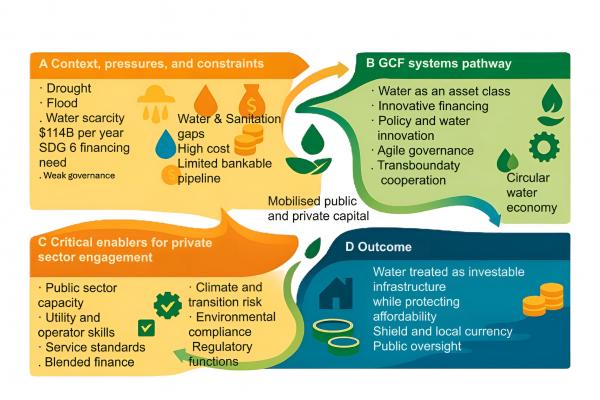
Everyone now knows that the climate crisis is a water crisis. As global temperatures rise, the world’s water cycle is thrown into chaos. Drought and flood extremes are intensifying, water scarcity is spreading, and unsafe water and sanitation gaps persist on a staggering scale. Nearly 2.1 billion people lack access to safe drinking water and 3.5 billion lack basic sanitation, mostly in the poorest communities. This creates cascading and compounding impacts that steadily erode all life and livelihoods. However, global investment remains woefully inadequate. Achieving Sustainable Development Goal 6 (universal water and sanitation access) requires about $114 billion per year through 2030 far above current investment levels indicates chronically underfunded relative to its importance.
We see the consequences of this underinvestment all around us. Water-related disasters now cause billions of dollars in damage and displace millions of people every year. In an average year, nearly 3 billion people already face declining water availability, and rising water demand is straining limited resources in many regions. When water becomes scarce or unpredictable, factories cannot operate, crops fail, power plants shut down, and social tensions rise. Water insecurity is fast becoming a strategic threat to economic stability and human well-being.
Barriers to investment in water
Why, then, do we still underinvest in water systems that are essential for climate resilience and development? Several structural barriers persist.
First, a limited pipeline of bankable projects holds back investment. Many countries lack the technical capacity to prepare robust, investable water proposals.
Second, knowledge gaps in both data and best practices (i.e. the ‘Findable, Accessible, Inter-operable and Reusable /FAIR principle is insufficiently being applied) make it harder to plan effectively and convince financiers to commit.
Third, governance weaknesses and fragmented institutions mean water responsibilities are often divided across agencies with unclear mandates and limited accountability for results. Finally, perceived high risks and low returns deter private financiers. Water projects typically require large upfront capital and have long payback periods; broad social benefits (health, environment, livelihoods) do not always translate into revenue, and politically sensitive tariffs can limit cost recovery. Indeed, only about 1% of global water infrastructure investment currently comes from private sources.
To read the rest of the article, go to ‘The Water Diplomat’ https://www.