 The CODATA member organisation for South Africa is the National Research Foundation.
The mandate of the NRF is to promote and support research through funding, human resource development and the provision of the necessary research facilities in order to facilitate the creation of knowledge, innovation and development in all fields of science and technology, including indigenous knowledge, and thereby contribute to the improvement of the quality of life of all South Africans.
What do we do?
South African CODATA supports the activities of the South African research community through the following activities:
- With “Everything Happening Somewhere” the integration between the activities of the CODATA and Spatial Data Infrastructures is crucial for achieving CODATA Decadal Programmes and delivering a Geospatial Knowledge Infrastructure.
- Making data work for cross-domain grand challenges to address challenges and achieve the Sustainable Development Goals. The initiative for interoperability includes the development and implementation of standards to support data integration.
- We need to work on improving data access and reusability. Data must be collected once, shared and reused. We advocate to avoid data duplication and data loss.
Meet the South African CODATA National Committee Members
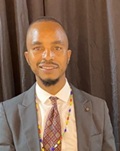
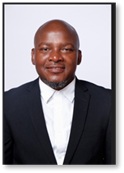
| Dr Kagiso Mabe, Chairperson
|
Dr Kagiso Mabe is a South African academic, researcher, and knowledge systems specialist serving as Chairperson of CODATA South Africa. He is based at the University of Johannesburg, serving in the Department of Information and Knowledge Management (IKM), within the School of Consumer Intelligence and Information Systems (SCiiS), where he also holds the role of Deputy Head of Department: Undergraduate Programmes, contributing to teaching, research, and strategic development in the fields of IKM, applied data science, and digital transformation. His research focuses on the intersection of data governance, knowledge management, artificial intelligence, research systems, and decision sciences, with particular relevance to Africa and other digitally transforming societies. He has authored and co-authored peer-reviewed journal articles and international conference papers, with collaborations spanning South Africa, Kenya, and broader global networks. His scholarship is recognised through awards, including the SCiiS Best Up-and-Coming Researcher Award, invitations to facilitate workshops locally and internationally, and multiple grants from the National Research Foundation. As Chairperson of CODATA South Africa, he is committed to strengthening South Africa’s participation in international data initiatives, promoting open science, responsible data stewardship, research interoperability, and equitable access to data-driven innovation. He has also been invited to serve on the Local Organising Committee for International Data Week 2027, which will be hosted in South Africa. Dr Mabe is actively involved in convening research communities and interdisciplinary dialogue. He received funding from the National Research Foundation to host and chair the Generative Decision Sciences Conference, bringing together global scholars, emerging researchers and industry leaders around themes such as AI, data governance, decision support systems, and sustainable development. He has also participated in global dialogues on data ethics, governance, and responsible research assessment. His current and future work seeks to advance African leadership in trusted data ecosystems, responsible research assessment, and knowledge infrastructures that support inclusive scientific progress. His broader vision is to strengthen Africa’s role in the global knowledge economy by promoting open science, trusted data ecosystems, ethical artificial intelligence, and collaborative research networks that create meaningful societal impact. |
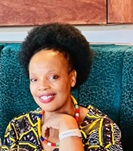
| Deputy Chair: Chuene Mosomane
|
Chuene Mosomane is a senior data scientist and AI research engineer with over 10 years of experience in solving data problems across academia and industry, whose path into data science came through physics — not the most common route, but one that has shaped how he thinks about almost everything he works on. His work sits at the intersection of physics and machine learning. He holds a PhD in High-Energy Physics from the University of the Witwatersrand, where his doctoral research used renormalisation group theory to investigate why deep neural networks generalise. Renormalisation is a framework physicists use to understand how systems behave across different scales — applied to neural networks, it offers a way to reason about model behaviour from first principles rather than observation alone. This matters for governance: a model grounded in physical law has interpretable structure, not just interpretable outputs, and that distinction has practical consequences for how AI systems are documented, audited, and trusted. In industry, Chuene has worked across finance, environmental monitoring, and research and development indusries. His work on model documentation such as model cards are one of the more direct tools available for communicating what a model does, where it is reliable, and where it is not — and writing them well requires the same honesty that good science demands. He has experience working on production machine learning systems across a range of domains, including air quality forecasting, anomaly detection for industrial equipment, quality control for electronics deployed at CERN, and large language model applications. Chuene also served as a Postdoctoral Researcher at iThemba LABS and Run Coordinator at CERN, where he led 24/7 detector operations for the Tile Calorimeter — one of the core detectors of the world’s largest physics experiment, overseeing a team across multiple time zones, maintaining data integrity, presenting operational outcomes to senior leadership and talking at international conferences. His developing research programme focuses on quantum-magnetic sensing. Current work involves quantum-magnetic sensors and tracer particles for tracking particle behaviour in mineral separation, which provides a practical foundation in sensing systems and the physics of measurement. The convergence of precise sensing, physically grounded modelling, and interpretable AI is the research direction Chuene is building toward. |
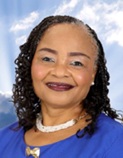
| Dr Refiloe Mabaso
|
Dr Refiloe Mabaso is a highly accomplished South African executive and scholar with more than 30 years of leadership experience across the private and public sectors. She is widely recognised for her expertise in Information and Knowledge Management (IKM), Information Governance, Records and Document Management, Data Management, Business Intelligence, and organisational transformation. Currently, she serves as Head of Information and Knowledge Management at Air Traffic and Navigation Services, where she leads specialist functions spanning library services, records management, knowledge management, and content management to strengthen organisational performance and strategic capability. Dr Mabaso has built an exceptional career through senior roles at organisations including Sasol, National Research Foundation, British Council, University of Witwatersrand, and the Gauteng Provincial Legislature. Her leadership has consistently focused on designing strategy, enabling knowledge-driven change, improving governance systems, and cultivating high-performing teams. She was also nominated by the American Productivity and Quality Center to contribute to its “On Making It Stick Knowledge Management Research Project,” where her insights were published in the APQC Knowledge Base Library. Beyond executive leadership, Dr Mabaso has made significant governance and professional contributions nationally and internationally. She has served as Chairperson of Knowledge Management South Africa, Chairperson of the National Library of South Africa, Council member of the National Heritage Council, Chairperson of CODATA under the International Science Council, Board Member of the Knowledge Management Global Network and Chaiperson of South African Library for the Blind. Academically, she holds a PhD in Information Science from University of South Africa, an MBA, and several advanced qualifications in leadership and knowledge systems. Her published work on integrated information governance reflects her commitment to advancing research and practice in the digital age. |
| Gaborekwe Esther Khambule
|
Gaborekwe Esther Khambule is a distinguished South African aviation and meteorological leader with more than three decades of professional experience spanning strategic leadership, governance, aviation services, and international collaboration. She served as Senior Manager and Head of Aviation at the South African Weather Service for 17 years until her retirement in December 2024, where she was responsible for driving operational excellence, stakeholder partnerships, regulatory compliance, business continuity, and revenue growth within the aviation division.
Widely respected in the global aviation community, Khambule has held several influential leadership positions within the World Meteorological Organization and the International Civil Aviation Organization. She served as 1st Vice-Chair of the WMO Standing Committee for Aviation Services (2020–2024), Chair of multiple ICAO Sub-Met Groups, and Vice-Chair of the AFI-APIRG-IIM Subgroup. Her expertise includes aeronautical meteorology, aviation cost recovery, stakeholder engagement, aircraft-based observations, and international policy coordination. Beyond aviation, she has contributed significantly to science and governance through appointments such as Board Member of the South African National Space Agency and Member of the Committee on Data (CODATA) under the International Science Council. Her career reflects a strong commitment to advancing science-led decision-making, safety, and innovation across Africa and globally. Khambule’s contributions have been recognised through prestigious honours, including the 2019 Aviation Professional of the Year at the Civil Aviation Industry Awards. She holds an MBA from MANCOSA, alongside qualifications in meteorology, management, and business continuity. |
| Dr Mmatseleng Lefike
|
Dr Mmatseleng Lefike is a seasoned Information and Technology Governance leader with extensive experience in data, AI, records management and digital governance within large, highly regulated organisations. She currently serves as a Group Information Governance Specialist, where she plays a critical role in shaping, implementing, and overseeing enterprise‑wide governance frameworks that align regulatory compliance, ethical principles, and business strategy.
Dr Lefike is recognised for her deep expertise in data governance, AI ethics, information risk, and regulatory alignment, particularly within the financial services environment. Her work bridges the gap between policy and practice—translating complex regulatory requirements into pragmatic, scalable governance models that enable responsible innovation while protecting customer trust and organisational value. She regularly collaborates with leadership, technology teams, and governance committees to strengthen oversight and decision‑making. In addition to her role, Dr Mmatseleng Lefike serves on advisory boards and governance panels, contributing strategic guidance on governance. In these capacities, she supports organisations and initiatives with policy development, governance maturity assessments, and forward‑looking strategic advice. Dr Lefike is passionate about advancing ethical, sustainable, and human‑centred digital transformation and continues to shape governance practices that balance innovation, accountability, and societal impact. |
| Jacky Mampana
|
Jacky Mampana is a Data Analytics and Digital Transformation executive with over 20 years of experience across Banking, Insurance, FMCG, and IT Consulting. He has led and implemented large-scale IT and Digital Transformation initiatives for major multinational organisations in Africa and is a recognised thought leader, regularly speaking at industry events across the continent and internationally.
He currently serves as Head of Data, Analytics & Digital at Flour Mills of Nigeria, where he leads the development and execution of the organisation’s Data and Analytics strategy, and drives Digital and AI initiatives across Manufacturing, Logistics, Supply Chain, and Sales. Jacky is also an entrepreneur, serving as the Founder and Managing Director of Dziva Group, a diversified company with business interests in IT consulting, agro-processing and agricultural backward integration. Previously, he held senior leadership roles at DAL Food (Sudan and Dubai), Coca-Cola (Director of Analytics for Africa). His experience also includes leadership positions at Hollard, ABSA, Liberty, SARS, Discovery Health, FNB and Nedbank. He holds an Honours degree in Agricultural Economics (University of Pretoria), a Master of Commerce (University of Johannesburg), and a Postgraduate Diploma in Business (Henley Business School). He is currently pursuing a PhD at the University of Johannesburg, focusing on improving food security in West Africa through digital technologies that enhance market access for smallholder farmers. |
| Dr Nobubele Shozi
|
Dr Nobubele Shozi is a Senior lecturer at the University of Johannesburg at the Academy of Computer Science and Software Engineering. She completed a PhD in Computer Science at the University of South Africa (UNISA). Her research interests lie in Data Management, Governance, Cybersecurity and Data Science. Dr Shozi has supervised master’s and doctoral students and has authored international papers presented at conferences and published in journals. In her previous role as a Data Stewardship Manager at the Council of Scientific and Industrial Research (CSIR) managed Data Intensive Research Initiative of South Africa (DIRISA), she established DIRISA’s Data Stewardship policies and framework to ensure proper governance of South Africa’s research data assets. She also contributed to strategies such as the Big Data Strategy and was the lead developer for DIRISA’s South African Data Management Planning Tool.
Her dedication to community upliftment is evident in the establishment of programs such as DIRISA Coding School – which introducing basic Python programming to high school students and the DIRISA Student Datathon Challenge – which introduces data science skills to university students so they can start using data to solve societal problems in South Africa. In her personal capacity, she also founded an NGO focused on mentoring and empowering students in taking up STEM fields and being digital innovators to solve some of South Africa’s problems called Ulwazi Digital Innovators. |



How can you get involved?
Please contact Ms Busiswa Molefe at busiswa [AT] nrf.ac.za
Page last reviewed 2022-05-11.