 How can data from different fields be combined and understood by both people and machines, across different technical and scientific ecosystems?
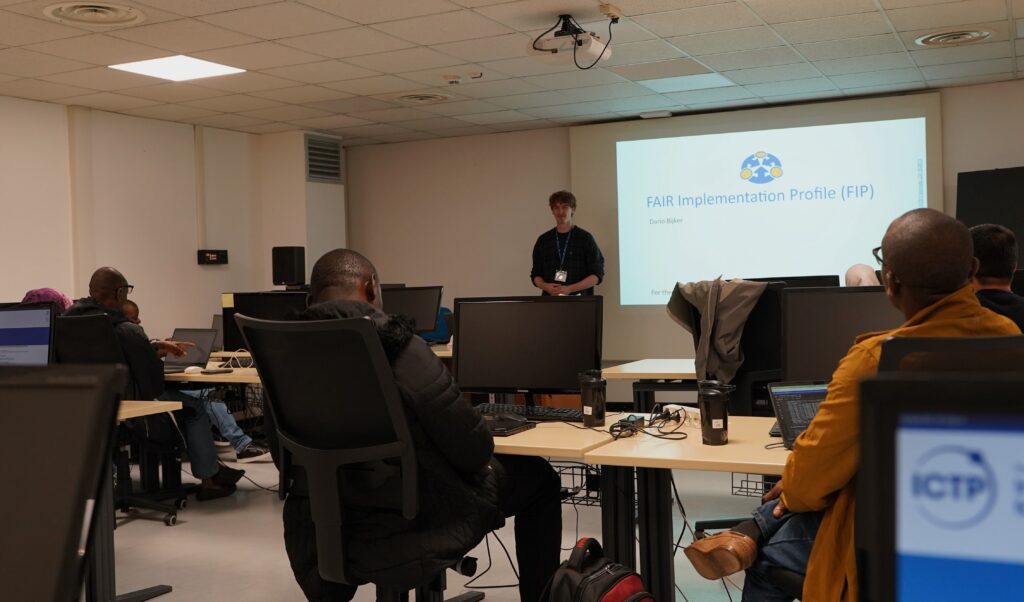
To mark the 10th anniversary of the CODATA-RDA Schools of Research Data Science, CODATA and the GO FAIR Foundation (GFF) organised a session on this question in Trieste on 16 November 2026.
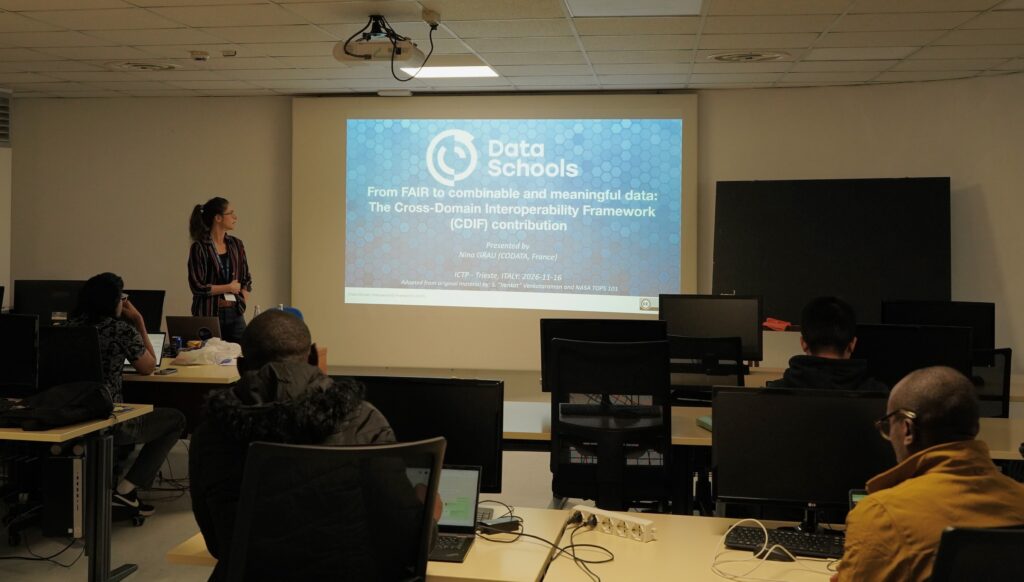 Here are the slides on the FAIR principles and FAIR Implementation Profiles, presented by Dario Bijker (GFF).
Here are the slides on the Cross-Domain Interoperability Framework (CDIF) presented by Nina Grau (CODATA).
Sharing data is no longer enough. There is an increasing need to combine data from different disciplines and across different systems. This is only possible when data is accompanied by clear and consistent information about what it is and what it contains: its metadata. Yet each community describes its data in its own way.
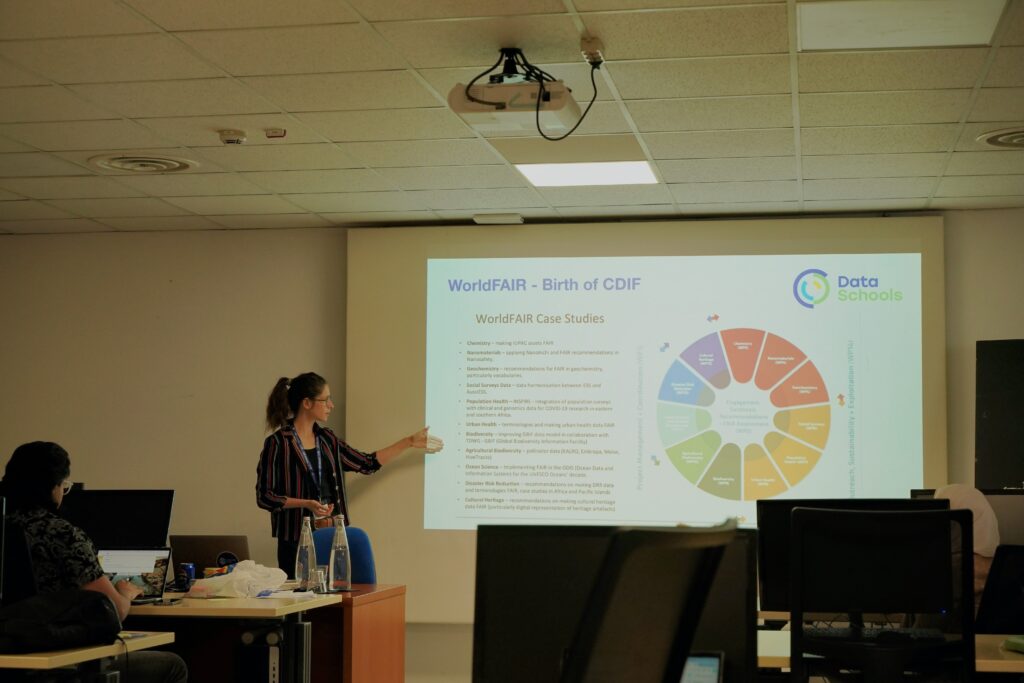 The session began with the FAIR principles, which aim to make data Findable, Accessible, Interoperable and Reusable, and explored how communities put them into practice through FAIR Implementation Profiles (FIPs). We then introduced the origins of CDIF, which emerged from the EC-funded but international WorldFAIR project to help bridge the gaps between different disciplinary approaches to implementing FAIR principles.CDIF provides a practical and developer-friendly guide to implementing the FAIR principles, using existing domain neutral standards, and is now being taken forward by the CDIF4EOSC project.
Next, we explored metadata itself: its purpose, the different types of metadata, and why expressing it in a structured, machine-readable format makes all the difference.
 Finally, we demonstrated how CDIF works in practice. It builds on existing standards and breaks metadata down into simple building blocks, connecting them to familiar resources and good practices, such as metadata formats and standards, data dictionaries, codebooks and vocabularies. This approach makes metadata understandable to both people and machines.
Participants then had the opportunity to put what they had learned into practice by describing a real dataset using the CDIF format.