 At IDW2025, a group of speakers from around the globe gathered to address a long-standing problem: although data is the common currency of both research data management and data science, the two communities often work in parallel worlds—each with its own conferences, training pipelines, infrastructures, and priorities. As Christine Kirkpatrick noted in her opening remarks, this separation persists despite converging challenges around stewardship, reproducibility, education, and ethics. She framed the session as an invitation to rethink how these domains might come together.
What followed was a set of short talks revealing just how interdependent—yet disconnected—these communities have become, and how much potential lies in more intentional collaboration.
From Observation to Interpretation: A Research Lifecycle View (Leo Lahti)
Leo Lahti opened with a fundamental question: How do we move from raw observation to meaningful interpretation in modern research? His answer traced the entire research lifecycle, positioning openness, interoperability, and transparency as essential ingredients. Drawing on studies that show how different choices in data preparation lead to drastically different results, Lahti made a compelling case for shared standards and methodological clarity.
His overarching argument: bridging data science and research data management is not merely technical, it is epistemic. It requires both communities to adopt shared infrastructures, shared educational foundations, and shared norms that elevate transparency as a scientific value.
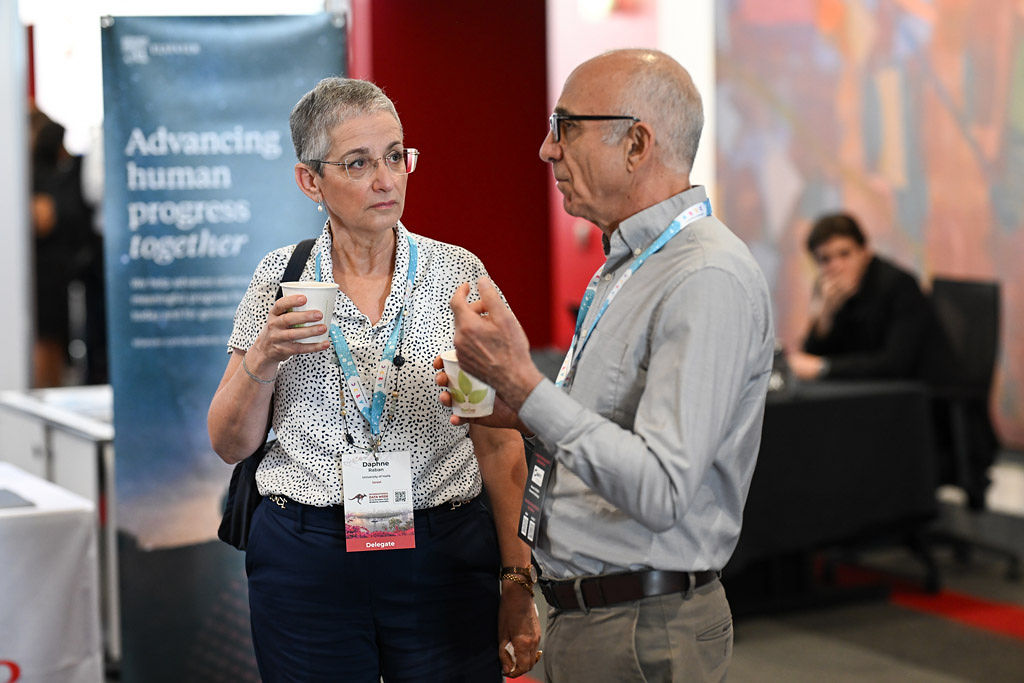
The Human Infrastructure of Data (Daphne Raban)
Daphne Raban shifted the lens to data stewardship which she called a “bridge profession” sitting at the intersection of technology, governance, and human judgment. As data volumes grow and automated tools proliferate, she reminded us that stewardship is what keeps data meaningful, contextualized, and ethically sound.
Raban illustrated the diverse impact of stewards across healthcare, finance, government, and research institutions, grounding her argument in the data cycle perspective advanced through the Israeli national initiative on data science education. In her framing, stewardship is not just about compliance; it’s about building trustworthy, reusable data ecosystems sustained by communication, documentation, and collaboration.
Parallel Universes: Awareness Gaps in Data Education (Phil Bourne)
Phil Bourne then highlighted a striking and often overlooked fact: students in data science programs worldwide typically have no exposure to organizations like CODATA, RDA, or WDS. Meanwhile, those global data organizations often operate with limited awareness of the educational and research priorities of academic data science. These are, Bourne argued, parallel universes that urgently need bridges.
His proposed actions were concrete: connect student groups, align leadership networks, embed governance into data science curricula, and convene joint thematic workshops on AI, synthetic data, and data ethics. He framed data as a continuum – from production to engineering to analysis to societal impact – and argued that without collaboration across these steps, sustainability and trustworthiness will remain elusive.
Read more on the CODATA blog https://codata.org/blog/2025/12/12/bridging-two-worlds-reflections-from-the-idw2025-panel-on-research-data-and-data-science/