
Monthly Archives: November 2026

Science in a Complex World: Why Our Future Depends on More Than Scientific Discovery

Reflections from the Beijing Science Dialogue and International Science Council Midterm Meeting, Beijing, China | 19–23 October 2026

By Ntsundeni Louis Mapatagane (CODATA)
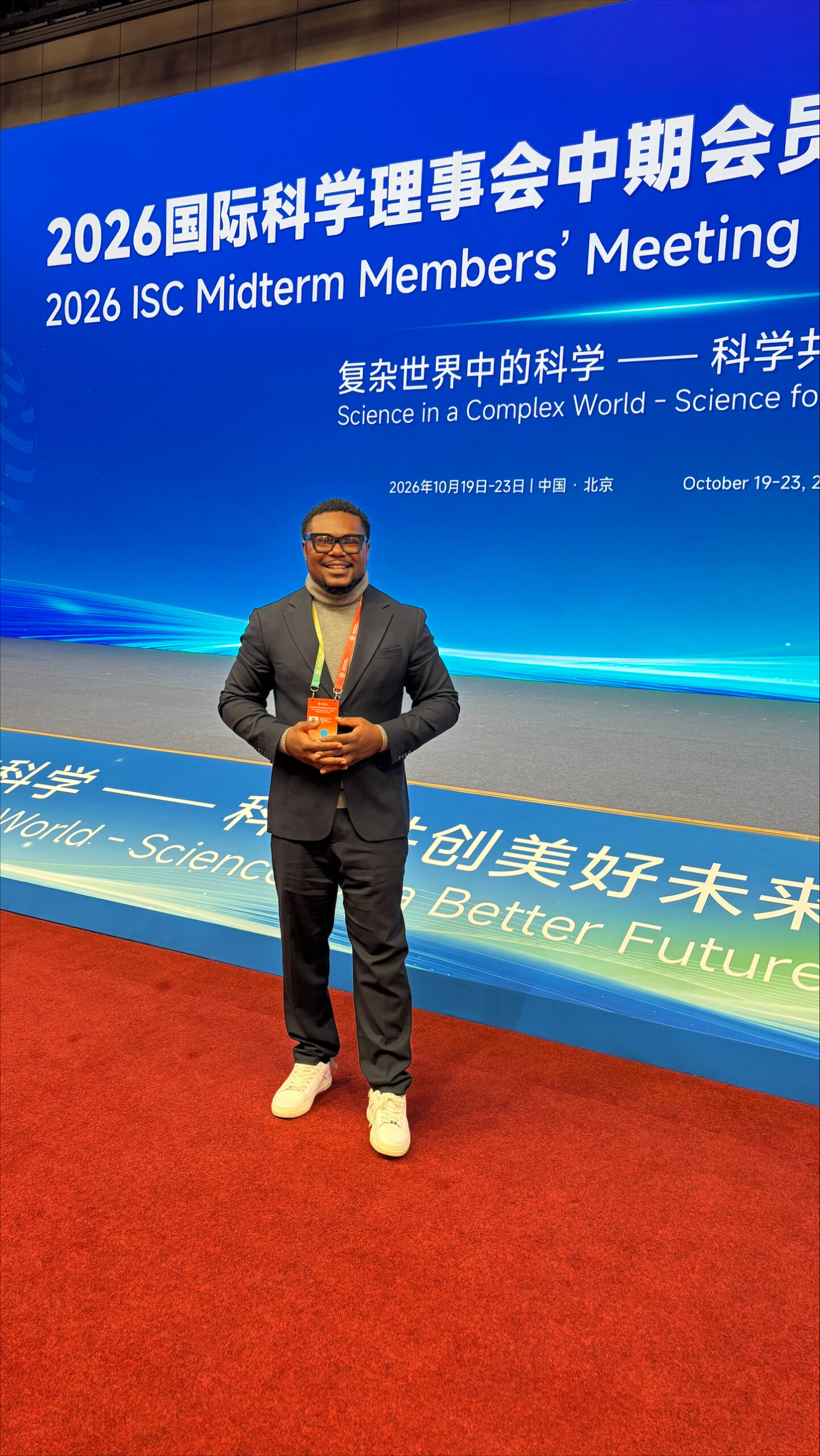
Ntsundeni Louis Mapatagena is Co-chair of CODATA Connect, CODATA’s Early Career Network, Director of Planning and Institutional Intelligence at Walter Sisulu University (WSU), MSc Environmental Sciences, Ph.D Candidate on the readiness of higher education institutions for energy efficiency and emissions reduction.

I travelled to Beijing, China, for the Beijing Science Dialogue and International Science Council (ISC) Midterm Meeting, expecting to engage in conversations about the future of science, international scientific cooperation and the opportunities and challenges presented by emerging technologies. I returned with something more profound: a renewed appreciation that the greatest challenge facing science may not necessarily be our ability to generate knowledge, but our collective ability to translate that knowledge into trust, responsible behaviour, effective policy and meaningful societal change.

Held under the theme Science in a Complex World – Science for a Better Future, the gathering brought together scientists, researchers, scientific organisations, policymakers and other stakeholders from across the world. What made the experience particularly meaningful for me was the convergence of several issues that have occupied my thinking for some time: artificial intelligence, science communication, research integrity, behavioural change, sustainable development and the responsibilities of universities in shaping our collective future. Three experiences stood out in particular: the Early- and Mid-Career Researchers workshop on AI readiness, the plenary discussion on science, society and trust, and the adoption of the Beijing Science Declaration. Although these engagements approached the future of science from different perspectives, they reinforced one central conviction: the future of science cannot be secured by technological progress alone. It requires stronger institutions, interdisciplinary collaboration, public trust and a shared commitment to ensuring that scientific advancement benefits humanity.
AI readiness: Are we preparing scientists for a future we do not yet fully understand?

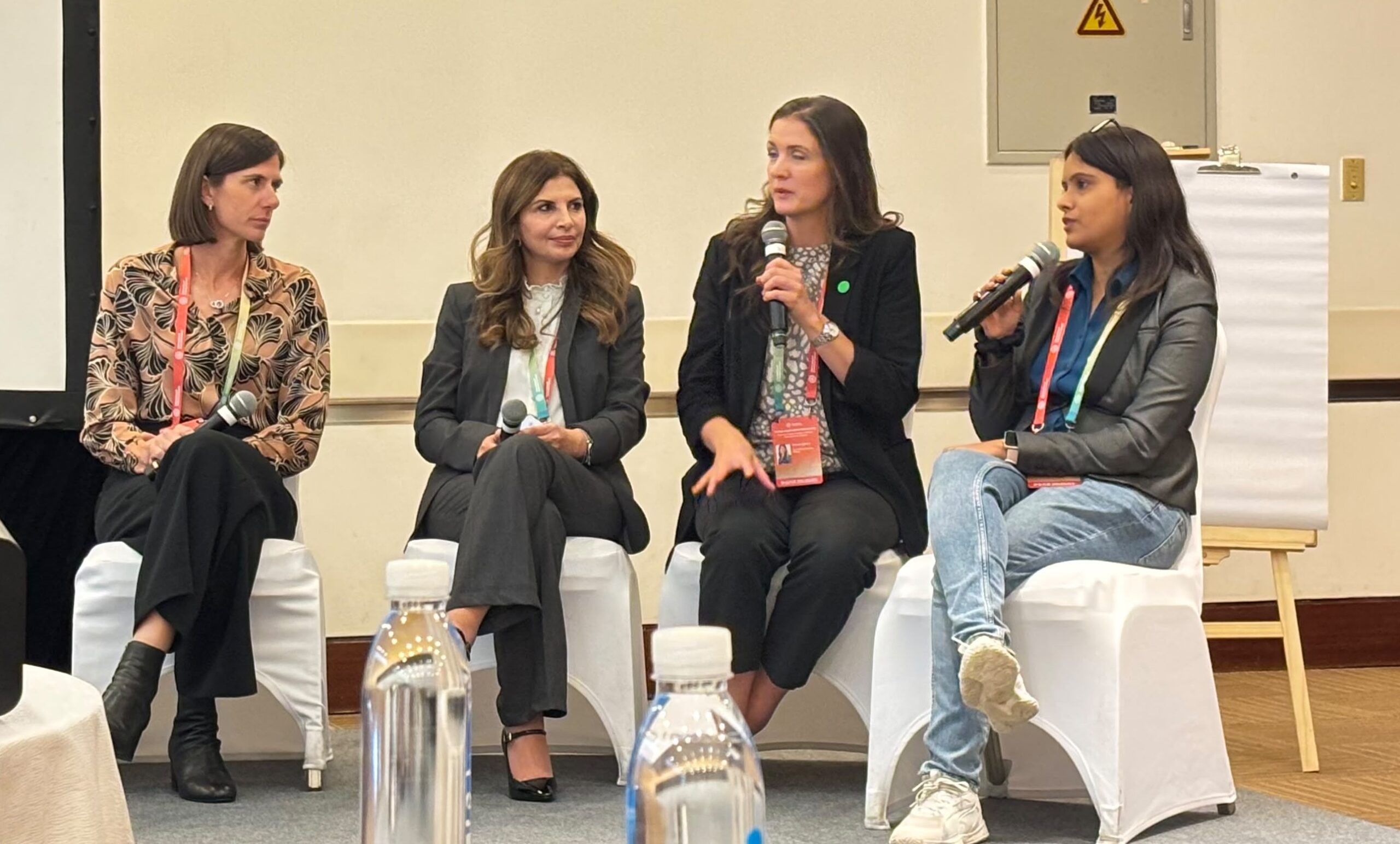
My engagement began on 19 October with the pre-event workshop, AI Readiness and Accelerating Science Communication for Early- and Mid-Career Scientists, convened by the ISC with support from the China Association for Science and Technology (CAST).

The workshop explored how artificial intelligence is transforming science communication, research visibility and the ways scientists engage with society. However, what I found particularly interesting was not necessarily the discussion about AI tools themselves. It was the diversity and dynamism of the participants and panellists. The conversation brought together seasoned academics, open science policy researchers, and professionals working across the biological, health and other scientific disciplines. Each approached the subject from a different disciplinary perspective, yet the challenges raised converged in remarkable ways. We shared the practical realities confronting our respective fields, exchanged best practices, and considered possible solutions to challenges already emerging, as well as those we anticipate in the future. At times, the conversation felt almost like a futurist exercise. We discussed not only how AI is changing how we conduct and communicate research today, but also how these technologies could fundamentally reshape scientific work, research careers, and the relationship between science and society.

It became increasingly clear to me that no single discipline has all the answers.

Computer scientists may develop increasingly sophisticated AI systems, but deploying them raises questions that require the expertise of ethicists, psychologists, behavioural scientists, educators, environmental scientists, legal scholars, policymakers, and many others. The future of AI in science will therefore depend as much on our capacity for interdisciplinary collaboration as on technological innovation.

More importantly, the conversation raised a question that I believe deserves much greater attention: Are we merely preparing scientists to use artificial intelligence, or are we preparing them to exercise sound scientific judgement, ethical responsibility and intellectual leadership in an AI-enabled world?

The difference is significant.

AI can support researchers in synthesising literature, analysing data, modelling complex systems, visualising findings and communicating research to wider audiences. These opportunities are substantial, particularly for early- and mid-career researchers working within increasingly demanding research environments. Yet the same technologies can also contribute to misinformation, fabricated evidence, questionable authorship practices, biased analysis and the erosion of public confidence in scientific knowledge.

This is why I left the workshop increasingly convinced that science communication and science diplomacy must be recognised and professionalised as essential scientific capabilities, rather than treated as supplementary activities that researchers undertake after completing their primary research. Researchers should be equipped not only to produce knowledge, but also to communicate uncertainty, explain evidence responsibly, engage with different audiences and participate meaningfully in public discourse. In an age where AI-generated content can be produced and distributed almost instantaneously, the credibility of science will increasingly depend on our ability to distinguish verified knowledge from convincing but unreliable information. Scientific expertise alone is no longer sufficient. We must also develop the capabilities required to communicate that expertise responsibly.

Science, society and trust: Where are the behavioural scientists?

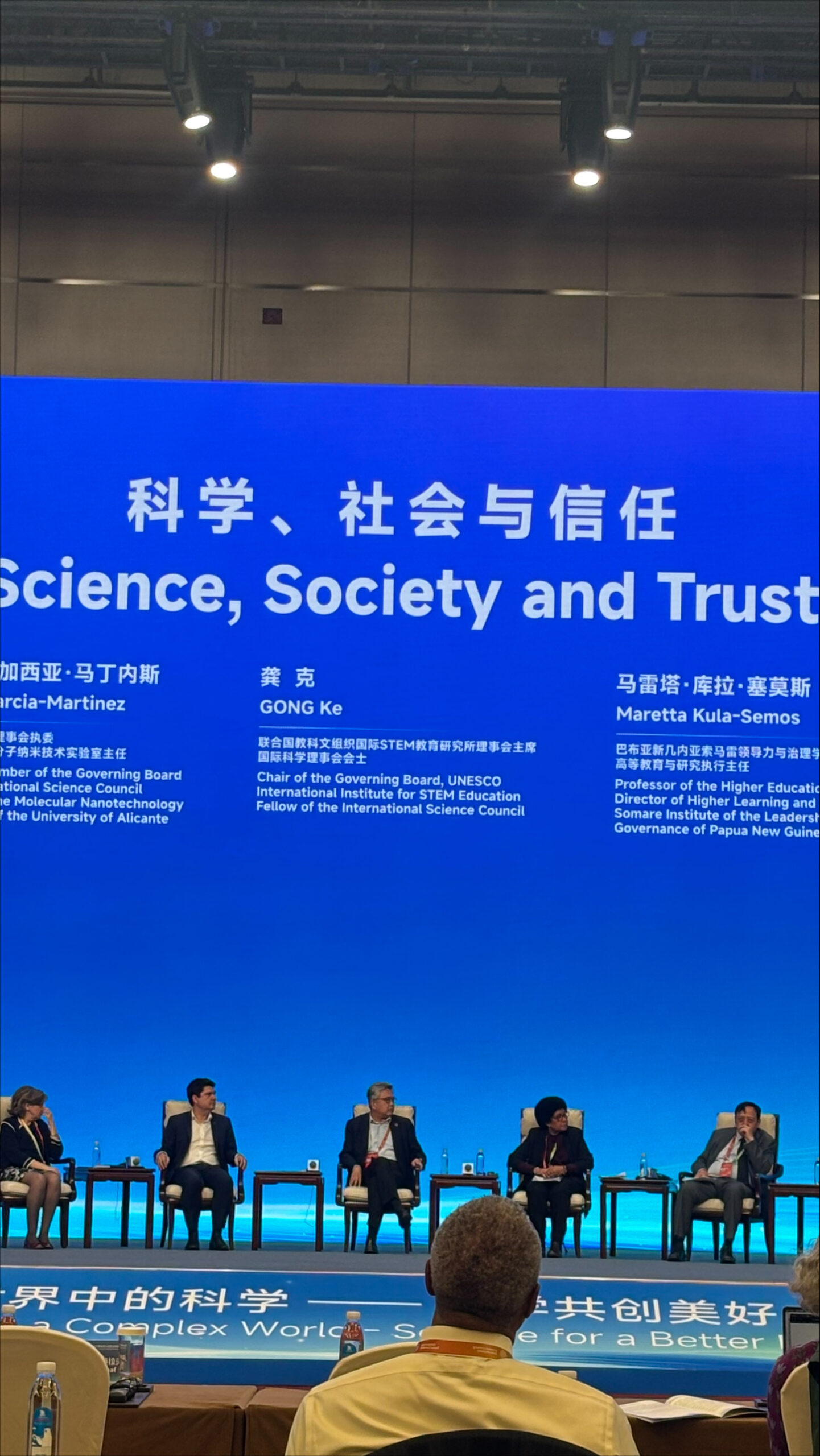
These reflections became even more pronounced during the plenary discussion on Science, Society and Trust, held on 21 October.

Chaired by Professor Márcia Barbosa, ISC Vice-President for Freedom and Responsibility in Science, the session brought together an impressive range of perspectives, including those of Professor Naomi Oreskes, Roberta D’Alessandro, Javier García-Martínez, Gong Ke, Maretta Kula-Semos, Mu Rongping and Yuan Xing.

The panel’s diversity reflected the complexity of the challenge itself. Science is becoming increasingly sophisticated and deeply embedded in our daily lives. Yet, paradoxically, it can also feel increasingly distant from the very societies it is intended to serve. We have unprecedented access to scientific knowledge and technological capabilities. At the same time, misinformation, distrust in institutions, political polarisation and growing inequalities continue to undermine the relationship between science and society.

The discussion reinforced the importance of openness, scientific freedom, responsible advocacy and meaningful public engagement. However, one question raised around the discussion resonated strongly with me: Where are the behavioural scientists and psychologists in these conversations?

I share this sentiment deeply.

As someone whose academic background includes environmental sciences and research on behavioural interventions, I have long been interested in the relationship between knowledge, attitudes, social expectations and human behaviour. During my master’s research, I investigated how different forms of energy-consumption feedback could influence energy-conserving behaviour in university environments. One of the most important lessons from that research was that providing people with information does not automatically change their behaviour. Behaviour is influenced by attitudes, social norms, perceived behavioural control, collective expectations and the environments within which decisions are made. In my research, subjective norms — the perceived social expectations that influence behaviour — emerged as a particularly important factor. This insight has continued to shape how I think about sustainability, institutional performance and the relationship between evidence and action.

Earlier this year, following the Global Sustainable Development Congress in Jakarta, I wrote an article titled Beyond 2030: Why Science, Trust and Behavioural Change Must Rebuild the SDG Agenda. In that reflection, I argued that the Sustainable Development Goals provided the world with a common framework for measuring progress, but measurement alone does not guarantee transformation.

The same concern informed my earlier reflection, Why the 2025 SDG Report Feels Personal — and What We’re Still Getting Wrong. The Beijing conversation brought me back to these arguments. We know a great deal about climate change, biodiversity loss, inequality, food insecurity and unsustainable consumption. We have decades of research, increasingly sophisticated models, comprehensive global datasets and internationally agreed development frameworks. Yet the world remains significantly off track in achieving the SDGs by 2030. This raises a fundamental question. If we already possess substantial scientific knowledge about the challenges confronting humanity, why are we still struggling to translate that knowledge into collective action?

The answer lies not in scientific discovery alone. It requires us to understand how people make decisions, why institutions resist change, how trust is established or lost, how social expectations influence behaviour, and how political and economic systems either enable or obstruct evidence-informed action. This is where behavioural science, psychology, sociology and the broader social sciences become indispensable. If science is to influence society, then understanding society must be central to the scientific enterprise.

I would go further and argue that rebuilding public trust requires more than communicating scientific findings effectively. It requires scientists and institutions to engage communities as partners in knowledge production, acknowledge uncertainty, demonstrate accountability and recognise that different communities experience scientific and technological advancement in different ways. Trust cannot simply be demanded based on scientific authority. Trust must be earned through transparency, integrity, participation and demonstrated public value.

The Beijing Science Declaration: A commitment that speaks to the Global South

For me, the most significant outcome of the Beijing Science Dialogue was the adoption of the Beijing Science Declaration: Science in a Complex World, Science for a Better Future.

I was particularly pleased by the declaration’s clarity and ambition. Its significance extends beyond the 18 commitments it sets out. It acknowledges that the global scientific enterprise operates within a world characterised by geopolitical tensions, unequal research capacities, technological disruption and significant disparities in access to knowledge and resources.

For someone from the Global South, these are not abstract concerns. They reflect the realities of scientific institutions that must pursue international competitiveness while navigating historical inequalities, constrained research infrastructure, limited funding opportunities and unequal participation in global knowledge networks.

One commitment in particular resonated with me. The Declaration calls for developing regions to be recognised not merely as sites for data collection, but as co-leaders in data analysis and intellectual property ownership.

This is a powerful statement. For too long, the international research system has been characterised by relationships in which institutions in developing regions contribute research sites, local knowledge, participants and data. At the same time, intellectual leadership, advanced analysis, publication visibility and commercial benefits remain concentrated elsewhere. Genuine international scientific cooperation must move beyond participation towards equitable partnership. It must recognise that African scientists, universities and knowledge systems have much more to contribute than access to research populations or geographical contexts. They must actively participate in defining research questions, developing methodologies, interpreting findings, shaping scientific agendas, and determining how the benefits of research are shared.

Equally important is the Declaration’s emphasis on responsible artificial intelligence, scientific integrity, open science, international collaboration and the involvement of social sciences in AI governance from the outset. For me, this represents a significant recognition that the challenges of the future cannot be resolved through technology alone.

The Declaration also calls for stronger relationships between science and society, public engagement, transparent communication of uncertainty, and a reconsideration of research assessment systems that place excessive emphasis on individual career advancement and performance metrics.

These commitments are particularly relevant to higher education institutions. They invite us to reconsider what we value, how we recognise scientific achievement, whose knowledge is legitimised, and whether our research systems are adequately designed to respond to societal challenges. The Declaration should therefore be understood not merely as an expression of shared aspirations, but as a challenge to scientific institutions to examine their own practices.

Universities must prepare more than graduates. They must prepare the future.

As someone working in the higher education sector, I could not engage in these conversations without reflecting on universities’ responsibilities.

Universities occupy a unique position in society. We are responsible for educating future generations, developing leaders, generating new knowledge, advancing innovation, engaging communities and contributing to national and global development. However, the pace of technological and societal change requires us to reconsider how we fulfil these responsibilities. We are preparing students for a world in which artificial intelligence will increasingly shape professional practice, scientific inquiry, economic participation and social interaction. Many of these students will enter careers that are already being transformed by technological advancements. Others will work in professions and sectors that have not yet fully emerged. They will be part of an increasingly interconnected and digitally mobile generation, able to collaborate, create knowledge and participate in professional networks across geographical boundaries. But preparing these future digital nomads and globally connected professionals cannot simply mean equipping them with technical skills. It must also mean developing their ethical judgement, critical thinking, adaptability, creativity, cultural awareness and capacity to navigate uncertainty. Similarly, developing future scientific leaders requires more than training technically competent researchers. It requires cultivating individuals who can work across disciplines, challenge established assumptions, communicate across cultures, engage society responsibly and lead within complex and rapidly changing environments.

This is particularly relevant to institutions such as iYunivesithi Walter Sisulu, where the university’s contribution to society is deeply connected to regional development, widening participation, advancing knowledge and responding to the needs of communities that have historically experienced unequal access to educational and scientific opportunities.

The opportunity for universities in the Global South is not simply to catch up with technological developments elsewhere. It is to help shape how those developments are governed, understood, and applied to address the realities of our societies. Our institutions must therefore be deliberate about building research capacity, strengthening interdisciplinary collaboration, developing responsible AI capabilities, enhancing science communication and ensuring that research contributes to meaningful societal outcomes.

We must also reconsider how we define and reward research excellence. Publications, citations, funding and international rankings remain important indicators. However, they cannot substitute for asking whether our research improves lives, strengthens institutions, informs public policy, or contributes to more sustainable and equitable societies. Scientific excellence and societal relevance should reinforce one another.

Beyond 2030: From scientific consensus to collective responsibility

Another important dimension of the Beijing conversations was the future of sustainable development beyond 2030. The world is approaching a critical point in implementing the SDGs. While the goals have provided an important global development framework, persistent inequality, environmental degradation, conflict, food insecurity, and other systemic challenges show that agreeing on common objectives does not necessarily guarantee their achievement.

This is not an argument against the SDGs. Rather, it argues for examining the conditions necessary to turn shared aspirations into meaningful action. The next global development agenda must be informed by scientific evidence, but it must also address the institutional, political, social and behavioural factors that influence implementation. It should recognise the interconnected nature of global challenges and the need for collaboration across the natural sciences, social sciences, humanities and other knowledge systems. Importantly, it must also confront the unequal distribution of scientific capabilities and opportunities.

The Beijing Science Declaration offers an important foundation for these conversations by positioning science as a global public good, calling for more equitable scientific cooperation and advocating a stronger role for science in international agenda-setting. However, declarations do not implement themselves. Their real value will ultimately depend on how scientific organisations, governments, universities and communities translate these commitments into institutional practices, policies, investments and collaborative initiatives. This is perhaps the greatest challenge that lies ahead.

My final reflection: What kind of scientific future are we building?

As I reflect on my experience in Beijing, I am reminded that science is fundamentally a human endeavour. Curiosity drives it, cooperation sustains it, and its contribution to society gives it meaning. Artificial intelligence will undoubtedly transform how we generate, analyse and communicate knowledge. Scientific discovery will continue to accelerate, and new technologies will create opportunities that previous generations could scarcely have imagined, but technological advancement does not automatically produce a better society.

A better future will depend on the choices we make about how knowledge is produced, whose voices are included, how scientific evidence is communicated, how technologies are governed and how the benefits of scientific progress are distributed.

For me, my experience in Beijing reinforced three convictions:

First, science must become more interdisciplinary. The complexity of contemporary global challenges demands collaboration across disciplines and knowledge systems, rather than isolated approaches to inherently interconnected problems.

Second, science must become more socially embedded and trusted. Scientific evidence can inform decisions, but societal transformation requires understanding human behaviour, institutional dynamics, and the conditions that make collective action possible.

Third, science must become more equitable. The Global South must not remain on the margins of global knowledge production. Its institutions, researchers and communities must help define and shape the scientific future.

The Beijing Science Declaration captures an important vision of an open, responsible, inclusive and cooperative global scientific system. The responsibility now rests with all of us to give that vision practical meaning. For those of us in higher education, this begins with the students we educate, the researchers we develop, the knowledge we produce, the partnerships we establish and the communities we serve.
I left Beijing more convinced than ever that the future of science will not be determined solely by how much knowledge humanity can generate, or how intelligent our technologies become. It will also be determined by whether we can build institutions that society trusts, cultivate the collective will to act on evidence, and ensure that scientific progress becomes human progress. Because science for a better future must ultimately be science that serves people, strengthens societies and makes a meaningful difference in the world.
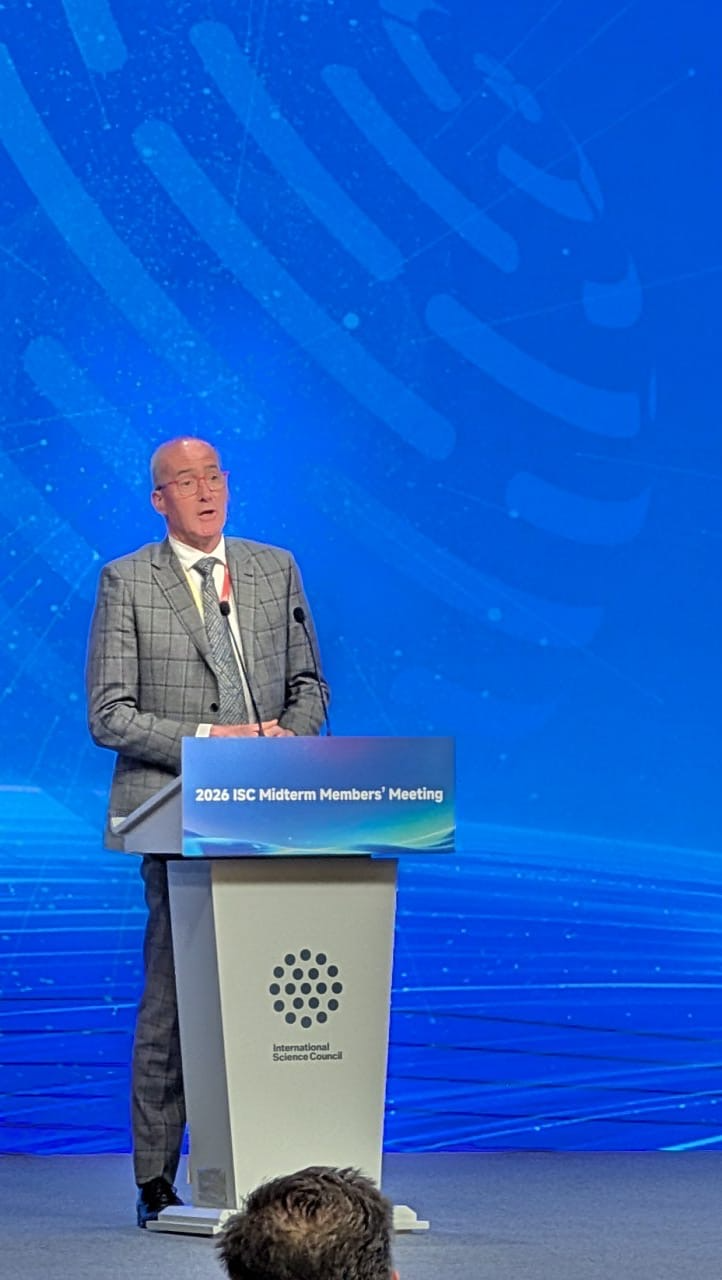
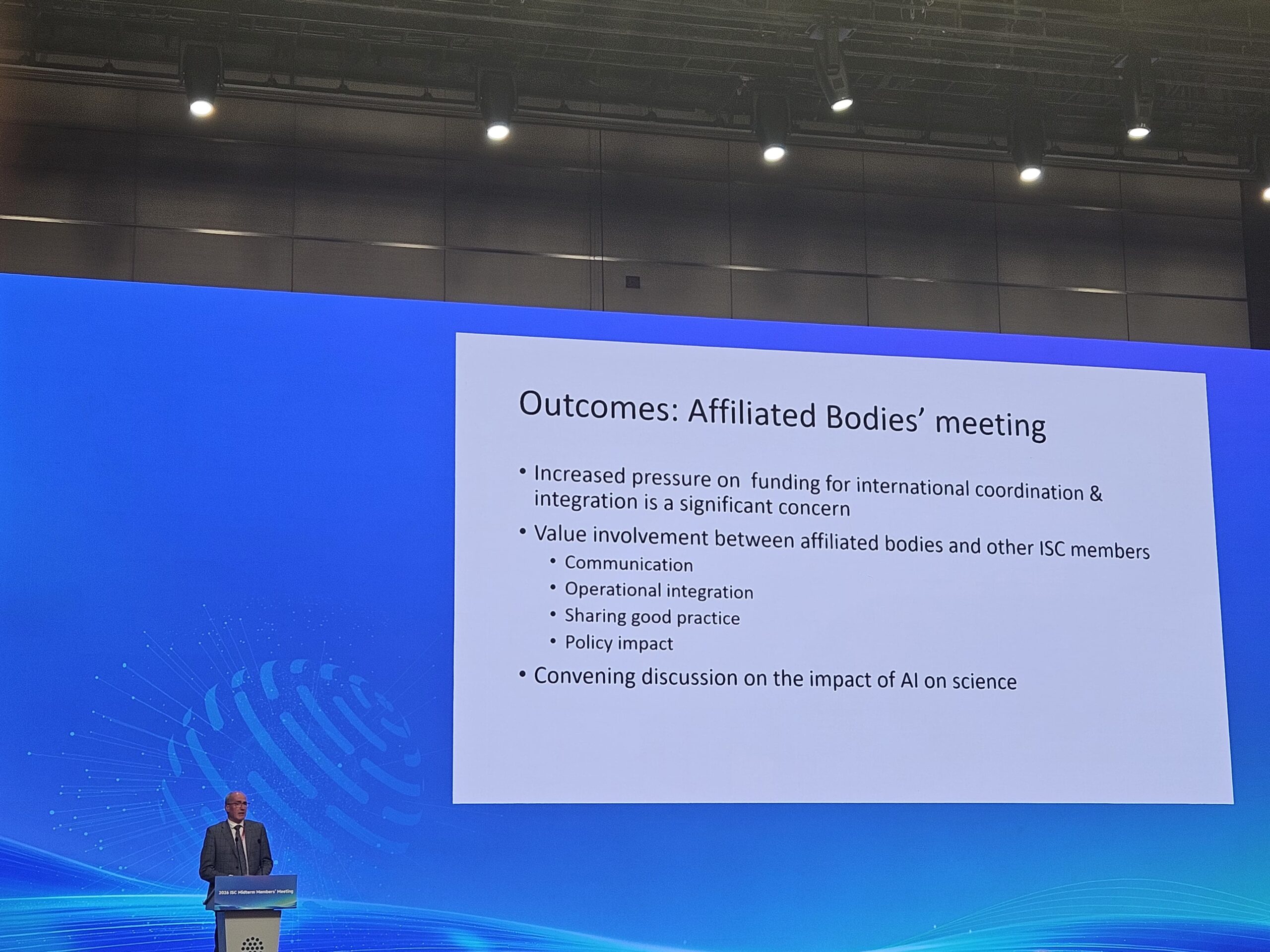
Affiliated Bodies at the ISC Midterm Membership Meeting

Richard Hartshorn is CODATA Vice-President, and Professor of Chemistry in the School of Physical and Chemical Sciences of the University of Canterbury, Christchurch, New Zealand. He was Secretary General of the International Union of Pure and Applied Chemistry (IUPAC) from 2016 to 2023.

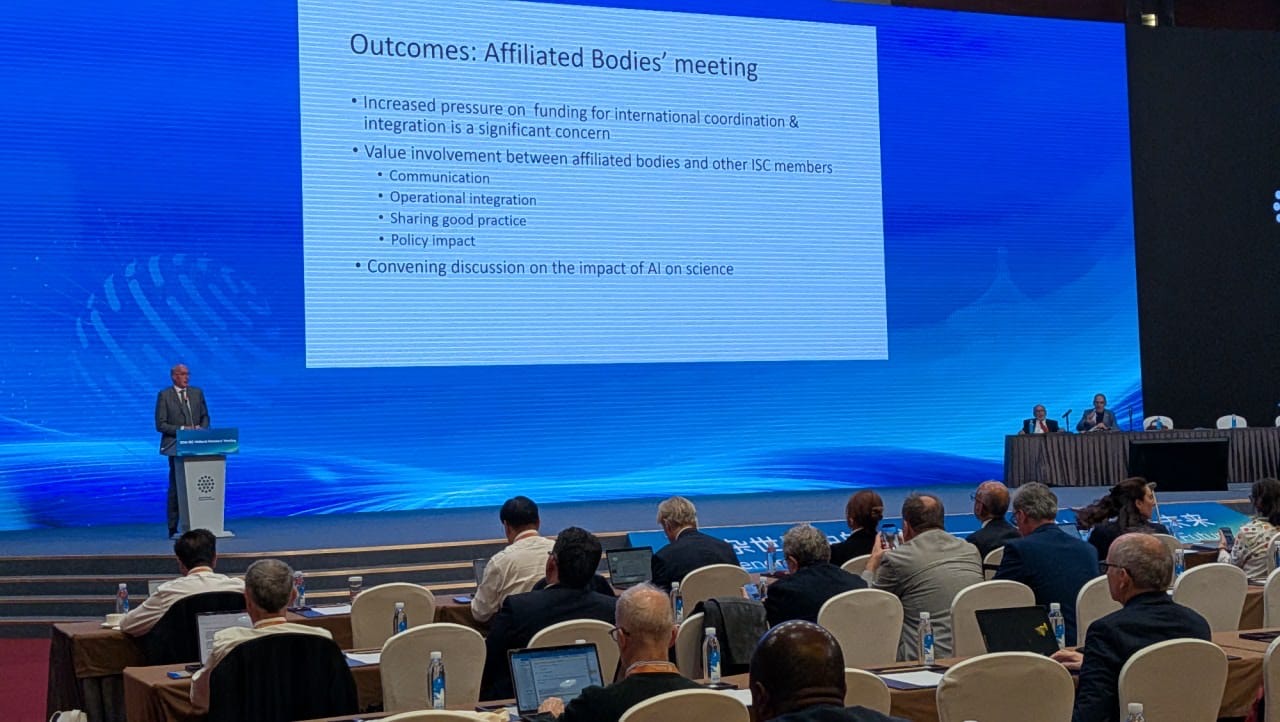
Representatives from the ISC Affiliated Bodies met at the ISC Midterm Membership Meeting in Beijing on Thursday 22 October. The Affiliated Bodies are a group of organisations based around specific themes, data and information, and global monitoring and observation.

The meeting began with reports from the organisations present and then developed into a discussion of issues to be raised in the report back to the ISC plenary session:

  • There is increased pressure on funding and that is especially true for projects and organisations that involve international coordination and integration. Many of the Affiliated Bodies are finding it challenging to secure necessary financial support.
  • The Affiliated Bodies noted how much they valued involvement with other ISC members, including scientific unions and national/regional bodies, and they wanted to see more of it. These involvements could and should include:
    • More and better communication
    • Operational integration
    • Sharing good practice
    • Working together to achieve greater impact on policy
  • The Affiliated Bodies were also very interested in the ISC convening discussions on the impact of AI and emerging technologies on science, but the group noted that there were real challenges in doing so simply from the rates at which these advances are being made and their impacts felt.

CODATA is proud to be one of the most active and impactful Affiliated Bodies, as noted by Sir Peter Gluckman, the outgoing president of the International Science Council, in his valedictory plenary speech.  We look forward to working with a wider group of scientific unions and expanding our national and regional reach.

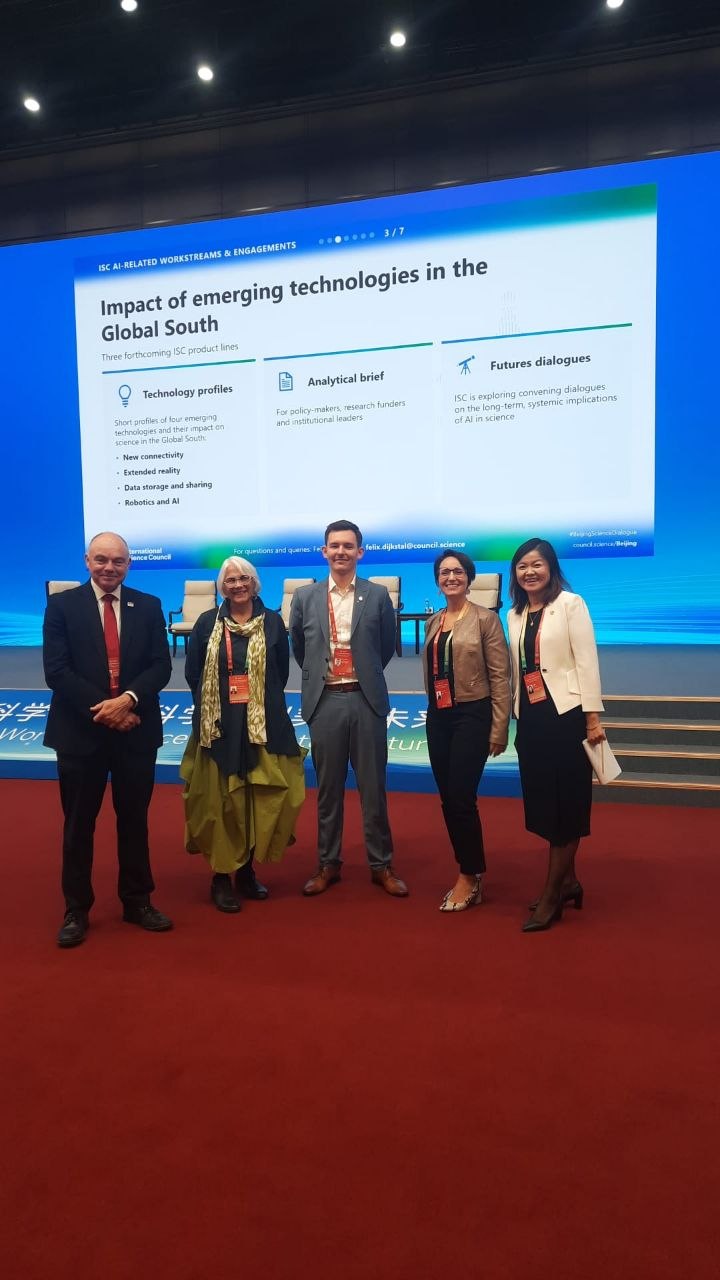
As testament to this engagement, CODATA was strongly represented in this meeting by Virginia Murray and Burçak Başbuğ, co-chairs of our International Data Policy Committee and of the UNESCO-CODATA WG on Data Policy for Times of Crisis and our International Data Policy; Cyrus Walther, Executive Committee Member; Pragya Chaube and Ntsundeni Louis Mapatagane, co-chairs of CODATA Connect, our early career network; Simon Hodson, CODATA Executive Director and myself.

EOSC EDEN: Developing long-term preservation strategies for galleries, libraries, archives and museums (GLAM): a blog post to celebrate World Digital Preservation Day, 5 November 2026 #WDPD2026

Written by Andrea Davidson (KU Leuven), with input from Laura Molloy (CODATA), Helene Andreassen (UIT) and Camilla Hagen Blixhavn (UIT).

Originally published on the Digital Preservation Coalition blog on 3 November 2026.

The European Open Science Cloud (EOSC) project ‘Enhancing Digital preservation strategies at European and National level’ (EDEN) aims to support and promote digital preservation practices and standards to advance the long-term preservation of digital data. Between January 2025 and December 2027, EDEN is creating a framework to help institutions to identify what data are candidates for digital preservation and to preserve research outputs as high-quality, FAIR data in the long term.

This work involves setting standards and protocols, which the project determines by assessing data usage, quality, and the data’s benefits to science and society. EDEN has engaged with the GLAM [Galleries, Libraries, Archives and Museums] sector, among other key stakeholders in the area of research data management, to understand each sector’s specific needs for long-term digital preservation. Engagement activities focus on soliciting external feedback, ensuring validation, and encouraging adoption of EDEN outcomes in the digital preservation community.

Long-term preservation for GLAM

The GLAM sector aspires to robust preservation practices. EDEN is developing frameworks, guidelines, and best practices for the identification, selection, and appraisal of data for long-term preservation. As part of that effort, EDEN carried out a large-scale survey in 2025, in order to better understand contemporary working practices in the sector. This is important for GLAM institutions as they increasingly integrate the FAIR principles and participate in the Collections-as-Data movement, which strives to make digital information about collections available as data for computationally-driven research enquiries.

EDEN has engaged GLAM sector stakeholders from the outset of this project, initially collecting input on existing identification, selection, and appraisal practices for digital preservation. The 2025 survey received 250 valid responses from 31 states/nations worldwide, with 151 responses representing the GLAM sector: 70 archives, 64 libraries, and 17 museums/galleries. Other stakeholders responding to the survey included repositories, research performing organisations, research infrastructures, digital preservation services, and one academic publisher.

The 2025 survey led to five important takeaways that have guided EDEN’s work and reflect the landscape and priorities for digital preservation among GLAM organisations. A full report of the survey is available for download at https://zenodo.org/records/17984753.

  1. The international digital preservation community works in a variety of settings and locations. 

There is significant diversity as to how digital data objects are handled: no single strategy for processing digital data objects and long-term preservation of data exists across the GLAM sector.

EDEN strives to be responsive to the different contexts for long-term digital preservation by offering solutions that adopters can adapt to their priorities. First and foremost, the Core Preservation Processes (CPPs) or 30 specific actions that a trustworthy digital archive should take to ensure digital preservation that a group of digital preservation practitioners has developed address generic processes regardless of specific content, domain, or discipline. The CPPs are described as a sequence of implementable steps that focus on operational activities required by digital preservation.

The CPPs were one of three finalists for The National Library and Archives, Singapore Award for Research and Innovation from the Digital Preservation Coalition in 2026. Read more about the CPPs here.

  1. Stakeholders are interested in sharing their experience and concerns.

Concerns that resonated across all types of survey respondents include sensitive or protected data, challenges of data volume, and access provision because these issues threaten FAIRness over time. To a lesser extent, stakeholders also expressed concerns about long-term provision of service, lack of useful policy or directive, software preservation, provenance issues, and format problems in order to meet community needs.

  1. The principles of FAIR data are familiar but the TRUST and CARE principles are less known or used.

Survey findings reveal that the FAIR principles can be considered foundational in preservation practice. However, even knowledge and use of conceptual frameworks – including FAIR and other frameworks and implementation standards for digital data handling – vary across GLAM institutions.

  1. “Long-term preservation” is still an unstable concept, as many respondents work at an organisation where there is no agreed or working definition.

For example, while 76% of archives responded that their organisation has an agreed definition of “long-term” in the context of digital preservation (this was the highest percentage among all types of organisations surveyed), only 7% of museums/galleries and 26% of libraries had defined “long-term” in their organisations. Of those organizations with a definition, “long-term” ranges from 1-5 years until 100 years, with 32.4% of respondents indicating that 100 years is the initial duration for preservation and 21.2% indicating 10 years.

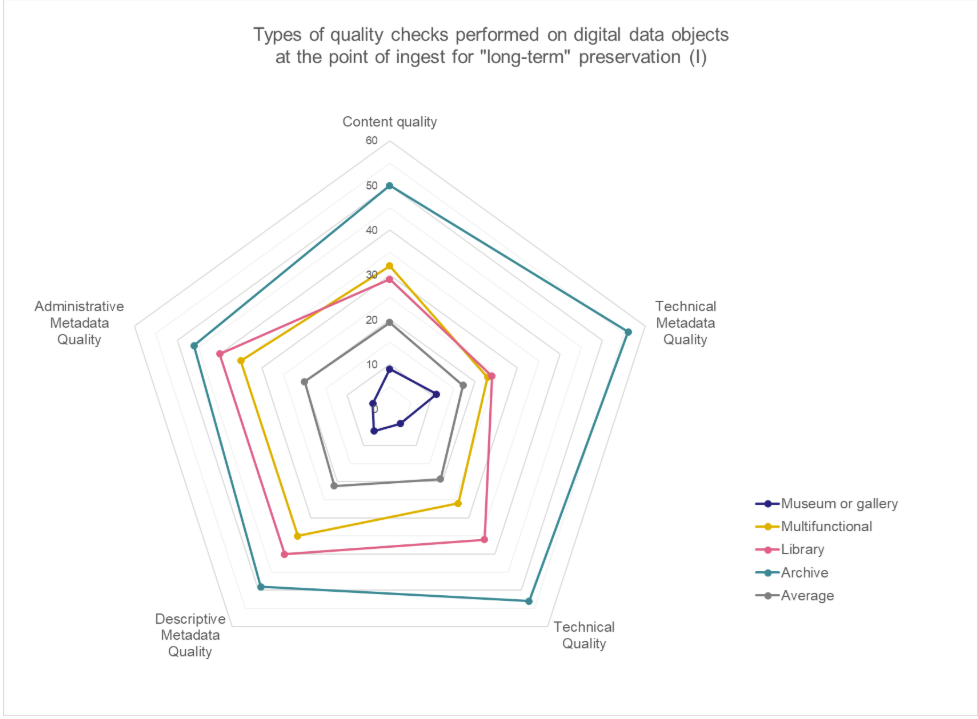
Similarly, the criteria used to assess the quality of digital data object candidates for long-term preservation at the point of ingest ranges widely, with different types of quality checks being performed to different extents across the sectors. According to the figure below, archives are more likely than libraries, museums, and galleries to consider a wide variety of criteria that includes content quality, technical (metadata) quality, descriptive metadata quality, and administrative metadata quality.  Museums and galleries report lower frequency of checking technical quality, descriptive metadata quality, and administrative metadata quality. Archives generally exhibit different behaviour from all other organisation types, with more checking activity reported overall and in particularly high levels of checking for provenance, completeness and documentation.

Source: Molloy, L., Lindlar, M., Benauer, M., Andreassen, H. N., Presser, K., & Anu, M. (2025). EOSC EDEN D1.1 – Overview of Identification, Selection and Appraisal Practices for Long-Term Preservation of Data. Zenodo. https://doi.org/10.5281/zenodo.17984753 

Although the survey indicates that relatively few GLAM organisations undertake to regularly reassess the quality of preserved digital data objects, GLAM organisations predominate among those 18.8% of survey respondents that do define “long-term” AND perform quality checks at the point of ingest AND perform reassessments of the quality of digital objects at later stages in the preservation period. That group of organisations that conduct the most rigorous long-term preservation process with these three steps consists primarily of museums or galleries (35.7%), libraries (31%) and archives (16.4%), with digital preservation services, research infrastructures, repositories, and research performing organisations represented at 14.3% of the group or less.

  1. Urgent issues for contemporary digital preservation practitioners include resourcing, metadata quality, dealing with sensitive data, handling increasing data volume, and meeting changing user needs.

As EDEN works to provide the community with solutions to the most pressing needs for long-term digital preservation, the project also fosters a community of practice that will carry on with this mission after the end of the project. The Digital Curation and Preservation Network gathers practitioners to work together to exchange knowledge and develop further solutions. At a 2025 in-person meeting where we gathered prospective members to help shape this network, several participants represented archives or repositories across Europe. If you work in data curation or preservation and are looking to get involved in a professional network, we invite you to participate in the upcoming DCPN events and find out if one or more of our working groups match your interests.

Follow EDEN for updates on our work supporting long-term digital preservation

In summer 2026, EDEN ran a follow-up survey on the quality of research data and metadata for long-term preservation that attracted over 250 responses from GLAM sector stakeholders. This survey investigated how both preservation professionals and researchers experience issues related to sharing, finding, accessing, and working with research data. Follow EDEN to find out more about the results of the 2026 survey when they are available.

Subscribe to EDEN’s newsletter or follow the project on LinkedIn or Bluesky to learn more when we publish the results.

Getting off at the right station: reflections on AI readiness

Cyrus Walther is a doctoral student in the Astroparticle Physics Group at TU Dortmund University; nominated by IUPAP, he has served on the CODATA Executive Committee since 2023. He contributes actively to CODATA’s Early Career Group, CODATA Connect, and to the Task Group on Digital Representation of Units of Measure (DRUM).

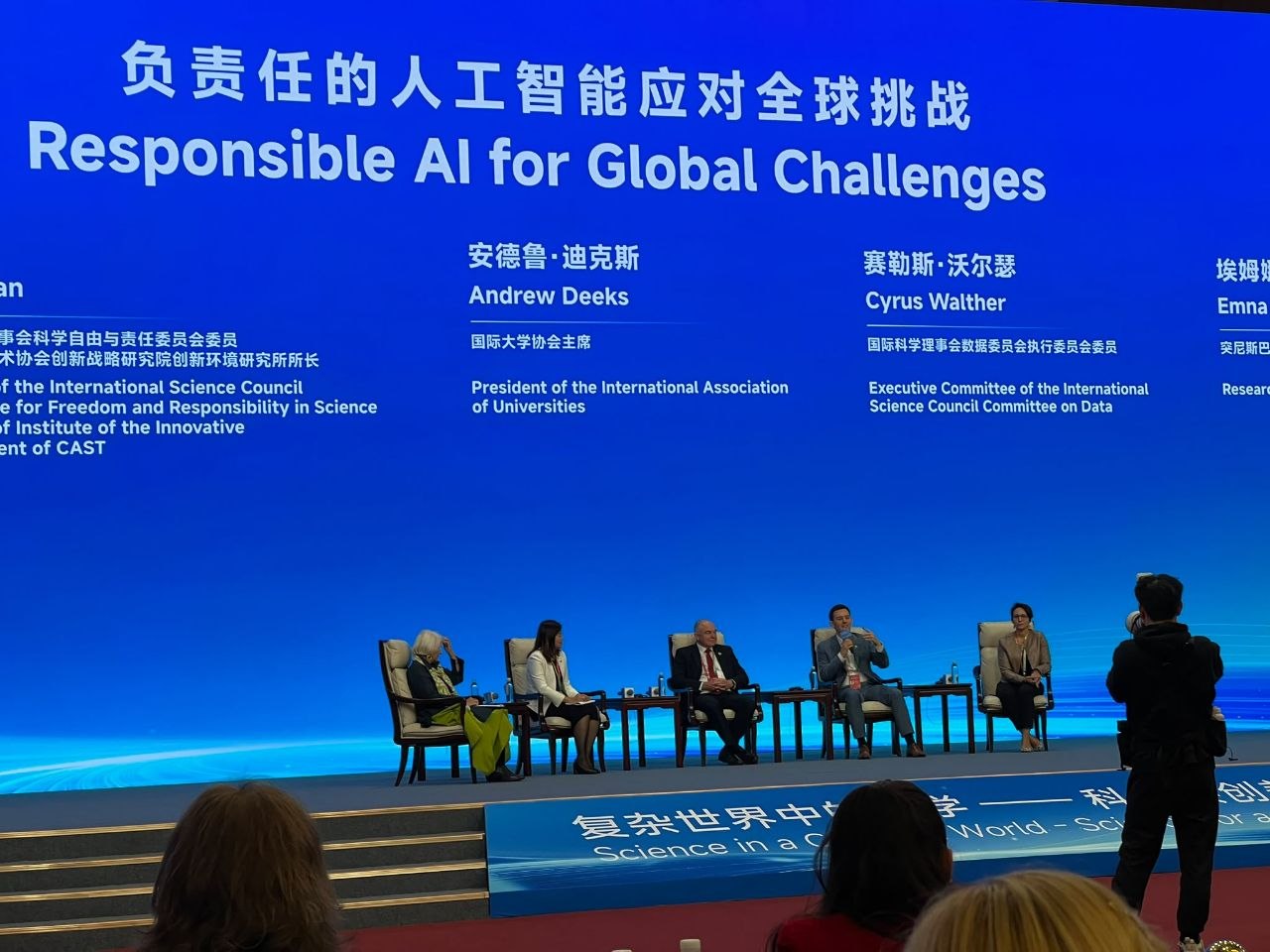
From the 19th to the 21st of October, the International Science Council (ISC), in collaboration with the Chinese Academy of Sciences and Technology (CAST), welcomed the international scientific community to Beijing for the Beijing Science Dialogue. During these three days, topics of transformative impact on science were discussed, among them Artificial Intelligence. As AI especially impacts early- and mid-career researchers, EMCRs from the ISC community suggested including young panellists on the topic. Following a nomination, I had the great honour to receive that invitation from the International Science Council to speak as an early-career scientist on the panel “Responsible AI for global challenges”.

With the exceptional panel speakers and our outstanding moderator discussing a highly relevant and spotlighted topic like AI, we expected people to have high interest and diverse perspectives. However, none of us on stage foresaw that especially one contribution would remain in the audience’s memory of this panel: the bus metaphor.

During the introductory round, we were asked to provide a short input focusing on our perspective on how AI transforms science. For this input, I chose to highlight the development of young people utilizing AI from an inside perspective using a metaphor that goes like this:
___

Imagine you want to climb a mountain. You travel to the small mountain village at the foot of the mountain that you want to hike up. As you arrive, you meet a lovely senior lady, maybe around 95 years old, and she happily shares her impressions about the amazing views at the summit. Affirmed by the lady, you are ready to start your hike in the morning. The next morning, you find out that there is a bus that takes you to the start of the hiking trail. “That sounds marvellous”, you think, and you start looking for the bus station and you find it close by. Not long after, the bus arrives. It looks good and the bus driver is very friendly, so you go inside. The bus is indeed very comfy and warm, and from the inside you have a great view of the mountain panorama outside. Stunned, you watch the trees go by and the beautiful mountain ranges in the distance. Then, it suddenly strikes you: you have missed your stop. The bus is already far up the mountain. So you scream, “Sorry, sorry, I missed my stop. I need to get off.” The bus driver answers, “No problem”, stops the bus and opens the door. As you get off the bus, happy about the fact that you noticed, you start feeling the cold wind around you. You look up the mountain; it is already foggy, cold, and quite steep. “But this is what I signed up for”, you mumble, and you start hiking. After 50 meters, you are out of breath, sweating, and freezing. Frustrated, you turn around to the bus driver, who is luckily still there and happily welcomes you back. After all, you want to see the summit. The senior lady said it was so nice, so you will just take the bus there. When you get on the bus, it is warm and dry again, and so comfortable. You are convinced this was a good decision. Some time passes and the bus stops. “We arrived at the summit, the bus driver says.” Excited, you jump off the bus. Stepping outside, you glance at the beautiful view that is presented to you; the senior lady did not lie. “Stunning!” you say to yourself just as a gust of wind almost blows you off your feet. That’s when you notice the bone-chilling cold around you as the warmth of the bus slowly fades away. Only a few seconds go by and it becomes unbearable – strong winds and freezing cold. You realize you are out of your depth, completely unprepared for the harsh environment on the summit…
You might ask, why is this story relevant? What is the kicker? The bus was warm, the bus was nice, right? The bus was called ChatGPT.

___

From this metaphor, one can and should ask the question of whether Artificial Intelligence is not only transforming science on its own, but primarily the scientists themselves, especially when it comes to Generative AI.

While the metaphor has various flaws, it remains relatable to scientists independent of their career stage. Now, one might think, “Yes, everybody already forgot to get off at the right station.” While this is surely correct, the metaphor relates much further, towards comfort and the warmth of the bus. Its feeling might be mimicked in doomscrolling while already having to leave for an appointment; in sleeping in because the bed is cozy although one has calls scheduled; or in choosing the frozen pizza dinner over a home-cooked meal. More specifically, to extend the metaphor: now at the top of the mountain, unaccustomed to the cold and the harsh environment, could you find your way down without the help of the bus? Faced with another mountain, but deprived of a bus service, could you manage to get to the top? Is the comfort and warmth of the bus depriving you of the opportunity to adapt to the alpine environment, to learn to navigate and climb on your own so when forced to descend from the bus you can find your own way?

After the panel, I was approached by various colleagues from the community, expressing their interest in the metaphor and stating their intention to use it in their teachings. Amongst many great pieces of feedback for which I am deeply grateful, one piece stood out to me. It was when a senior colleague approached me during a coffee break later that day because she realized something. She told me, “I am on the bus; I just realized it, Cyrus. I am on the bus.”


This remains the key insight of the story of the bus and the mountain: it is the awareness to understand where you are right now, on the bus, about to get on, halfway up the mountain avoiding the bus, or already on your way down from the peak. Then, as soon as you are aware of where you are, it is about acknowledging it, identifying where you want to go and potentially changing your path.

So, the question remains: Are you on the bus and do you know when to get off? :)

Thank you very much for reading until here.
All the best!

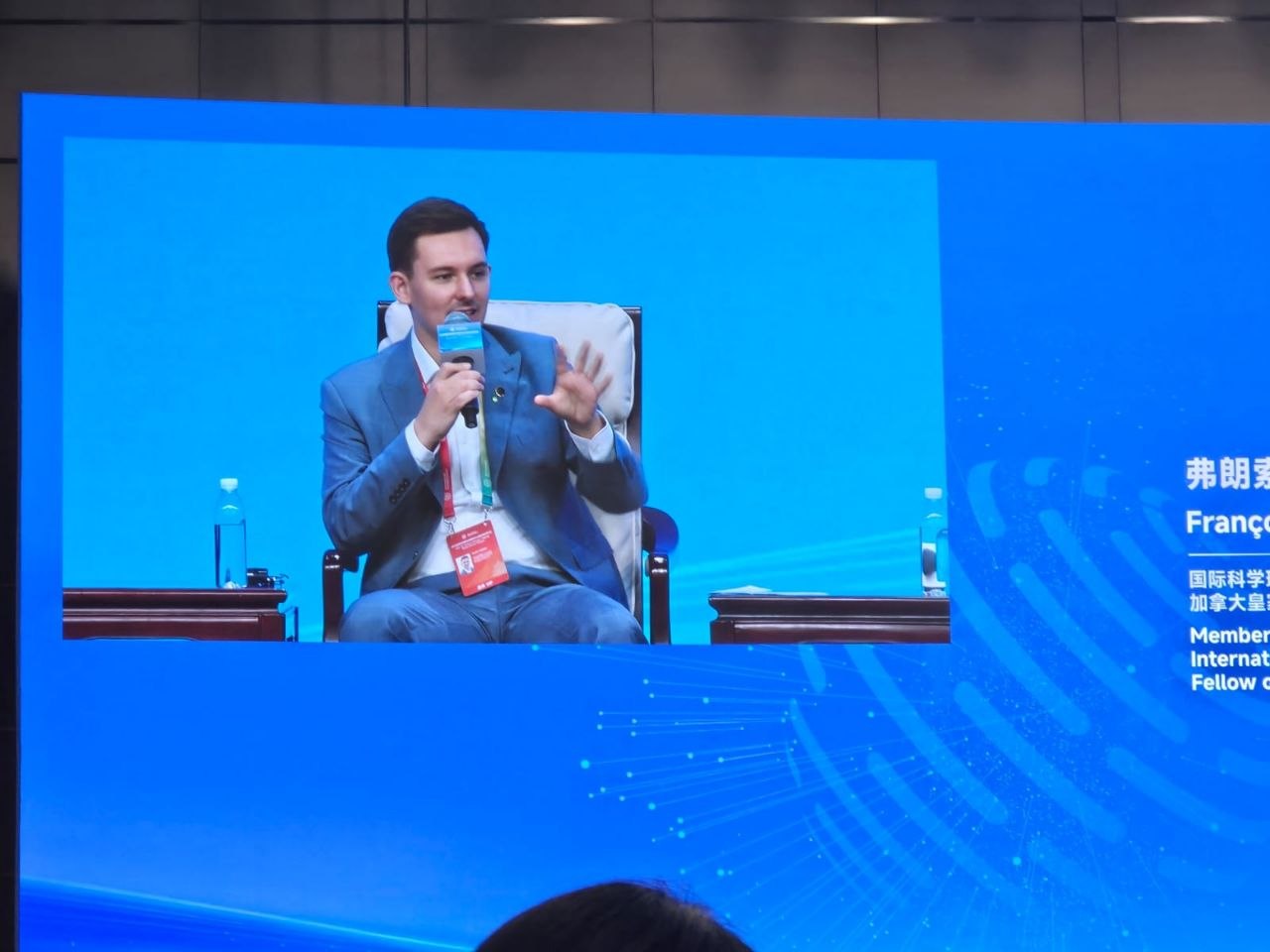
The panel was chaired by Françoise Baylis (President, Royal Society of Canada, ISC Governing Board member). The other panellists were: Andrew Deeks (President, International Association of Universities); Emna Harigua (Researcher, Institut Pasteur de Tunis); Liu Xuan (Director of Institute of Innovative Environment, CAST, and member of the ISC Committee for Freedom and Responsibility in Science).

A Better Future for Science? Reflections from Beijing

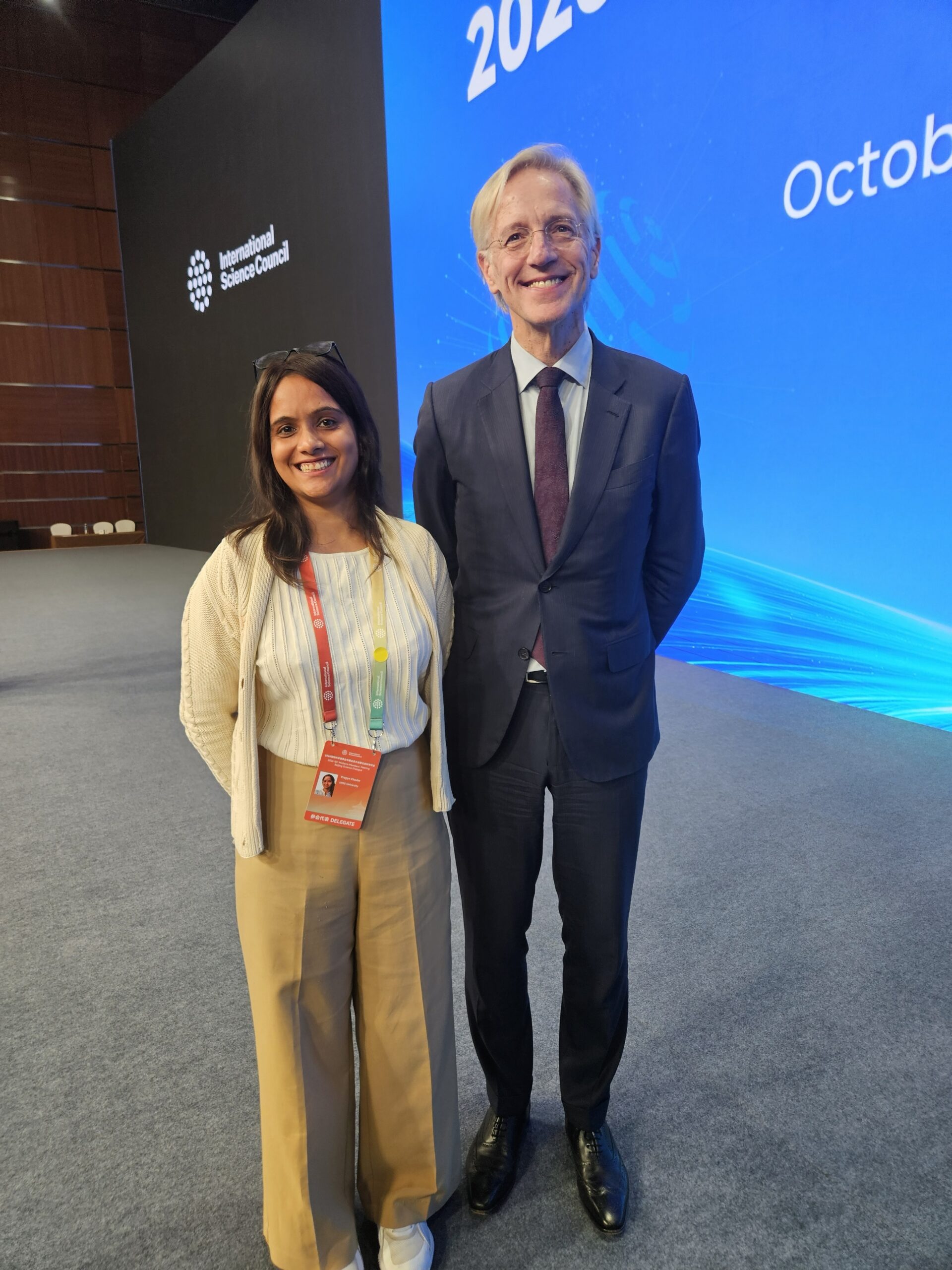
Dr. Pragya Chaube is Assistant Professor at the UPES University, India. She is a co-chair of the CODATA Connect Early Career Network and co-founder Open Science South Asia Network (OSSAN). Pragya’s participation in the International Science Council’s (ISC) Midterm Membership Meeting and Beijing Science Dialogue was kindly supported by the ISC and by the China Association for Science and Technology (CAST).

I had the opportunity to spend the week of 19–24 October in Beijing, alongside a large gathering of scientists and representatives of national science academies from across the globe, reflecting on the future of science. More than 1,000 people from over 80 countries and regions came together for these discussions. We welcomed a new ISC President, Robbert Dijkgraaf, and, on the final day, adopted the Beijing Science Declaration: Science in a Complex World, Science for a Better Future.

The meeting covered many important issues, but I left Beijing reflecting on a question that connects many of them for me: What kind of research ecosystem do we want to build for the future, and what needs to change to get there?

From declarations to implementation

The Beijing Science Declaration is ambitious and well put together. Its 18 commitments cover scientific freedom, responsible AI, public trust, and a stronger role for science in what follows the 2030 Agenda. It sets an important vision for science and society. I did, however, feel that the consultation period was quite short. The draft was shared with us on 13 October, with responses requested by 19 October. A little more time could have allowed for deeper reflection and discussion.

More broadly, I found myself thinking about what comes after a declaration is adopted.

We often agree on what we want to achieve. The next question is how we get there. Open science is one example. It needs infrastructure, sustained funding and viable financial models. It also requires institutions to recognise and reward open practices.

The declaration establishes long-term commitment towards openness. Developing practical ways to deliver on its commitments is just as important.

Open science in the age of AI

One question raised by the new ISC President, Robbert Dijkgraaf, stayed with me. In his speech, he asked whether open science is still the right approach when AI systems can use the same data. “Are we being naïve …?”

It is an important question. It does not mean that we should abandon open science. Rather, it asks us to think more carefully about the systems that support it.

Who benefits when research data is openly available? Who controls how it is reused? How do we ensure that communities retain a say in the use of their data? These questions matter particularly for data sovereignty and Indigenous data governance. Openness needs to work alongside principles such as CARE, which emphasise collective benefit, authority to control, responsibility and ethics.

As AI changes how knowledge is produced and used, we need to reconsider how our systems can support openness while ensuring accountability and equitable benefits.

Science in a world of geopolitical tensions

Geopolitical tensions make international scientific cooperation more difficult. I felt that there was scope to give greater attention to the role of science diplomacy in addressing these challenges.

The declaration recognises scientific and academic freedom, including the right of researchers to cooperate internationally. This is important. But how do we turn this commitment into practice when researchers face visa barriers, restrictions on mobility and political tensions between countries? The ability to collaborate should not depend so heavily on where a researcher comes from. There is room for greater advocacy and international cooperation to address these barriers.

There is also another dimension to the digital divide. A country’s AI capacity depends not only on its own skills, infrastructure and investment. It is also shaped by where AI hardware and software companies are based and who controls these technologies. Because these companies sit in only a few countries, geopolitical tensions between nations can quickly become barriers for researchers elsewhere. Access to chips, computing power or AI tools can be restricted, become costly, or change overnight, regardless of a country’s own capacity. These questions deserve attention when we discuss equitable participation in AI. Science diplomacy could help us think about these global dependencies and how they affect the future of scientific cooperation.

Science as a public good

The meeting included a panel on science as a public good. This is an important principle, and one that the Beijing Science Declaration rightly emphasises. But what does it mean for the kind of science we choose to fund?

In his speech, Robert Dijkgraaf made an important point about the pressures facing fundamental research. In many countries, the demand for immediate economic returns and new technologies is leaving less room for curiosity-driven research. Yet some of our most transformative technologies have emerged from research that was not originally driven by a specific application.

This is particularly relevant for low- and middle-income countries, where the emphasis on solving immediate societal challenges can sometimes overshadow the importance of basic research. These challenges are real and deserve attention. But we must also make space for research whose value we cannot predict in advance.

Fundamental research is also a global public good. Its benefits do not stop at national borders. This makes me wonder whether science diplomacy could play a greater role in building international support for research that individual countries may struggle to prioritise or fund on their own.

Thinking about the research ecosystem we want

For me, the biggest takeaway from Beijing was how interconnected these questions are.

The openness of research, the use of AI, the skills we want future researchers to develop, and the way we fund and assess science cannot be considered separately.

If AI changes how research is conducted, we need to think about the skills researchers will need. If we want more open and collaborative research, we need institutions that support these practices. And if we want researchers to take on new responsibilities, we need to consider what our research assessment systems reward.

Research assessment reform is therefore an important part of this conversation. We cannot expect the research ecosystem to evolve if the incentives remain unchanged.

This also brings me to the role of early- and mid-career researchers (EMCRs).

The EMCRs had a dedicated programme during the meeting. It included a half-day session on the first day, an outing on the second, and a full day on Thursday. It was a valuable opportunity to connect with researchers at similar career stages. At the same time, I wondered whether there could have been more opportunities for EMCRs to participate in the main discussions, particularly those on science policy and the future of research. A dedicated programme has its value. But so does being part of the wider dialogue, alongside those shaping science policy today.

If we are thinking about the future of science, we should also think about how the next generation of researchers can help shape it. This means giving them opportunities not only to develop new skills, but also to contribute to the policy discussions that will influence their careers and the research environments in which they work.

The Beijing Science Declaration sets out an ambitious vision. The work ahead is to translate that vision into practice, through sustained funding, institutional change, international cooperation and a willingness to rethink how we value science. For me, the bigger question is how we shape the research ecosystem that will enable future generations of researchers to realise this vision.