Category Archives: Uncategorized

Urban FAIRscape at the Urban and Climate Risk Data Lab

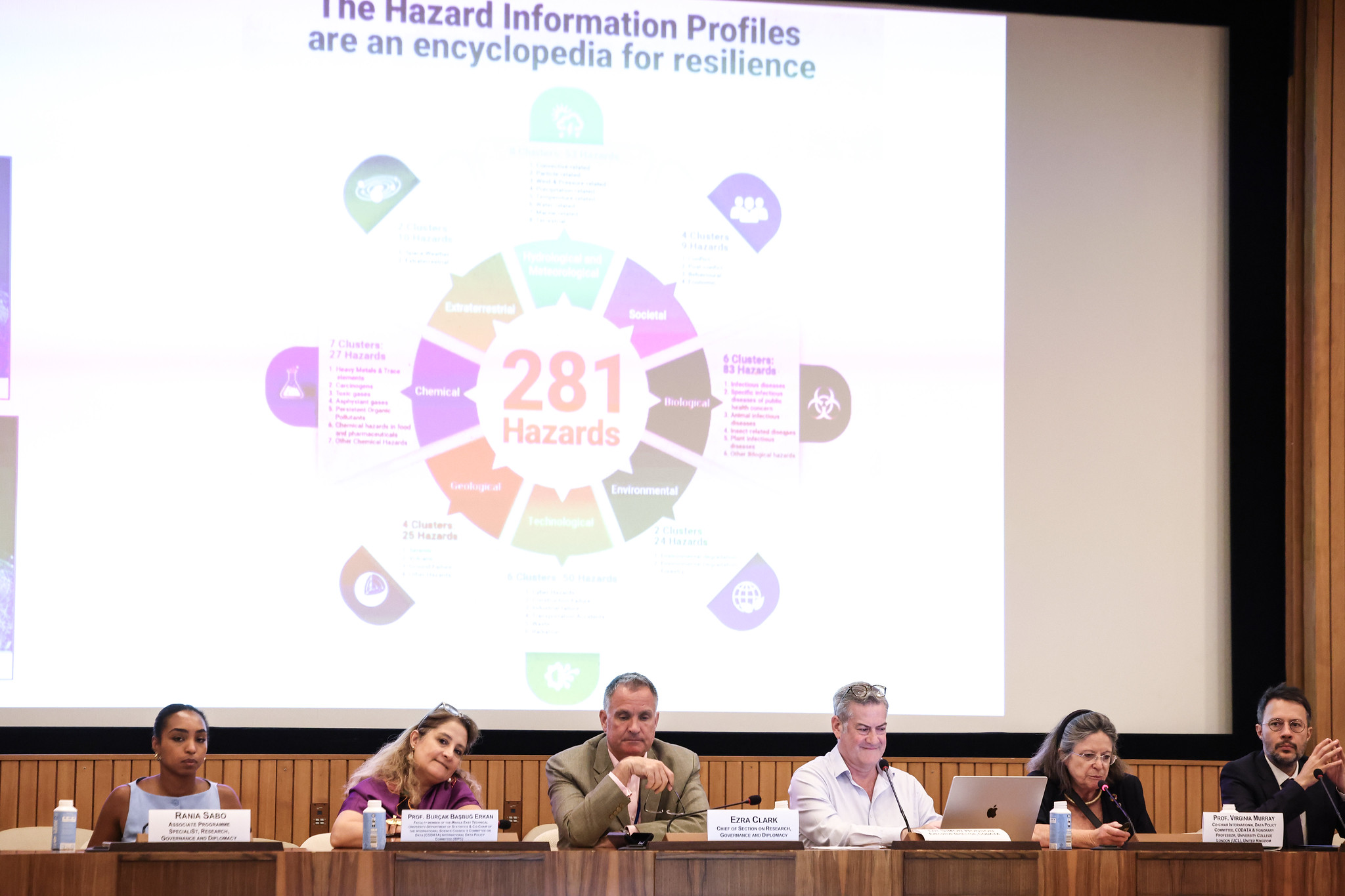
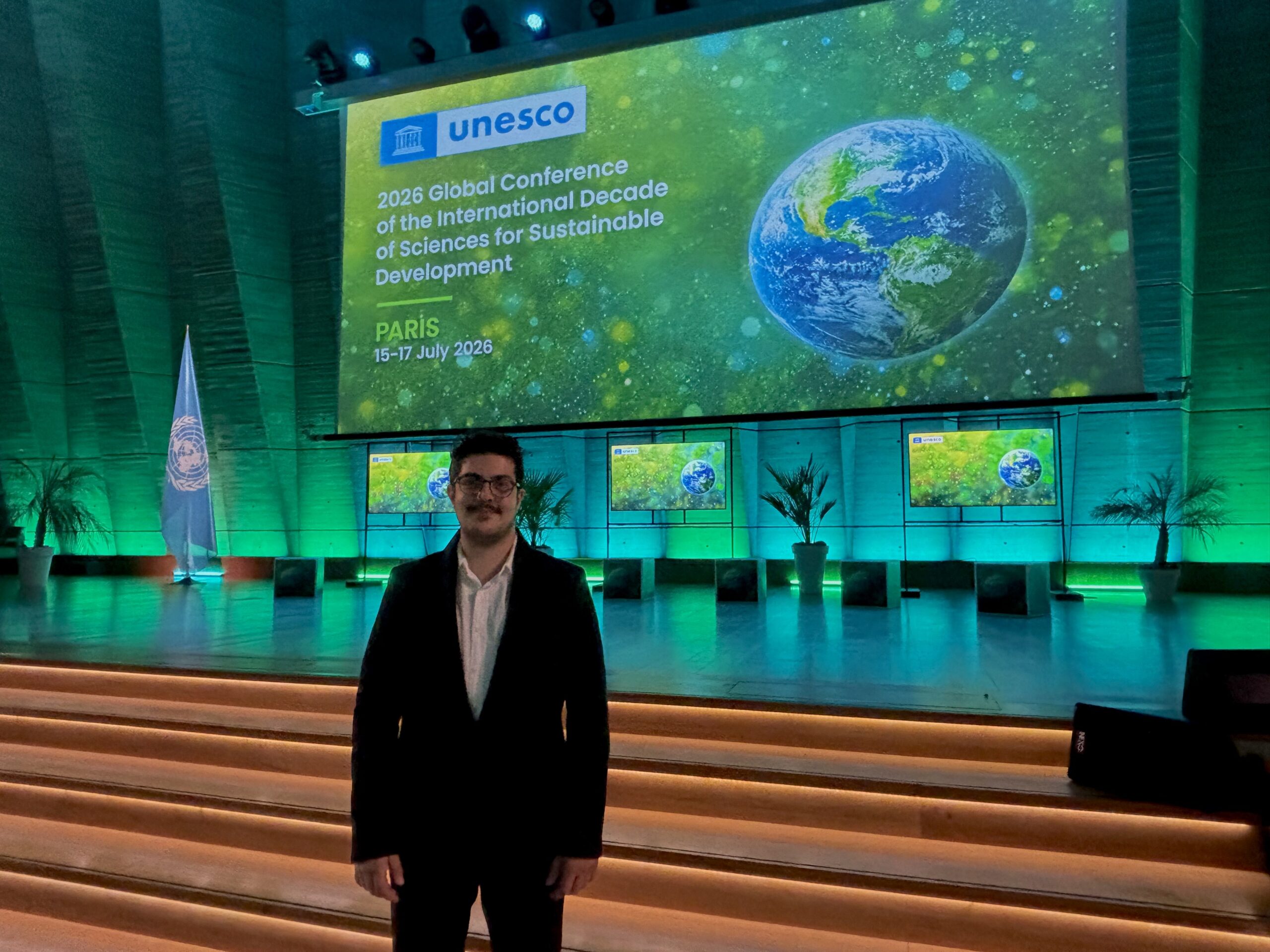
This blog post was inspired by the opportunity to join the Urban Risk and Climate Risk Data Lab event hosted by the World Bank Group in Paris, 21st to 22nd May 2026. 

By Burçak Başbuğ, Shaily Gandhi, Matti Heikkurinen, and Slava Tykhonov.

(c) Matti Heikkurinen CC-BY 4.0

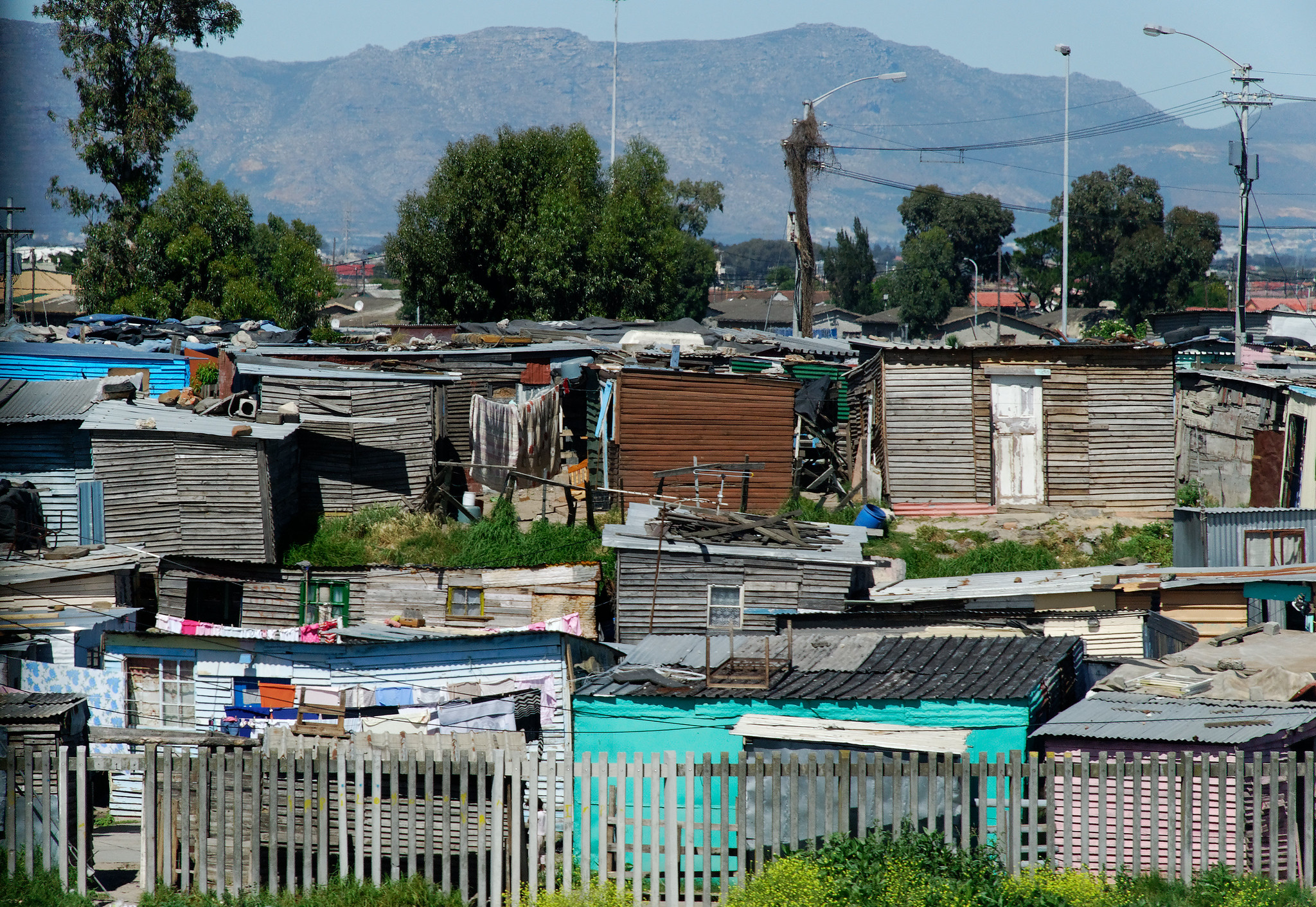
For many people, the first associations with the word “Urban” are perhaps related to progress; skyscrapers surrounded by pristine parks, new opportunities, human connections and delightful cultural exchanges. However, this vision bringing people together also drives unplanned urban sprawl, as well as challenges that infrastructures and services struggle to cope with. Escape into population centres may also not be voluntary. For example, refugee camps often turn into permanent, growing settlements. 

Independent of the drivers, concentration of population into urban centres also concentrates risks. The details may vary, but the number of individuals and the value of assets exposed to hazard events grows, while risk reduction activities and disaster response planning may face additional constraints. Unfortunately, the economic and social dynamics provide incentives to set these risks aside. The same pattern can often be observed in the approach to climate change, pandemic preparedness or maintenance of critical infrastructure. The combination of rapid urbanisation and climate change is an example of a situation where the growing, cumulative hazards may also be more than the sum of their parts.

At the same time, we have unprecedented access to data, thanks to initiatives such as Hyogo and Sendai frameworks and other mechanisms to track the impact of hazard events. We also have IT infrastructure to process these datasets efficiently and put them into context of climate and weather data.  However, we need to use these resources better: at the moment, data is often siloed, inaccessible or incompatible for efficient risk assessment and response.

Leaving the $2.3 trillion on the table

(c) Matti Heikkurinen CC-BY 4.0

Hazard and exposure profiles have shifted dramatically: During the last 65 years, the proportion of urban population has grown from 34% to 58%. Despite this, most of the disaster losses would be avoidable. The resources that could be refocused into more productive uses are considerable: according to a recent UNDRR report, direct disaster losses average 180-200 b$ annually. If you take indirect impact and ecosystem damage into account, the costs to the global economy grows to 2.3 trillion $. This sum, divided by the estimated world population (8.23 billion, according to the United Nations Population Fund), corresponds to almost 250$ per person per year. A sum that is noticeable in the rich industrialised countries — and existential, for populations living below the 3$/day poverty threshold.

Quantifying the scale of the problem is an important first step. However, as noted by Jenty Kirsch-Wood (UNDRR) during the workshop:

“We can’t just keep re-defining the problem in a better way” 

Data needs to drive action. The workshop presentations demonstrated several possible solutions that aimed at going beyond awareness raising. From using satellite data to anticipate the development of urban sprawl and to support planning to targeted clean-up activities to maintain drainage capacity of drainage systems to prevent flooding. The workshop provided an opportunity to share steps that may seem little in isolation but — put together — will have a growing impact.

Data, data, data every where (The Rime of the Ancient FAIRiner)

The hands-on part of the workshop acted as a reality check – and a call to action. Attempting to find relevant datasets and adding them to the GFDRR Urban Data Tracker drove home the degree the approach to data is fragmented — and how difficult it is to find datasets that are of suitable granularity and format to address urban challenges. The search provided a tangible reminder of the huge amount of data in various forms on the Internet, but — like seawater – most of it requires processing before being ready for consumption. 

This “desalination process” is often made more difficult by choices, undoubtedly made under time or budget pressures. For example: lack of persistent identifiers (leading to “Link rot”), publishing datasets without metadata describing the syntax and semantics of the data, making only aggregate data (e.g. national level instead of commune or settlement) data available or referencable. Adding language barriers and careless use of AI can lead to drawing very plausible and completely erroneous conclusions from the data.

Discussions triggered by the exercise highlighted not only the economic and human costs of fragmented systems, but also the urgent need for shared standards, collaborative workflows, and FAIR data practices. The workshop initiated conversations reflecting that resilience is no longer only about surviving crises, it is about building connected data ecosystems that enable faster, smarter, and more equitable decisions before, during, and after disasters. As a positive sign, the examples and demonstrators illustrated promising examples of integrated solutions that were nevertheless limited in their scope.

CODATA: connecting FAIR islands

We could consider these promising demonstrators and pilots as “Findable, Accessible, Interoperable and Reusable (FAIR) islands”. These systems provide clear value for a smaller subgroups of stakeholders, have trained userbases and are well-understood by the funding agencies leading to the sustainability of these solutions. 

CODATA is interested in contributing, through several channels, to improve the interconnectedness of this “archipelago”. These channels include policies, processes and tools that can improve the FAIR aspects of the solutions and improve their interoperability and reusability. The approach in all cases needs to be minimally invasive and based on incremental, iterative improvements. 

The primary policy channel is developed by the Data Policy for Times of Crisis Facilitated by Open Science (DPTC) Toolkit. The resources developed by the group — including a factsheet, a guidance document, and a checklist — were introduced on 4 June 2025 into the UNESCO Open Science Toolkit. These resources are designed to strengthen cross-border crisis data management and to support governments, UN agencies, research institutions, civil protection authorities, and other stakeholders in preparing for, responding to, and recovering from crises. 

Legal and organisational interoperability (LOI) has been identified recently as a topic requiring focused attention. The goal is to ensure that the FAIR data ecosystem complies with the relevant regulations, supports coherent data-driven activities across organisational boundaries and is supported by lifecycle management approaches that ensure that the data solutions provide predictable service also years into the future.

Both of the policies and LOI rely on tools and semantic frameworks ensuring semantic and technical interoperability of data. The primary solutions include the Cross-Domain Interoperability Framework (CDIF), which provides a practical and developer-friendly guide to implementing the FAIR principles, using existing domain neutral standards, in a way that enhances Interoperability and Reusability and conforms to current good web and data practices. CDIF can be combined with human-controlled AI solutions that reduce the efforts needed to make datasets ready for integration. Importantly, CDIF also provides frameworks making it possible to technically enforce agreements between organisations and individuals.

These solutions are being developed and implemented by CODATA and partners in the Climate-Adapt4EOSC and CDIF4EOSC projects. We are very keen to explore collaboration with the participants and organisers of the Urban Risk and Climate Risk Data Lab.

Thank you and see you soon (hopefully)

We see a crucial role of events like Urban & Climate Risk Data Lab that allow sharing of best practices, tools and experiences. They will speed up harnessing data resources to meet the evolving and growing challenges in the Urban and Climate risk landscape. We would thus like to express our gratitude to the organisers:

And hope to be able to join the follow-up events and activities!

About the authors

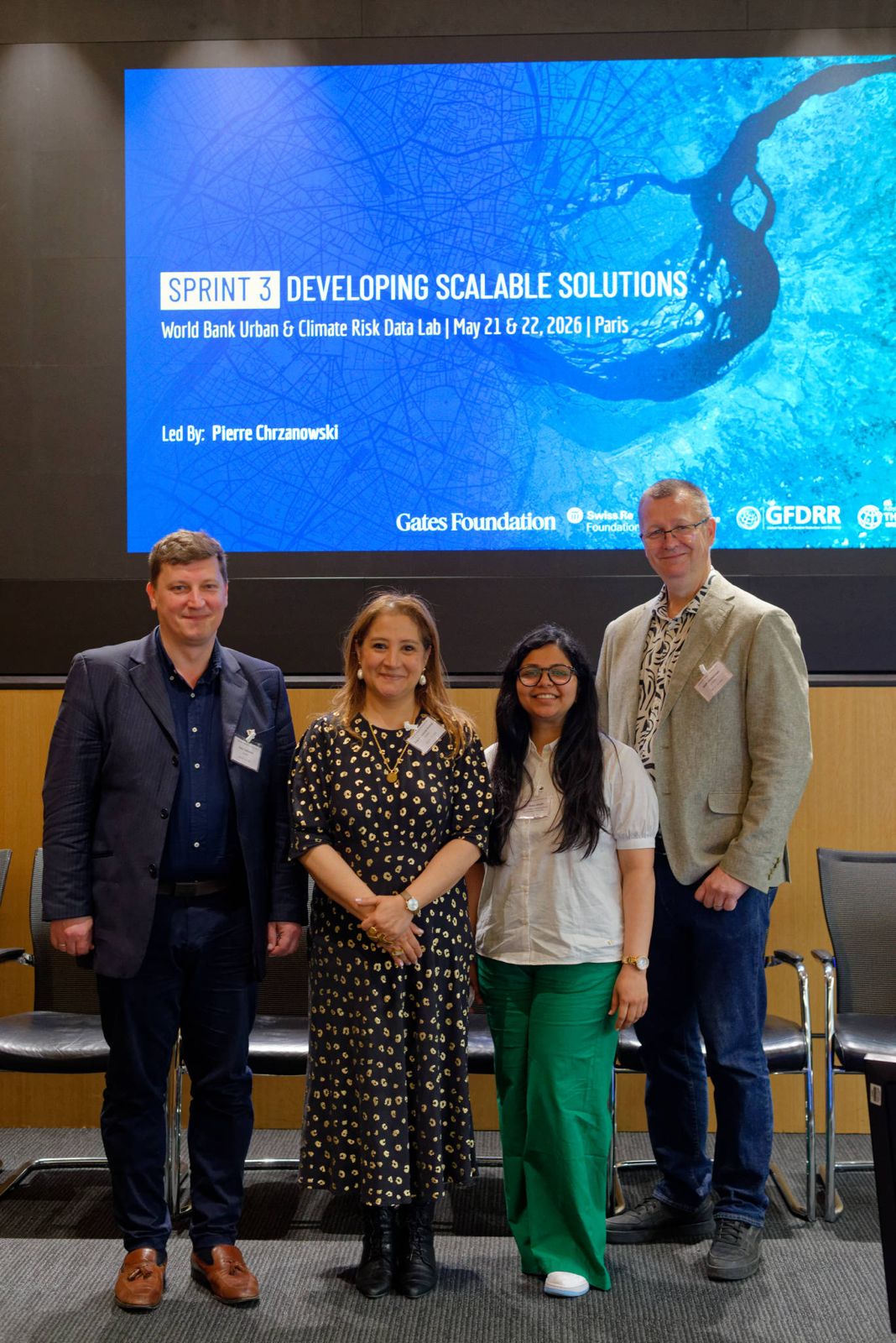
CODATA team at the Urban Risk and Climate Risk Data Lab workshop. From left to right, Slava Tykhonov, Burçak Başbuğ, Shaily Gandhi, and Matti Heikkurinen.

Burçak Başbuğ is Professor of Statistics and Disaster Science at the Middle East Technical University in Ankara; she is co-chair of the CODATA International Data Policy Committee and co-chair of the UNESCO-CODATA Working Group on Data Policy in Times of Crisis.

Shaily Gandhi is Senior PostDoc at the Geo-social AI Research Group, IT:U, Linz; she is an ISC Fellow and a former lead of the CODATA Connect Early Career Network.

Matti Heikkurinen is Project Portfolio Manager at CODATA leading work on Legal and Organisational Interoperability in numerous projects.

Slava Tykhonov is Head of AI and Interoperability at CODATA and a Dataverse ambassador.

Towards a data strategy for the Fifth International Polar Year (IPY5)

As I wrote this during the week of the solstice, the sun never set at the South Pole, and it never rose at the North Pole. That difference – the tilt of the Earth relative to the sun  –  drives the climate system. It gives us the seasons and the temperature differences that move the atmosphere and ocean. 

The poles are also bellwethers of change. Glaciers, ice sheets, and sea ice are rapidly receding. Ground frozen for millenia is thawing and buckling. Coasts are flooding. People are displaced, and species are dying. 

Understanding the poles is critical to understanding the Earth, but it is difficult to study a place that is often dark, cloudy, and frozen. Studying the poles requires coordination.

Initially, Western study of the poles was more about heroic exploration and conquest rather than scientific understanding. Then in 1875, one of those heroic explorers, Karl Weyprecht of the Austro-Hungarian Navy, realized that they needed to be better about collecting good data, and he proposed an internationally coordinated program of scientific observations. This ultimately led to the first International Polar Year (IPY) in 1882-83.

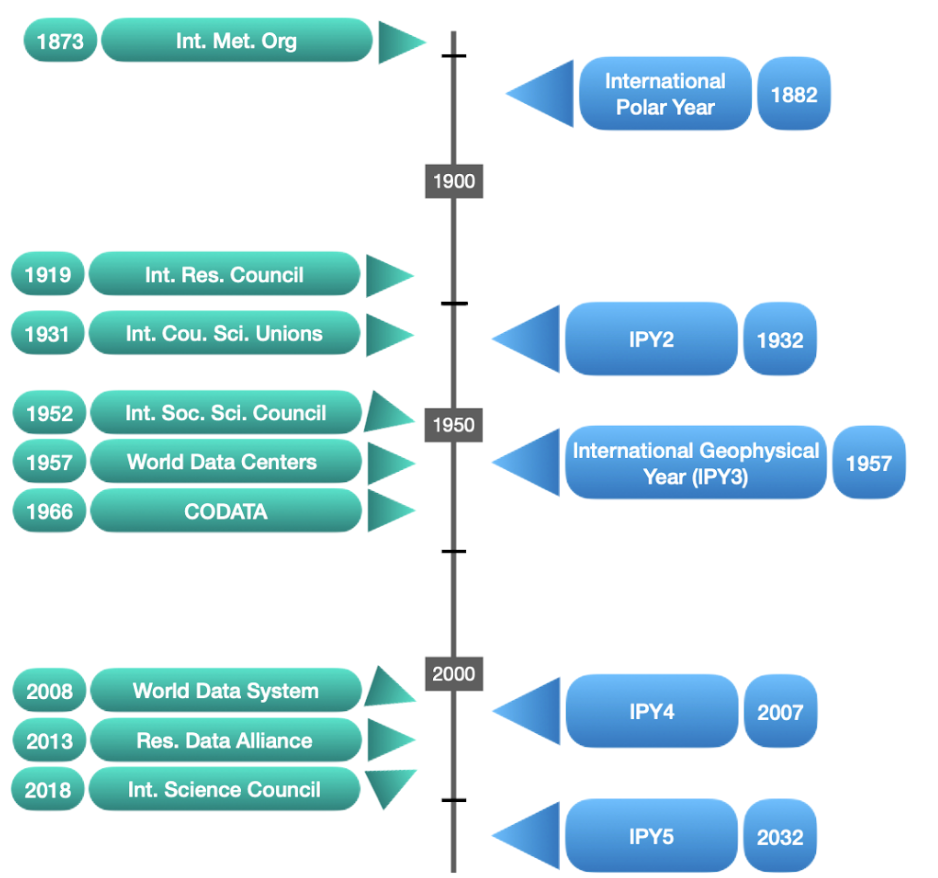
Since then, there have been three more International Polar Years in 1932, 1957, and 2007. Each of these marked a milestone in scientific coordination and data stewardship. IPY1 established meteorological stations that still collect ongoing records today. IPY2 established more stations and made major advances in radio science but also highlighted the vulnerability of data during major social upheaval (World War II). IPY3, the International Geophysical Year, launched the modern scientific era and established the World Data Centers to share scientific data across geopolitical divides. IPY4 made real the nascent concepts of ethically open data policy, federated data search, and respectful inclusion of Indigenous knowledge.

Indeed, as the timeline below illustrates, IPY has been intertwined with the roots of international scientific organizations and data systems.                  

Now we plan IPY5 (2032-33). What advances will it bring? CODATA has a keen interest in ensuring that IPY5 is a success and marks another step forward in data stewardship. We believe that with adequate resources, the data stewardship community should be able to support major international science initiatives almost as a matter of course. We know how to do this, and at the same time we can take advantage of modern technologies and what we have learned to accelerate Earth system science understanding even more.

The purpose of IPY5 is to unite scientists and Indigenous knowledge holders to advance polar research and produce actionable insights for mitigating and adapting to environmental changes, while promoting international collaboration and inclusivity. It is based on seven core principles (with items of direct relevance to the data community highlighted here):

    • Fostering the widest possible international collaboration to produce knowledge for action with direct societal relevance.
    • Committing to inclusive and diverse practices, including the implementation of equitable and ethical standards for engagement and cooperation with Indigenous Peoples and their knowledge systems.
    • Striving for holistic, systemic, transdisciplinary research approaches that minimise environmental footprints. This includes co-design of research programs and co-production of knowledge across different knowledge systems, as well as ensuring that funding programs are directly supporting and financing Indigenous People´s comprehensive participation for the benefit of all parties.
    • Ensuring balanced involvement and information flow, identification of areas of common interest, and effective knowledge exchange across Arctic and Antarctic polar research communities and networks.
    • Encouraging  open science and open data, according to the FAIR (Findable, Accessible, Interoperable, Reusable) and CARE (Collective benefit, Authority to control, Responsibility, and Ethics) data principles.
    • Encouraging effective and inclusive science communication, polar education, and public engagement, both in the polar regions and globally.
    • Engaging in capacity building and sharing for early-career scientists, Indigenous Peoples and those from historically under-represented groups across the polar regions and polar research disciplines.

The International Arctic Science Committee (IASC), the Scientific Committee on Antarctic Research (SCAR), the International Science Council (ISC), and the World Meteorological Organization (WMO) have established an IPY5 Planning Group, and CODATA was recently accepted as a member. I am acting as the CODATA representative and want to involve the broad data community. Let’s make sure data stewardship is embedded in IPY planning and action.

To that end, a group of us have proposed an IPY5 Data Task Group to develop an initial data strategy for data to be FAIR, handled with CARE, and preserved with TRUST. It will be an approximately 16-month effort to provide resources and develop recommendations, building on existing systems while identifying gaps. Chantelle Verhey (Arctic Data Committee), Jonathan Kool (WDS and Standing Committee on Antarctic Data Management), and Michaela Miller (Southern Ocean Observing System) co-chair the task group, and I am acting as a coordinator or secretary. The task group is open to all, so please contact me if you are interested. We want to make sure we connect to relevant systems and repositories beyond traditional polar organizations.

Although formal acceptance of the task group is still pending, CODATA supported my attendance at  International Data Week and the subsequent Polar Data Forum. At IDW, we took a broad view. Michaela, Chantelle, and I led a working session entitled  “So much going on!” How to best coordinate international efforts for data management. The idea was to identify ways where repositories can work “glocally” and serve the idiosyncratic needs of their immediate community while also fitting into global and interdisciplinary initiatives.

After some discussion we focussed on one key tension: Data providers do not adhere well to standards making integration into common systems difficult. We recognized that increasing automation and AI can help mitigate this, but contextual information from the provider is still essential. For example, repositories should be able to accept any common data format, but providers must still define the variables they used. The general takeaway was that researchers need to improve their data hygiene and data repositories need to relax their standards. This is not groundbreaking, but it illustrates the need for collaborative effort.

At the Polar Data Forum in Hobart the following week, we held an initial, half-day workshop to delve more deeply into IPY data planning. Participants divided into groups addressing different data planning topics. Each group identified relevant resources and initiatives and proposed recommendations to address the issues.

The four topics addressed were:

  1. The minimum set of ideas and considerations that should be front of mind when planning large international initiatives.
  2. An inventory of existing polar archives, data tools, protocols, vocabularies, and systems. 
  3. Data advocacy and education for researchers and students.
  4. Funding for data planning, management, and coordination.

Each group produced detailed notes. The first group took a big picture view while the other three dug into more specifics. One online individual worked independently and clarified and reinforced several recommendations.

A central theme was that data management must be planned in advance and throughout a project. Data repositories must be identified and data systems defined before IPY begins, and this should be a requirement for IPY project approval. In that regard, an annotated inventory of data stewardship resources will be essential. We plan to develop a database or knowledge graph of these resources and welcome ideas and input. We would also like to see basic data training be a requirement of IPY participants. Ideally, a data professional would be embedded in every IPY project. At a minimum, data management funding must be included in every project and for the initiative as a whole.

Perhaps most critically, we as data professionals need to be looking forward. We need to be considering new and advanced methods using machine learning, cloud computing, and trusted research environments while remaining grounded in core principles such as FAIR, CARE, and TRUST. Equally important is the active and ethical inclusion of Indigenous knowledge. We only touched on this during the workshop. More dedicated effort is required.

CODATA sees IPY5 as an opportunity to demonstrate how solid data management is central to the success of any major scientific initiative. We aim to build on the history of past IPYs and ensure that the next IPY represents a step change in global data stewardship. Please join us: get in touch with Mark Parsons <parsonsm.work@icloud.com>.

FAIR Well 2023, and looking forward to 2024!

A message from Simon Hodson, Executive Director.

As is customary, before taking a break for the (northern hemisphere) mid-winter holidays and the New Year, I would like to highlight some of CODATA’s achievements in the year that is ending and look forward to activities in the coming year.  Highlights include the progress of the WorldFAIR project, an ambitious expansion of the International Data Policy Committee, a successful completion of the first phase of the Global Open Science Cloud initiative, and a Festival of Data at International Data Week.  The CODATA General Assembly elected a wonderful new President and Executive Committee, and approved an updated Strategic Plan which gives the organisation a strong sense of direction for the next four years.

WorldFAIR: ‘global cooperation on FAIR data policy and practice’
The WorldFAIR project has become the flagship for our Decadal Programme ‘Making Data Work for Global Grand Challenges’.  As coordinator of the project, and working with a fantastic consortium, we have been further refining a methodology and approach to advance implementation of the FAIR principles, and in particular those relating to interoperability and reusability, in a range of domain and cross-domain research areas.  

The WorldFAIR project was active at the March RDA Plenary in Gothenburg, at the EOSC Symposium in September, and at International Data Week in Salzburg in October.  It was also featured in the UNESCO-hosted event ‘Towards a FAIRer World’.  A series of webinars has been showcasing the work of the project and in particular that of the case studies.  You can access WorldFAIR deliverables from the website or our Zenodo collection.  As we head towards the end of the project, there will be a lot going on, so please do sign up to our newsletter!

One of the significant outputs will be the Cross-Domain Interoperability Framework, a set of practical recommendations for how to address the functional requirements to service FAIR data and metadata for cross-domain use.  The first draft module on ‘Discoverability’ is currently available for public review, and will be followed by modules on ‘Access’, ‘Integration’, ‘Controlled Vocabularies’, ‘Mappings’ and ‘Provenance’.  The CDIF development was considerably advanced by this year’s Dagstuhl Workshop ‘Defining a Core Metadata Framework for Cross-Domain Data Sharing and Reuse’.

Although the European Commission funded project will conclude at the end of May 2024, we are already exploring how to expand and sustain the initiative in the form of ‘WorldFAIR+’.  Thanks to a grant from the International Science Council, two further case studies relating to data in emergencies will be launched.  We are optimistic of adding a further case study in earth sciences as part of a collaboration with IUGS and Deeptime Digital Earth.  And discussions are ongoing with a number of partners, including ARDC, the Helmholtz Metadata Collaboration, CESSDA, KISTI and others.

FAIR Vocabularies in Population Research

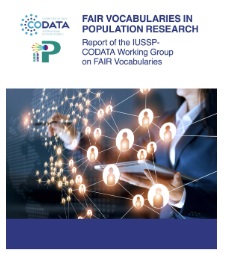
Highly relevant to the work of the WorldFAIR project and to implementing the FAIR principles in different domains was the work of the joint IUSSP-CODATA Working Group on FAIR Vocabularies in Population Research.  Ably chaired by George Alter, and marshalling subject and technical expertise from a range of partners including UN Stats, OECD, SDMX and the DDI Alliance, the WG published its concluding report in June 2023.  FAIR Vocabularies in Population Research has been particularly well received and makes recommendations for SDMX, the DDI Alliance, IPUMS, as well as IUSSP and CODATA.  

International Data Policy Committee: data policy in times of crisis and expansion for a new challenge!

The topic of data policy for emergency situations has also been an important theme for the International Data Policy Committee (IDPC).  Hosted at UNESCO on 29 March, ‘Towards a FAIRer World’ examined the underlying ethical, human rights, and humanitarian frameworks needed to support data policy during crisis situations in an open science context, respecting the FAIR (data stewardship) and CARE (ethical) data governance principles.  This event led directly to the creation of a UNESCO and CODATA Working Group to develop contributions to the UNESCO Open Science Toolkit to assist with Data Policy for Times of Crisis.  The results, in the form of guidance, a checklist, and a factsheet, will be launched at the UN World Data Forum in Medellín, Colombia in November 2024.

Under the tireless leadership of Francis Crawley, the IDPC has undergone a transformation and renewal.  The IDPC’s new Action Plan identifies seven topics for action:

  1. Data policy for data quality, reliability, and integrity
  2. Data policy for science in crisis situations
  3. Data policy for education
  4. Data policy for AI
  5. Data policy for Open Science
  6. Data policy for the publication and communication of science
  7. Data policy for specific populations

To meet this ambitious agenda, a call was issued for new membership, and the IDPC has been considerably expanded.  It now comprises over 60 leading experts from over 30 countries.  Task Groups will be formed to address each of the topics.

Global Open Science Cloud Initiative

The International Symposium on Open Science Clouds, 4-6 September 2023 marked a successful conclusion to the first phase of the Global Open Science Clouds (GOSC) initiative, which rests on a strong partnership between CODATA and the GOSC International Programme Office, hosted at CNIC.  A significant community of cooperation has been created, with representatives from the major Open Science infrastructure initiatives around the world.  There is palpable enthusiasm for continuing the cooperation and there was general agreement that this should be the first of a series of similar events.  The GOSC Steering Group is now exploring the possibility of holding an ISOSC on the African continent in early 2025.

Advancing data science and the science of data

Marking 20 Years of the Data Science Journal, the CODATA DSJ published a collection of articles and essays exploring the history of data science and the relationship between data science and the science of data.

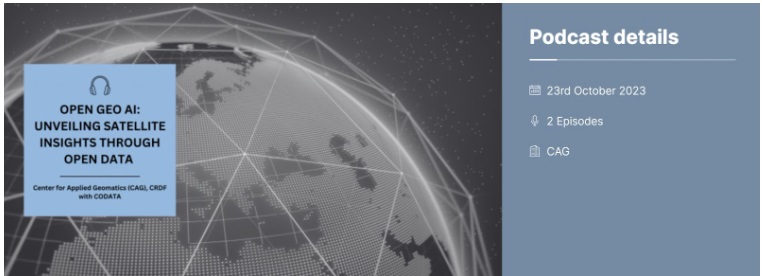
The CODATA Connect Early Career Working Group has continued its excellent work, completing a podcast series on Data for Disaster Risk Reduction, in partnership with the CODATA Task Group on FAIR Data for Disaster Risk Research, and launching a new one on Open Geo AI

Meanwhile, the CODATA-RDA Schools of Research Data Science had another successful year, running an in person school at the ICTP in Trieste and an online version in South Africa.  Both CODATA Connect and the CODATA-RDA SORDS have recently issued calls for new leadership and participants, so there will be exciting opportunities going forward.

A Festival of Data and a New Era for CODATA

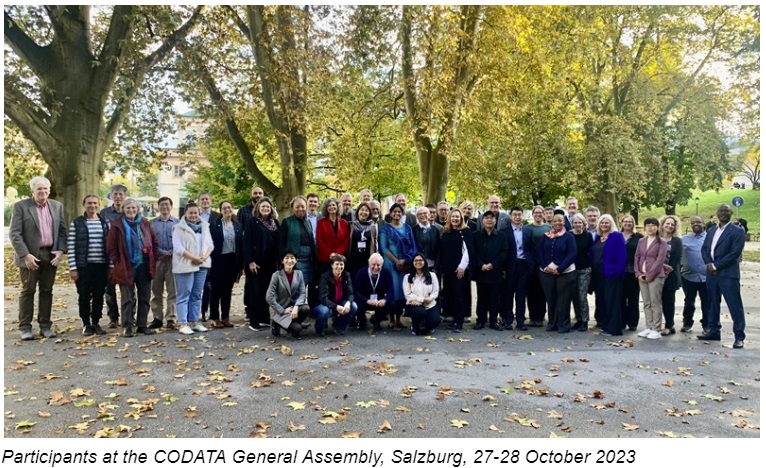
The major conference of the year was the fourth International Data Week, in Salzburg, Austria, 23-26 October.  Combining the Research Data Alliance’s Plenary Meeting and SciDataCon, organised by CODATA and WDS, IDW 2023 attracted 834 participants (702 in person and 132 online) from 48 countries.  The feedback on the plenary sessions and the breakout sessions has been excellent.  

IDW was followed by the CODATA General Assembly, 27-28 October.  The GA elected Mercè Crosas as CODATA President.  Currently head of Computational Social Sciences at the Barcelona Supercomputing Centre, Mercè brings to the role a remarkable range of experience from a career that spans astrophysics, biotech and software startups, social sciences, and Open Public Data.  A strong Executive Committee was elected, notable by considerably improved gender balance and a prominent representation from international scientific union.  Barend Mons bade FAIRwell, becoming Past President and saying that he was now ‘Findable, Accessible, Interoperable and Retired’.

The General Assembly also approved five new Task Groups, three continuing Task Groups and one new Working Group.  Alongside the strategic activities described above, each of these groups will contribute to the updated strategic plan, which was approved by the GA.  To be launched in the new year, Making Data Work to Improve our World, the CODATA Strategic Plan 2023-2027 presents our vision of a world in which science is empowered to address universal challenges through the transparent, trustworthy and equitable use of data and information. The strategy describes four strategic priorities which CODATA will pursue in order to help realise this vision.  In sum, we need to make data work to improve our world.

Looking forward to 2024!

The transition from 2023 to 2024 is certainly one of dynamic change.  CODATA has new leadership and a renewed vision.  2024 will see the compilation of the WorldFAIR project and the launch of WorldFAIR+; we will embark on the next phase of the Global Open Science Cloud initiative; the new expanded International Data Policy Committee will pursue its action plan; and the new (and renewed) Task Groups and Working Groups will set about their activities. February will also see the launch of the Data Science Without Boundaries project in which CODATA is a partner.

Important events early in the year are The Road to FAIR and Equitable Science Workshop at the Lorenz Centre in Leiden, 22-26 January, celebrating 10 years of the FAIR principles, and the FAIR Digital Object Summit in Berlin, 20-21 March.  CODATA will once again be partnering with the DDI Alliance on two workshops at Schloss Dagstuhl, to advance work on the DDI-CDI standard and on the Cross-Domain Interoperability Framework.

The CODATA Executive Committee will meet in Barcelona in October, where our new president will also host a workshop on data and AI issues for computational social sciences.  The priority event for CODATA in 2024 will be the UN Data Forum in Medellín, Colombia, where we intend to showcase a number of contributions to help make data work for global grand challenges.

The FAIR well message by CODATA Past-President, Barend Mons

Five years flew by, including a pandemic that locked us in our corners of the world for quite some time. One of the fond memories I will keep from my CODATA presidency is how the staff and the Executive Committee stand together, both in times of joint progression and in times that were challenging due to natural and geopolitical disasters. 

Before I dive in some scientific and policy content, let me first express my gratitude to the exceptional staff of the CODATA Secretariat. Simon and Hana, who operate as a Formula 1 pit stop team in good and bad times, as well as Laura and Asha…

I can see only one flaw in the team (which I share myself and probably even aggravated): they work too hard! But – they also know how to enjoy the rare moments of relaxation we had. In short, the team made my period as CODATA President a great experience and I am very proud that I have worked with such an impactful global organisation. Not that they are totally rid of me now…

My successor Mercè Crosas inherits not only the team, but also an impressive Executive Committee. The ‘ExComm’ of CODATA plays a very important and active role, and I have experienced it as a uniquely motivated group of strongly networked professionals that enables the global impact of CODATA. Mercè will be the ideal President now as she is a bridge builder. In the coming decade CODATA needs to be more than ever a consolidator and a convener of like-minded data stewards, scientists, policy makers and increasingly also the private sector.

The two new Vice-Presidents, Daisy and Richard, who both were ExComm members during my presidency and in whom I built a lot of trust, will form a great team with Mercè, other Officers and the Secretariat. 

Let me now move on to some achievements of which CODATA can be proud and reflect a bit on its future. I’d like to start with the initiative taken by our previous Vice-President Jianhui Li, named ‘The Global Open Science Cloud (GOSC)’, aimed to be a mechanism for collaboration among the Open Science Cloud-type initiatives springing up all around the world. This is an activity that is clearly in CODATA’s mandate and mission, referenced in the International Science Council (ISC) Action Plan, and continuing CODATA’s longstanding engagement with Open Science platform initiatives in Africa, South East Asia and elsewhere, as well as our major contribution to the UNESCO Recommendation on Open Science. With the success of the first International Symposium on Open Science Clouds and the creation of an International Programme Office, GOSC is now a truly global initiative, where the leadership of regional open science initiatives collaborates towards global interoperability of data and services, one of the core aims of CODATA for the coming decade.

The second one is WorldFAIR. In collaboration with GO FAIR for the FAIR Implementation Profile methodology, and with RDA as a partner, this is a true ‘DataTogether’ project, but I want to applaud Simon and the team of CODATA for their leadership in this project. I sincerely hope that the intended expansion of the project to a multi-annual programme, provisionally called WorldFAIR+, will take the approach to a next level and optimally use the global networks and mandates of the participating organisations to contribute to global convergence and interoperability of data and services. 

Finally, we jointly started a professional outlet for what we now call FAIR Enabling Resources, ranging from vocabularies used and maintained by recognised expert communities, like those collaborating in GOSC and WorldFAIR. This innovative platform is called FAIRconnect and supports the global community of data stewards, organisations and funders that take FAIR seriously. FAIR is everywhere now, but implementing it properly requires a lot of skills, tooling and resources. FAIRconnect is meant to be the place where machines and people can find FAIR enabling resources that are increasingly qualified by the professional data stewardship community. 

CODATA, with its strong, growing and executed mandate of the International Science Council is set to play a leading role in the policies and practices around good data stewardship and data-intensive science and innovation. As Mercè stressed in her candidacy statement, CODATA should continue to collaborate well with the other international data organisations.  WDS, as the ISC affiliated body dealing with high-quality data repositories and also fully committed to the FAIR principles, will be a valuable sister organisation. RDA will continue its valuable grass roots role, addressing major data issues and CODATA will continue to collaborate with the RDA Secretariat, leadership and with many of the RDA WGs. GO FAIR will play its part in networking those organisations that align with the interpretation and implementation of the FAIR principles as they were originally conceived and adopted, including CODATA, its parent organisation (ISC) and its global networks. 

And again, I hope to be able to contribute to and support several of these exciting projects as the Past-President, without being in the way of the new leadership!

FAIR Data for Disaster Risk Research – Task Group renewal proposal

Bapon Fakhruddin and Li Guoqing, co-chairs

After four terms of study, the award winning FAIR Data for Disaster Risk Research (FAIR-DRR) has focused itself on addressing enabling technology (i.e. decision support system, rapid damage mapping, etc.), scientific questions, technical challenges, and best practices of disaster data standards and applications in risk assessment across disciplines, development partners and governments.  FAIR-DRR also developed a data ecosystem by integrated other networks to work collaboratively (i.e. IRDR of UNDRR, GEO-DRR, NASA DRR working group, SDG, Disaster Statistic etc.) and applied data for cross-domain studies.  These activities closely allied with the ISC’s Decadal Programme “Making data work for cross-domain grand challenges”.

FAIR-DRR is an increasingly important activity linking and ensuring coherence of major global milestones – the Sendai Framework for Disaster Risk Reduction (SFDRR), Sustainable Development Goal (SDG), Paris Agreement for Climate Change and the New Urban Agenda (NUA)-Habitat III.

The experiences of the Covid-19 pandemic in the past year have made all disciplines keenly aware that solutions to complex and difficult problems require data to be readily assessable and actionable by machines using big data in combination with the most advanced hardware and software technologies. Our technology is advancing rapidly, however, our data systems are not able to achieve the same milestones. The fundamental enabler of data-driven science is an ecosystem of resources that enable data to be FAIR (Findable, Accessible, Interoperable, and Re-usable) for humans and machines. This ecosystem must include effective, maximally automated stewardship of data, and effective terminologies,  metadata specifications and partnerships.

Following these works the Fifth term of the FAIR-DRR task group proposed the following objectives for the 2022-2023 term.

  • Volunteer Rapid Disaster Monitoring and Mapping in collaboration with Earth-GEO
  • Enhance interdisciplinary data integration using FAIR-DRR’s sequence, partnership with other networks and documenting good practices.
  • Engage with users and sectors for greater alignment and consistency of hazard definitions, standardisation of data loss quantification and risk assessment
  • Demonstrate transdisciplinary approaches linking climate scientists, engineers and sectoral professionals to identify future emerging and complex research using data
  • Capacity building using monthly newsletters, policy papers, conference, webinars and white papers.

In this video, Li Guoqing and Bapon Fakhruddin lay out the key activities and achievements of the Task Group in the past terms, detail their objectives for the next two years and invite participation in FAIR DRR.

Proposals of the Renewed Task Group “Advanced Mathematical Tools for Data-Driven Applied System Analysis”

Fred S. Roberts, Igor Sheremet Co-Chairs

Background: Resilience of Digitized Complex Systems
Today’s society has become dependent on complex systems, enabled by increased digitization of our world and the increasing availability of vast amounts of data, that have had a great impact on virtually all facets of our lives and our societies: enabling our financial transactions, running our power grid, underpinning our transportation systems, empowering our health care, supporting the rapid delivery of supplies and materials. Yet these changes have made us vulnerable to natural disasters, deliberate attacks, just plain errors. A challenge is to develop ways to make our complex systems more resilient. We propose to continue the work of the “Task Group Advanced Mathematical Tools for Data-Driven Applied System Analysis” to address this challenge through the development and refinement of a toolkit of advanced mathematical tools.

Mathematical Tools to Enhance Resilience
Modern technological and sociotechnological systems consist of numerous critical infrastructures that are strongly interconnected, which makes them vulnerable to multiple chain or cascading destructive impacts. Vast amounts of data need to be taken into account in understanding the performance of such infrastructures and their interconnections, and understanding how to make them resilient. Mathematical tools can assist with this and in particular the Task Group will study algorithms for responding to a disruption that will enhance resilience, i.e., minimize the departure from a previous state when things settle down after a disruption.

Mathematical Tools to Design Resilient Systems
In addition to helping us understand how to bring a system back to a normal state as rapidly as possible, mathematical methods can aid us in understanding how to design systems so as to make them more resilient in case of disruption. Modern complex systems may include millions of interconnected components (humans, devices, buildings, etc.), so to design a system with a predefined level of resiliency, it is necessary to represent in some formal way a system’s structure and logic of operation, and to develop an appropriate mathematical and algorithmic toolkit that can provide for efficient search for solutions over the extra-large volumes of data associated with digitized systems in today’s era of Big Data. This is a major goal of our proposed renewed Task Group.

The Task Group’s Approach
In the pages that follow, we describe the basic components of our approach. This consists of taking advantage of a multidisciplinary team, each bringing to the dialogue their own mathematical expertise and tools (whether it be graphs and networks, simulation tools, or the theory of algorithmic decision making), developing ways to share the tools, and studying how to relate them to an organizing component designed around a multiset-based (multigrammatical framework). Pilot software for components of the improved mathematical and knowledge engineering framework will be implemented in standard platforms and carefully documented. We also describe the connection to other Task Groups, to the CODATA Decadal Program, and the collaboration with the International Institute for Applied Systems Analysis (IIASA). The plans for the renewed Task Group are modeled after the successes of our first TG, namely webinars, a workshop, scientific papers, and a research monograph.

Read the full presentation

Task Group on Data from Participatory Mapping for the SDGs

By Carolynne Hultquist and Peter Elias

The overall objective of the Task Group on Data from Participatory Mapping for the SDGs is to study data on environmental changes generated by participatory mapping projects and platforms for the specific requirements of the Result Framework proposed by the United Nations (UN) 2030 Agenda. Namely we focus on indicators associated with the Sustainable Development Goals (SDGs), especially Disaster Risk Reduction (DRR) and Climate Change Adaptation (CCA) and other high-level policy frameworks, such as the Sendai Framework for Disaster Risk Reduction and the post-2020 biodiversity monitoring framework proposed by the Convention for Biological Diversity (CBD). The alignment facilitates and encourages the inclusion of participatory mapping in the official monitoring of the SDGs and other policies at local, national, and global levels. Our group is particularly interested in evaluating the use of Participatory Geographic Information Systems (PGIS) data for underrepresented groups in relation to global environmental challenges.

Participatory GIS provides a powerful methodology in which open spatial data are contributed and in turn, accessible web-based tools enable all stakeholders to track progress at a local, regional, or even global level. However, data generated by participatory mapping projects are not yet included in the official framework to monitor the SDGs, despite the abundant literature illustrating that citizens can contribute high-quality data. Work previously supported by the CODATA–WDS TG on Citizen Science and the Validation, Curation, and Management of Crowdsourced data illustrated a wide range of actual practices. Growing support for Citizen Science also exists under the UN, with UN Environment recently supporting the establishment of a Citizen Science Global Partnership (http://www.citizenscienceglobal.org).

The TG seeks to facilitate and encourage the use of participatory mapping and Participatory Geographic Information Systems (PGIS) by envisaging a framework for evaluation and use that will facilitate the mapping of data to the specific requirements of the SDG framework. Participatory mapping is a sub-category of citizen science that involves spatial data while PGIS even more specifically involves user contributions and changes to spatial data being available in a public digital GIS environment. Surveying the platforms will provide visibility to participatory mapping data and their use in filling some of the official data gaps, while challenging the scientific community to identify targeted methods and data to tackle the remaining gaps. Sharing of ‘SDG-mapped’ data will produce benefits well beyond scientific results, strengthen the science-policy interface, and help amplify the societal impact of citizen science.

The activities of the TG will include the following tasks:

  • Survey of participatory mapping data use by national statistical offices (NSO), health, environment, and humanitarian organizations, government agencies, and community groups
  • Survey data practices of PGIS platforms/community science groups
  • Develop a framework for evaluation of participatory mapping and share lessons learned for effective practices for metadata, stewardship, validation, and management
  • Demonstrate the use of participatory mapping through case studies; e.g., underrepresented groups (slum, refugee, extreme poverty, isolated Pacific island communities) in relation to global challenges (e.g. health pandemic – COVID-19, climate change – flooding, Disaster Risk Reduction (DRR), biodiversity monitoring, etc.).
  • Explore possible ways to map existing and historic participatory mapping data to the indicators framework, including the possibility to propose new indicators inferred by the data and more relevant to people’s life and experience.
  • Explore the potential for data on human capital in volunteer activity from participatory mapping platforms; namely, data on the engagement of volunteers and subsequent learning/social/civic outcomes to support indicators. This incorporates issues of inclusiveness in monitoring and data collection, thus ensuring ‘leaving no one behind’.
  • Collaborate with UN statistical offices and other UN stakeholders to gather requirements and develop shared glossaries to support the inclusion of participatory mapping in the list of accepted ‘non-official’ data providers for the SDGs.
  • Work with the UN, including the UN Environment and Development Programmes,UN Habitat, and Convention for Biological Diversity (CBD), to continue to gain support for participatory mapping and strengthen the science–policy interface.

The outcomes of the above activities will include the study of concrete use cases that exemplifies the value of participatory mapping for a specific indicator by illustrating the creation and implementation of a participatory mapping project. The use cases will feature a complete ‘participatory mapping for SDGs’ cycle: identification of a data gap, design of the project, implementation, data collection, data analysis, and data sharing with UN officials. The final result in such an example could be a change in policy in the best-case scenario. The analysis of these use cases will help extract common practices and simple data policies that can be generalized to other projects and countries.

December 2020: Publications in the Data Science Journal


Title:
Investigation and Development of the Workflow to Clarify Conditions of Use for Research Data Publishing in Japan
Author: Yasuyuki Minamiyama, Ui Ikeuchi, Kunihiko Ueshima, Nobuya Okayama, Hideaki Takeda
URL: http://doi.org/10.5334/dsj-2020-053

Title:
Open Data Challenges in Climate Science
Author: Francesca Eggleton, Kate Winfield
URL: http://doi.org/10.5334/ds,j-2020-052

Title:
Historical Scientific Analog Data: Life Sciences Faculty’s Perspectives on Management, Reuse and Preservation
Author: Shannon L. Farrell, Lois G. Hendrickson, Kristen L. Mastel , Julia A. Kelly
URL: http://doi.org/10.5334/dsj-2020-051

Title:
Incorporating RDA Outputs in the Design of a European Research Infrastructure for Natural Science Collections
Author: Sharif Islam , Alex Hardisty, Wouter Addink, Claus Weiland, Falko Glöckler
URL: http://doi.org/10.5334/dsj-2020-050

Title:
Implementing the RDA Research Data Policy Framework in Slovenian Scientific Journals
Author: Janez Štebe , Maja Dolinar, Sonja Bezjak, Ana Inkret
URL: http://doi.org/10.5334/dsj-2020-049

Title:
Role of a Croatian National Repository Infrastructure in Promotion and Support of Research Data Management
Author: Kristina Posavec , Draženko Celjak, Ljiljana Jertec Musap
URL: http://doi.org/10.5334/dsj-2020-048

Title:
39 Hints to Facilitate the Use of Semantics for Data on Agriculture and Nutrition
Author: Caterina Caracciolo , Sophie Aubin, Clement Jonquet, Emna Amdouni, Romain David, Leyla Garcia, Brandon Whitehead, Catherine Roussey, Armando Stellato, Ferdinando Villa
URL: http://doi.org/10.5334/dsj-2020-047

Title:
Going Digital: Persistent Identifiers for Research Samples, Resources and Instruments
Author: Esther Plomp
URL: http://doi.org/10.5334/dsj-2020-046