
Nepal floods: how measuring snow in the Himalayas could help avoid future disasters
The August 2026 glacial flood that killed more than 1,000 people on the Nepal–Tibet border has renewed urgent calls to close a critical knowledge gap: scientists still do not know precisely how much water the Himalayas hold, or how fast that is changing. Home to nearly 90,000 glaciers sustaining ten major river systems, the region underpins the food, energy and water security of six nations. New measurement techniques, including airborne glacier surveys and satellite radar measurements, are emerging, but deployment remains too slow and too sparse. Researchers argue this must be treated with the urgency of a public emergency, with scientific innovation matched by coordinated monitoring networks, cross-border data sharing, and Indigenous knowledge.
Water investments, capital mobilisation, and national water compacts
Capital for water investment exists; the challenge is creating the conditions to deploy it well. Speaking to The Water Diplomat, Dr Bapon Fakhruddin of the Green Climate Fund and Sarah Nedolast of the World Bank’s Global Water Security and Sanitation Partnership argue the real bottleneck is alignment between policy, regulation and financing, and turning national plans into bankable projects. Too often the same projects are funded repeatedly without shifting the paradigm. Nedolast notes only 70% of public water funding gets spent, so building skills and preparing projects must come first. National Water Compacts show countries are committed to this. Fakhruddin sees grounds for optimism: countries are now asking about blended finance, which was not happening five years ago.
Rising sea levels could cost Australians at least $855 billion by 2100
Rising sea levels and storm surges could inflict A$855 billion in economic losses across Australia by 2100, according to landmark research from the University of Melbourne and Australian National University published in Nature Scientific Reports. Under a moderate-emissions scenario, nearly 270,000 properties and two million hectares of land are at risk, with Queensland, Western Australia, and Victoria bearing the heaviest losses. The Gold Coast alone faces A$84.4 billion in projected damages. Critically, these figures are conservative: rapid ice sheet collapse and erosion losses are excluded entirely. Researchers warn that the cheapest option available now is straightforward: stop building in the highest-risk zones.
Cross-Domain Interoperability Framework (CDIF) Version 1.1 Now Final
When questions span multiple disciplines, domain-specific standards fall short of what is needed for Findable, Accessible, Interoperable and Reusable (FAIR) data exchange. The Cross-Domain Interoperability Framework (CDIF) addresses this by establishing a common language for cross-domain metadata exchange, built on existing standards and complementing, rather than replacing, those already in use.
After the initial release of the CDIF version 1.1 Profiles in June, and a subsequent round of testing and implementation, they have now been finalised. The release will henceforth be stable, with all further issues and features addressed in subsequent versions. It is available at https://book.cdif.org/ and https://github.com/Cross-Domain-Interoperability-Framework.
Smarter, faster, better: Building New Zealand’s energy future
New Zealand’s energy infrastructure pipeline is growing, but delivery remains too slow and costly. Glen Nicholson, Chris Perks and James Russell of Tonkin + Taylor argue the problem is method, not volume: teams repeatedly recreate designs and specifications while constructors join too late, surfacing access and supply-chain problems at their most expensive.
The authors call for four shifts: publishing a visible forward programme of works; standardising repeatable design inputs; testing logistics at business case stage; and involving constructors before design closes. Resilience must be embedded from the outset, and the Edgecumbe and Canterbury earthquakes show it pays. Getting energy policy right could add NZ$22 billion a year to GDP by 2035; delivery will decide whether New Zealand captures those gains.
Cape Town’s day zero: How a water crisis built a data-driven city
Nearly a decade after Cape Town came within days of becoming the first major city to run dry, the crisis still offers lessons for fast-growing cities worldwide. Speaking on VoxDevTalks, senior city official Hugh Cole reflects that the two most effective interventions were public communications and network pressure management, not desalination or tariff hikes. More enduringly, the crisis forced Cape Town to rebuild its entire data infrastructure, embedding evidence-based decision-making across city services from water to its COVID-19 response. With climate change increasing drought risk globally, Cole’s message is clear: cities cannot afford to wait for a crisis to start treating data as a public resource.


Harmful information in disasters: Risk communication for safer decisions (Guidance note)
Misinformation and disinformation now rank as the top global risk, and they strike fastest in disasters, where confusion, fear and slow institutional communication create a vacuum for false narratives to fill. This 2026 guidance note from the United Nations Office for Disaster Risk Reduction gives communicators and practitioners a practical framework for managing harmful information, from rumours and scams to AI-generated deepfakes, across the disaster cycle. The goal is to reduce harm, not control information, and not every rumour deserves a response. Before a crisis, the work is building trust and partnerships. During one, communicators should pre-emptively warn people about manipulation tricks, communicate uncertainty with “known / unknown / next update” formats, and triage by Reach, Risk and Resonance to decide whether to act, monitor or stay silent. Afterwards, an after-action review closes the loop. The core message: slow approval processes are not just bureaucratic friction but a risk factor.
The Community Capacity Co-design Process (C3P): A framework for hyperlocal community-led disaster preparedness
Most disaster preparedness programmes hand communities a ready-made plan and tell them to follow it. This paper argues that approach misses the point: every neighbourhood has different risks, skills and histories that a one-size-fits-all curriculum often fails to reflect. The authors developed the Community Capacity Co-design Process (C3P), a seven-step framework that puts communities in the driver’s seat: rather than being trained, residents map their own hazards, identify local strengths and gaps, and design a response plan that fits their reality. Built around trauma-informed principles, it is designed to be emotionally safe for people who have already lived through disasters. Tested across seven communities in Australia, Brazil and New Zealand, the framework was well received, with 97% of participants rating activities positively. The authors acknowledge the need for longer-term follow-up to confirm whether communities sustain what they co-designed.
Changes in glacial lakes and associated risks in the China‒Nepal Himalayas
This study presents a quantitative glacial lake outburst flood (GLOF) risk assessment for the China–Nepal Himalayas (CNH), a transboundary region of 221,876 km² where trade infrastructure and local communities face growing ice-related hazards. Mapping 2,377 glacial lakes across four time periods using Landsat imagery, the authors document a 27% expansion in lake area between 1992 and 2022, driven by accelerating glacier retreat. A machine learning model, trained on High Mountain Asia GLOF records, reliably identified all nine historically documented outburst lakes in the CNH. Downstream, 260 km of roads, 9.35 km of bridges and nine hydropower facilities are exposed. Of 76 potentially dangerous glacial lakes identified, four were classified as very high risk: Peace Lake, Tilicho Lake, Jialong Co and Poiqu No.1. The framework is designed to be transferable to other data-scarce mountain regions.
When climate forces people to move: Bridging the gap between global frameworks and local action
Climate change is not just warming the planet: it is moving people and trapping others in place. Drawing on nearly a decade of field experience across the African Union, the Economic Community of West African States (ECOWAS), Fiji and the Philippines, this practitioners’ brief tackles the gap between global promises on climate migration and practice on the ground. Climate mobility sits between adaptation, disaster risk, migration and development mandates, and often falls through the cracks between them. Five lessons emerge: build climate mobility into permanent government systems rather than time-limited projects; use data that drives decisions; learn from pilots such as Fiji’s rights-based relocation guidelines; provide dedicated funding, as existing climate finance is largely inaccessible to affected communities; and sustain cross-regional peer learning. In fragile contexts such as the Horn of Africa, climate mobility cannot be separated from conflict, food insecurity and humanitarian needs.


An AI-ready, data engineering playbook for FAIR Integration in EOSC and beyond: CDIF4EOSC Workshop, London, Friday 9 October
Co-located with the Research Data Alliance 27th Plenary Meeting, this workshop showcases the Cross-Domain Interoperability Framework for the European Open Science Cloud (CDIF4EOSC) project’s effort to turn the CDIF into a practical playbook for Findable, Accessible, Interoperable and Reusable (FAIR) data integration across the EOSC. Three use cases anchor the work, ocean sciences, climate adaptation, and sustainable materials development, supported by AI-assisted FAIRification tools and partnerships including the Australian Research Data Commons. Sessions cover CDIF tutorials, federated infrastructure, AI-readiness, access rights, and data quality. In-person registration has now closed, but the event is still worth following.
Date & location: 9 October 2026 | The Long Room, Kia Oval Cricket Ground, London
International Day for Disaster Risk Reduction 2026
Held on 13 October, the 2026 International Day for Disaster Risk Reduction (IDDRR) focuses on how homes are planned, built, financed and maintained as a determining factor in whether risk is reduced or created. Under the theme “Resilience Starts at Home,” the day calls on governments, the private sector and households to act: enforcing risk-informed building codes, expanding access to affordable insurance, and ensuring early warnings and planning processes reach and include everyone. Events are being held around the world throughout October, so keep an eye out, and you can search for ones in your region on the IDDRR website
Date & location: 13 October 2026 | Global
Beijing Science Dialogue & ISC Midterm Meeting
Part of a wider gathering of more than 250 scientific organisations, the International Science Council (ISC) Midterm Members’ Meeting brings together ISC members and Fellows over two days for business and forward planning. Day one opens with category-based member forums, committee meetings, and a full plenary covering secretariat reports, member forum readouts, and reflections from the outgoing President, closing with a gala dinner. Day two centres on the incoming President’s vision for the next four years, discussion with members, and a formal handover. Optional afternoon side events cover funding challenges for international scientific unions and shaping the post-2030 UN agenda for disaster risk reduction.
Date & location: 22 – 23 October 2026 | Beijing, China
Asian Conference on Disaster Reduction 2026 (SIDEX-ACDR2026)
Held under the theme “Future-Proofing Transboundary Climate and Disaster Risk Reduction through Advanced Technologies for a Resilient Society,” this conference focuses on strengthening cross-border collaboration and using advanced technologies to improve risk assessment, early warning and disaster response across the region. Sessions include a roundtable on progress and remaining challenges in implementing the Sendai Framework for Disaster Risk Reduction (SFDRR) 2015–2030, and a technical session on applying digital transformation to disaster risk reduction in isolated and inaccessible communities. Registration is open.
Date & location: 28 – 30 October 2026 | Singapore EXPO Hall 3 / Peridot Room, Singapore
World Cities Day / Urban October
Held annually on 31 October to close out Urban October, World Cities Day 2026 focuses on urban regeneration as a pathway to adequate housing for all. This year’s theme explores how area-based regeneration, combined with strategies for housing and informal settlements, can deliver inclusive, climate-resilient neighbourhoods, with an emphasis on community-led approaches and safeguards that prevent displacement and ensure existing residents benefit. The event is hosted this year in Fuzhou, China.
Date & location: 31 October 2026 | Fuzhou, China

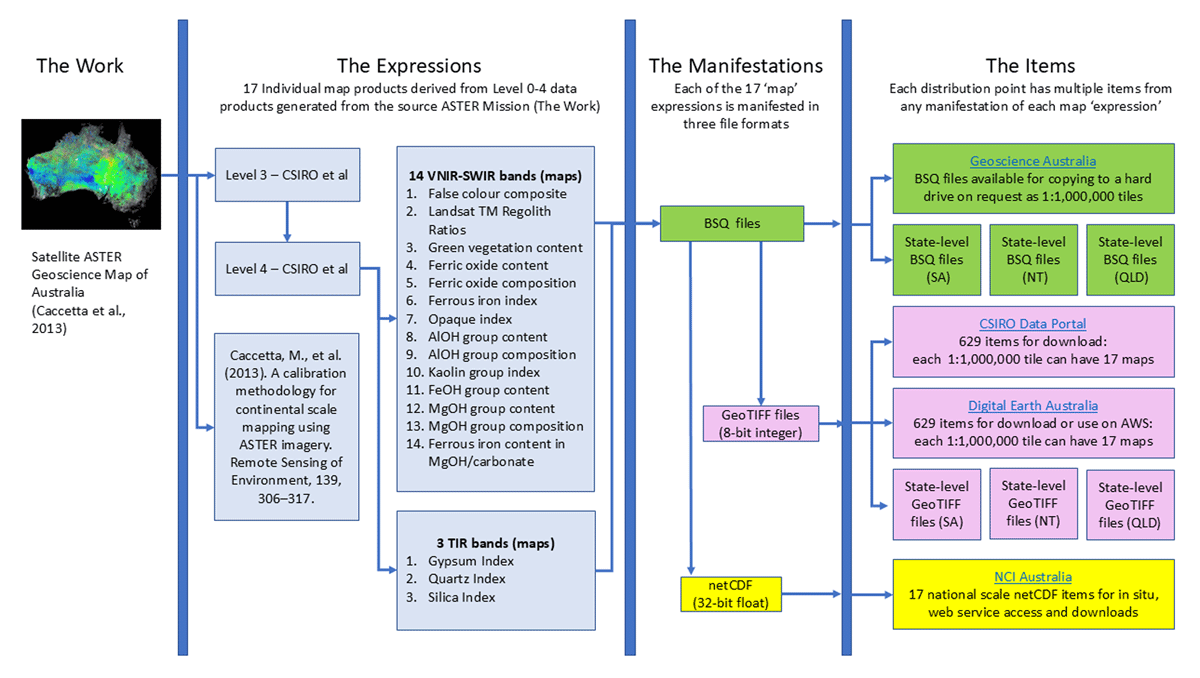 Title: What Do We Mean by ‘Version’? Actionable Guidelines for the Versioning of Data
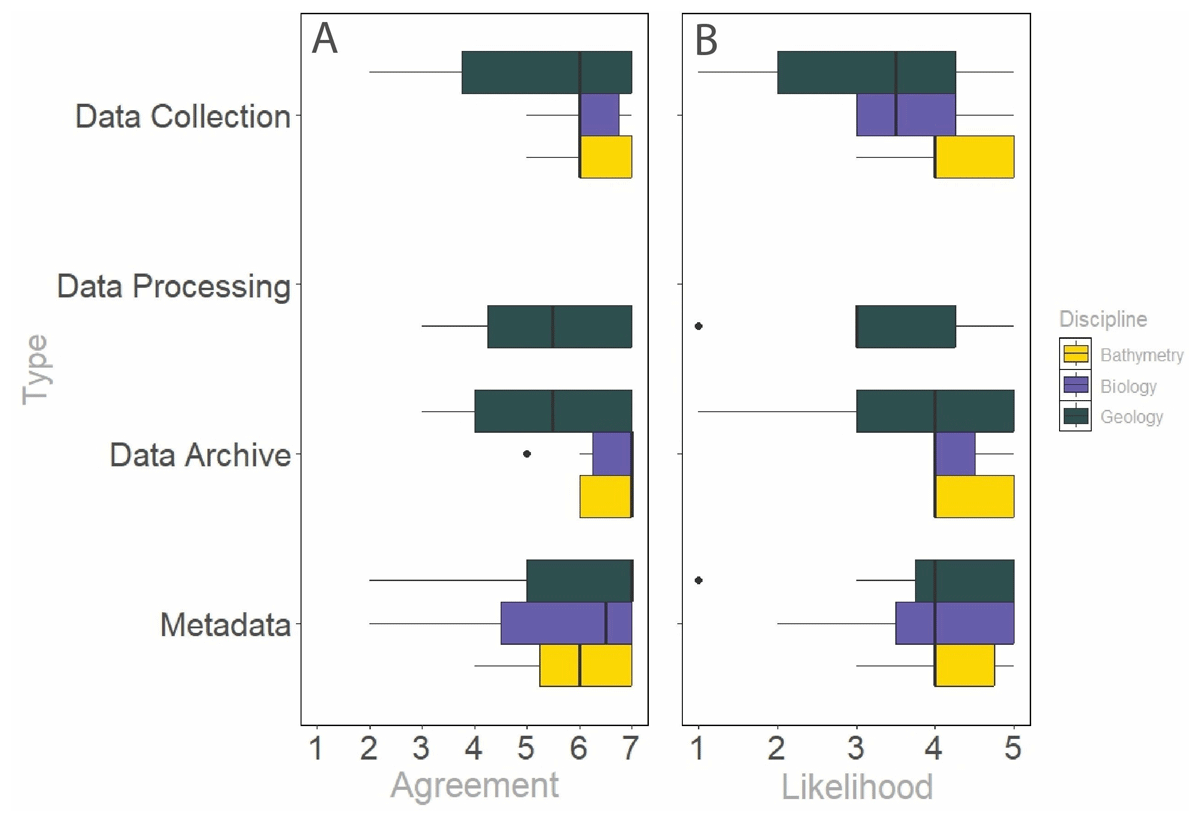 Title: Toward a Standardized Framework for Benthic Mapping Data and Metadata Integration in Florida

