Monthly Archives: May 2026

Disaster Risk Reduction and Open Data Newsletter: May 2026 Edition

El Niño likely to return: the case for early action

Climate models point to a likely return of El Niño by mid-2026. Its strength remains uncertain, but waiting for certainty can increase exposure to avoidable losses. History tells the risks; drought, agricultural collapse, and disease outbreaks, hitting poor and food insecure regions the hardest. Unfortunately, this return arrives with governments and households less resilient than before, and climate change pushing risks further. The priorities should be; turning climate forecasts into actionable ground-level decisions, early financing options, and strengthened coordination across sectors. The window for preparation and long term resilience opportunities is open.

How controlled burns can help save taxpayers billions

Indigenous nations have been clearing underbrush and trees or employing prescribed burns for centuries. A study published in Science confirms what land managers have long argued; preventing wildfires is cheaper than fighting them. Every dollar spent on clearing underbrush and trees, and prescribed burns avoided $3.73 in damage. Yet US federal policy has moved recently in the opposite direction, with suppression prioritised over prevention and one million fewer forest acres with prevention measures adopted in 2025 than 2024. Wildfire prevention can also bring benefits for ecology and recreation, however, not everyone is in support of the tactic.

Tulane researchers say Louisiana could lead global climate adaptation efforts

Louisiana is losing land faster than almost anywhere on Earth. New research published in Nature Sustainability has identified an ancient shoreline roughly 30 miles north of New Orleans, which formed 125,000 years ago when temperatures were just 0.5-1.5°C warmer than preindustrial levels. With global temperatures now approaching that 1.5°C threshold, a similar retreat may already be locked in. The authors are clear in that this does not have to be an inevitable disaster. An early start with planned, managed relocation, can transform retreat into renewal. Sweden’s city of Kiruna, currently relocating 6,000 residents due to mining activity, proves it can be done. The window to plan is open, but it will not stay open for long.

From forecasts to futures: how Ugandan communities are turning early warnings into everyday action

In Uganda’s flood-prone Kamuli and drought-affected Pakwach districts, the Water at the Heart of Climate Action (WHCA) programme is transforming how communities prepare for climate hazards. Launched in 2024, WHCA unites government agencies, the Uganda Red Cross Society, and humanitarian partners to build community-rooted early warning systems. Recognising that “people know their risks better than any map,” the programme began by listening, engaging over 3,000 participants to shape its roadmap. At the heart of the programme is training the community and trusted groups, because “when people hear advice from their church or local radio, they act faster”. Ultimately, WHCA aims to turn early warning into an everyday culture of preparedness, leading the way in learning to live with climate hazards.

Cities are rehearsing for deadly heat. Will it help when disaster comes?

In a tunnel beneath Paris, kept at a cool 18°C, schoolchildren acted to simulate the chaos of a 50°C heatwave. They faked food poisoning from spoiled refrigerated goods and carbon monoxide leaks from emergency generators. Above ground, firefighters and city officials worked through the cascading failures such heat would trigger across power, transport and health systems. The drill led to 50 recommendations now embedded in Paris’ Climate Action Plan, with a few other cities following suite. The lessons learnt being that a heat action plan on paper is not the same as knowing how to execute it under pressure, and residents (not just officials) must be prepared.

Revolution’s aftermath: population based cross-sectional study to understand the intergeneration mental health and wellbeing following the 2024 student-led uprising

When Bangladesh was gripped by a nationwide student uprising in July 2024, millions were exposed to prolonged unrest and traumatic events. This open-access, population-based study is among the first to quantify the psychological impact, using the validated PTSD Checklist for DSM-5 to assess probable PTSD among Bangladeshis aged 15 and over within three months of the uprising. The study highlights the value of applying Findable, Accessible, Interoperable, and Reusable (FAIR) principles to post-crisis mental health data and provides a rigorous, reproducible framework for studying the mental health impacts of disasters. Findings reveal high probable PTSD rates following large-scale confrontations, underscoring the need for culturally appropriate interventions and continued monitoring. As political unrest, climate shocks, and displacement increasingly overlap worldwide, interoperable mental health data is becoming essential to effective recovery and disaster risk reduction.

Open Science, Health Data and Epistemic Harms: A Multidisciplinary Reflection

Open Science (OS) promises to democratise knowledge and reduce inequalities, but does it deliver? This interdisciplinary essay from researchers at the University of Warwick argues that, particularly in health data, OS can amplify structural vulnerabilities for already marginalised communities. Drawing on a September 2025 workshop, the authors bring perspectives from law, epidemiology, disability studies and data justice to critically examine OS’s “promise and paradox.” They highlight how OS infrastructures can perpetuate Eurocentric knowledge norms, corporate capture and data colonialism. The authors call for OS to move beyond techno-optimism and instead embrace relational data governance, CARE principles, Indigenous data sovereignty, accessibility as a core principle, and stronger accountability frameworks, ensuring openness genuinely serves collective benefit rather than reinforcing existing power structures.

Preparatory phase of large earthquakes illuminated by unsupervised categorization of earthquake catalog features

Predicting large earthquakes remains a major scientific challenge due to the complexity and variability of fault systems and their preparatory processes. This study applies an unsupervised machine learning framework to seismicity catalogues to identify patterns that may signal the lead‑up to large earthquakes. For earthquakes with a clear preparatory phase, certain clusters of smaller earthquakes became increasingly localized and interconnected in the lead-up to the main event. These “critical” patterns reflected higher levels of strain release and earthquake interaction compared to background seismicity. Importantly, the method did not detect the same signals before earthquakes with no clear preparatory phase, suggesting it may help distinguish when meaningful precursory activity is occurring. The researchers say the approach shows promise for improving operational earthquake forecasting, while also highlighting that not all earthquakes exhibit detectable warning patterns beforehand.

Disaster risk planning in an evolving risk landscape: Barriers and enablers in the integration of land use and preparedness actors

Integrating land use planning with preparedness actors such as fire and rescue services and crisis management is becoming increasingly important in disaster risk management. Evolving risks linked to climate change, urban densification, and complex hazard interactions require both preventive and resilience‑based approaches. Four key themes were identified shaping collaboration: institutional structures and data sharing, alignment of priorities and risk perceptions, resource availability and capacity, and role clarity and mutual understanding. Evidence shows that fragmentation, unclear responsibilities, limited information exchange, and competing priorities constrain effective coordination across these actors. As responsibilities for prevention and response remain organised across separate systems, insufficient integration can weaken feedback between planning and operational practice, limiting the ability to reduce risks and adapt to emerging threats over time.

Reinterpreting disasters and urban resilience in the Anthropocene: Disaster management or transforming with disasters?

Disasters are increasingly shaped by the conditions of the Anthropocene, where human-driven environmental change is producing more frequent, interconnected, and unpredictable events. The analysis argues that disasters can no longer be understood as discrete, natural occurrences, but as chronic, systemic processes arising from complex interactions between social and ecological systems. In this context, traditional disaster management approaches—based on control, prediction, and recovery—are increasingly limited by uncertainty and the breakdown of stable cause‑effect relationships. Instead, the study highlights a shift toward “transformative resilience,” where disasters are understood as potential catalysts for systemic change. This approach emphasises reconfiguring socio‑ecological systems, addressing structural drivers of vulnerability, and enabling cities to reorganise and evolve in response to disruption, rather than returning to pre‑disaster conditions.

Emergency Preparedness, Disaster Displacement and Climate Migration

Climate‑related hazards are reshaping patterns of human mobility, with preparedness emerging as a key factor determining whether displacement is safe, planned, or chaotic. The analysis shows that linking risk assessment, early warning systems, and pre‑arranged financing enables earlier and more effective action, reducing losses and distress migration. Inclusive risk communication and evacuation planning are critical to ensuring that vulnerable populations can move safely or access protection in place. The duration and impacts of displacement are strongly influenced by the pace of recovery, including housing reconstruction and access to social protection. Over the longer term, combining adaptation measures that support habitability with safe, voluntary migration pathways is identified as essential to strengthening resilience under increasing climate pressures.

16th UCL Risk & Disaster Reduction annual conference | UCL Risk & Disaster Reduction

How do cities confront emerging risks and build more resilient futures? The 16th UCL Risk and Disaster Reduction Annual Conference brings together researchers, practitioners, and policymakers across disaster risk — from multi-hazard modelling to AI ethics in crisis management. The programme features a keynote from UNDRR’s Loretta Girardet, and sessions span from engineering to social science, as well as an explorative hackathon reimagining future cities.

Date & location: 24 June 2026 | UCL, London, United Kingdom

2nd Bonn Risk Finance Dialogue

Vulnerable communities remain dangerously under protected as climate risks intensify and financing gaps widen. The 2nd Bonn Risk Finance Dialogue will bring together practitioners, researchers, and policymakers to tackle this challenge head-on. Structured around three themes; scaling up policy and financing frameworks, scaling out financial protection solutions, and scaling deep through stronger delivery systems, the Dialogue aims to advance climate and disaster risk finance and insurance (CDRFI) for those who need it most. The event organisers welcome contributions to the Dialogue.

Date & location: 17-18 June 2026 | Haus der Evangelischen Kirche (EViB), Bonn, Germany

Integrating Risk Reduction and Risk Finance: From Strategy to Implementation

National financing for Disaster Risk Reduction (DRR) remains insufficient, fragmented, and too disconnected from implementation processes. Yet countries are increasingly seeking practical tools to change that. A workshop will be held to explore emerging solutions, including the Climate Insurance and Resilience Programme (CIRP) and the G20 Compendium on Risk Transfer Instruments, and assess their real-world applicability. The workshop will strengthen national DRR financing strategies, advance anticipatory financing, and gather country feedback to shape joint technical guidance. This workshop is a complementary event to the 2nd Bonn Risk Finance Dialogue event.

Date & location: 17 June 2026 | Haus der Evangelischen Kirche (EViB), Bonn, Germany

CESSDA “Future-Ready Social Science: Data, Policy, and Impact” (50th Anniversary)

As digital transformation, open science, and AI reshape research, the need for trustworthy, interoperable, and policy-relevant social science data has never been greater. To mark its 50th anniversary, CESSDA, the Consortium of European Social Science Data Archives, convenes researchers, data experts, policy actors, and funding partners from across Europe and beyond to reflect on five decades of collaboration and chart a shared vision for the future. Anchored in CESSDA’s strategic pillars of Data, People, and Landscape, the conference creates space for bold questions and stronger synergies, advancing a European Research Area where data is as open as possible and as closed as necessary.

Date & location: 15–18 June 2026 | Bergen, Norway

CODATA-RDA School of Research Data Science

Contemporary research cannot be done effectively without strong data skills, yet access to quality training remains unequal. The CODATA-RDA School of Research Data Science offers early-career researchers and professionals from Africa and South America a self-paced, online curriculum covering ten themes in research data science, from technical skills to responsible research practices. Delivered through video lectures, exercises, and live question-and-answer sessions, the school equips participants with the foundational skills needed to work with data effectively in 21st-century research. Open to master’s students, postdoctoral researchers, and professionals, this initiative reflects CODATA’s commitment to building an inclusive, globally connected research data community.

Date & location: 1 June – 17 July 2026 | Online (short course)

Disaster Risk Reduction and Open Data Newsletter: April 2026 Edition

Why disaster risk financing must evolve to meet the climate crisis

Climate-related disasters are increasing in frequency and severity, while global adaptation and resilience finance remains largely reactive and far below estimated needs. Evidence shows finance flows often rise only after disaster losses occur, reinforcing a cycle of response rather than prevention. The analysis highlights mismatches between current adaptation funding and projected requirements, alongside findings that policy uncertainty discourages private investment. Financial instruments such as parametric insurance, catastrophe bonds, and blended finance are used in regions including the Caribbean, Pacific, and parts of Asia, but remain underutilised globally. Examples from Mexico, Indonesia, Kenya, and the Philippines show how pre-arranged disaster risk financing enables faster, more predictable responses to climate shocks.

CDIF4EOSC: watch this space!

CODATA has advanced with the Grant Agreement Preparation process with the European Commission for CDIF4EOSC, a three‑year project aimed at strengthening cross‑domain interoperability within the European Open Science Cloud (EOSC). Building on the existing Cross‑Domain Interoperability Framework, the project will extend recommendations through profiles, guidelines, and use‑case examples to produce an actionable playbook supporting FAIR integration across EOSC and related data spaces. CDIF4EOSC will promote a FAIR‑by‑design approach to digital objects, supported by AI‑assisted FAIRification tools and tested through use cases in ocean science, climate adaptation, and safe and sustainable materials. With a total budget of €8 million, the project brings together a large European consortium and targets direct integration with EOSC Federation Nodes and Common European Data Spaces.

Unlocking the Economic Dividend of Resilience Investment

Resilience spending isn’t just “avoiding future damage”—it can be an economic stimulus right now. Resilience investment is often sold as insurance against tomorrow’s disasters. Tonkin + Taylor says that framing is too narrow—and it slows action when budgets are tight. Instead of counting only “avoided losses” from floods, slips, or coastal inundation, it urges decision-makers to capture the “triple dividend”: preventing damage, unlocking economic and development gains (jobs, growth, business confidence), and delivering social and environmental benefits that accrue even if no disaster strikes. It points to New Zealand’s long history of flood protection, noting assets valued at $3.6b delivering $13b in benefits each year. With public funding constrained, it backs beneficiary‑pays and value‑capture tools, and faster property-level upgrades supported by insurance and low-interest finance.

Systemic risk is the hidden tax on growth: insurance can help

Systemic risk is increasingly shaping economic growth as climate shocks, geopolitical disruption, public‑health crises and technology concentration collide. The article argues these risks often begin invisibly, raising capital costs, discouraging innovation and weakening resilience until they cascade into crises, as COVID‑19 demonstrated. Climate disasters are widening insurance “protection gaps” as coverage retreats in higher‑risk areas, affecting property markets and investment. Supply‑chain shocks and threatened shipping choke points add volatility and inflation pressure, while AI’s reliance on concentrated data centres and semiconductor supply chains creates fragile failure points. The proposed shift positions insurance as a growth stabiliser through risk modelling and risk‑sharing, early warning, incentives for adaptation, and public‑private risk pools.

Building the Market for Resilience: A new opportunity for financial institutions

Insured losses from natural catastrophes have exceeded $100 billion for six straight years. Banks in emerging markets are already seeing the consequences through higher loan defaults, weakened collateral after repeated storms, and uninsured small businesses. Adaptation is no longer primarily a government responsibility, as firms are investing in resilience to protect assets, operations, and supply chains. With resilience solutions markets growing, financial institutions can accelerate the shift by integrating physical climate risk into credit and investment decisions, financing resilience through debt and equity, and using tools like contingent finance and resilience bonds. As more countries publish National Adaptation Plans and clearer taxonomies emerge, early-mover banks could help unlock a $130 billion-a-year resilience financing opportunity by 2030.

AI and drones team up to find climate-resilient wheat

AI and drones are helping wheat breeders find varieties that stay productive as weather becomes more erratic. A 2026 study tracked 64 durum wheat varieties in Mediterranean conditions, comparing irrigated plots with rainfed fields. Drones carrying multispectral and thermal sensors captured early signs of plant stress and moisture, and AI models used that data to predict not only yield but “production stability” across good and bad seasons. The key finding challenges a common assumption: staying green late into the season did not reliably boost yields and could reduce stability. Instead, the most resilient performers showed vigorous early growth and earlier maturation, helping them avoid late-season heat and drought.

How AI’s language barrier limits climate disaster responses

AI is increasingly used by governments and organisations to scan social media for early warning signals during floods, heatwaves and other climate emergencies, but a major blind spot is language as it’s actually used online. Posts often rely on code switching, slang, Pidgin, sarcasm, and locally shared cues of urgency, so an AI trained on western‑centric, standard English data can misread a genuine call for help as casual commentary. That cultural fingerprint in training data can systematically diminish underrepresented voices in developing countries, with real consequences when misinterpretation delays response and puts lives and property at risk. The fix is practical: train and test models on real regional posts, and build systems that recognize cultural context and urgency signals.

Integrating climate adaptation and peacebuilding: capacity development in climate and conflict-affected communities

Communities affected by armed conflict face heightened vulnerability to climate change due to displacement, infrastructure damage, restricted mobility, and limited access to land and water. Climate change adaptation and peacebuilding interventions both seek to reduce vulnerability and build resilience, yet they have largely developed in separate policy and practice domains. Using a two‑stage case study from a conflict‑affected region of Colombia, based on semi‑structured interviews and document analysis, the analysis identifies areas of convergence and divergence between these approaches. Six domains of potential synergy emerge— access to information, education, social networks, employment, environmental management, and healing. Two notable gaps remain, relating to protection and safety, and socio‑cognitive factors such as social identity and risk perception. An integrated framework is proposed to better align adaptation and peacebuilding efforts and reduce reinforcing cycles between climate vulnerability and violent conflict.

Landscape of climate finance in Ethiopia

Ethiopia has built an ambitious climate policy platform since launching its Climate Resilient and Green Economy strategy in 2011, aiming to combine rapid growth with low‑carbon development and stronger resilience. But the report’s 2019/20 mapping shows climate finance remains far below need: around USD 1.7 billion a year was committed, just 7% of estimated requirements of USD 25.3 billion and under 2% of GDP. Funding skews toward adaptation at 56% compared with 38% for mitigation, and flows are dominated by international public finance, mostly delivered through grants. To close the gap, the report argues for stronger tracking and transparency, more blended finance and PPP approaches to de-risk investments, central-bank reforms to unlock green lending and capital markets, and long-term capacity support so sub-national and non-state actors can build investable pipelines.

Gender in climate and disaster risk finance and insurance in Bangladesh

Bangladesh’s escalating climate hazards are intersecting with entrenched gender and social inequalities, and the paper argues CDRFI will not deliver fair outcomes unless inclusion is built into the financial architecture, not added on through pilots. It finds Bangladesh has extensive policies, but implementation is held back by weak coordination across ministries, limited gender-relevant tracking and data, and market rules that still make access harder for women—especially when customer data are not disaggregated and enrolment processes rely on documentation many women do not hold. The recommendations focus on enforceable levers: linking budget release to gender markers and results, strengthening legal and regulatory requirements for gender-responsive product design, using microfinance networks as a scalable delivery channel, investing in awareness and trust-building, and creating a standing coordination mechanism so finance, data, and delivery systems work together.

Introduction to financial assessments to address climate change

Turning climate plans into action increasingly depends on knowing what measures cost, where the money can come from, and how to shift finance at scale. UNDP’s financial assessments are designed to estimate the incremental, direct funding required to implement climate measures, identify the size of the financing gap, and map potential sources of public and private finance. The aim is to help countries move from targets to delivery by strengthening budget planning, aligning ministries around a shared investment pathway, and building evidence that can support policy reform and stronger climate finance proposals. The assessments can be applied to different national goals, including NDCs and long-term strategies, and are positioned as a repeatable planning tool that supports implementation decisions as well as engagement in international climate finance and negotiations.

AI for Social Risk Forecasting and Explanation: The Power of Machine Learning–Based Social Risk Models

AI is increasingly being used to forecast social risks that can destabilise fragile and climate-affected settings, including conflict, displacement, and crime. The article presents three proof-of-concept machine-learning models that combine satellite imagery, text analysis of news and social media, and economic, climate, and geospatial indicators to detect changing risk patterns and generate usable proxies where official statistics are limited. Reported out-of-sample accuracy ranges from 63–76% for conflict prediction and 70–74% for population change, and the explanatory signals most associated with elevated risk include politically sensitive language, economic pressure and price shifts, climate stress, and changing social perceptions. The takeaway is that social-science-informed AI can complement conventional analysis by improving monitoring, enabling earlier action, and supporting more targeted allocation of limited resources.


Dataverse Community Meeting 2026

The Dataverse Community Meeting 2026 has announced it will convene in Barcelona, Spain. This year’s theme, “Advancing Data and Dataverse: AI, Interoperability, and Sensitive Data”, highlights key areas of interest for data professionals and researchers. The three focus areas are building AI solutions for data to enhance repository workflows, data quality, and AI-ready data; improving interoperability to enable richer linkage and reuse across datasets, domains, and platforms; and expanding support for sensitive and restricted data.

Date & location: 12-15 May 2026, World Trade Center, Barcelona, Spain

TWO WEEKS TO GO – Call for participation: UNESCO and CODATA survey on open science for data policy for times of crisis

UNESCO, in collaboration with the International Science Council’s Committee on Data (ISC CODATA), has launched a global survey to assess how organizations are implementing data policies for times of crisis, in alignment with open science principles. The survey builds on the Data Policies for Times of Crisis Facilitated by Open Science (DPTC) resources as part of the UNESCO Open Science Toolkit. By participating in this survey, organizations contribute to shaping global dialogue and advancing coordinated, ethical, and effective data management for future crises.

The questionnaire takes approximately 10 – 15 minutes to complete. The deadline to submit your response is 11 May 2026.

GEO Symposium & GEO-21 Plenary

The 2026 GEO Symposium and GEO-21 Plenary explore how Earth Intelligence can drive transformative, resilient solutions for people and the planet at a pivotal moment in the implementation of GEO’s Post-2025 Strategy. This year’s theme is “Investing in Earth Intelligence for a Resilient Future”. It will convene governments, space agencies, research organizations, private sector innovators, and development partners.

Date & location: 26-28 May 2026, World Meteorological Organisation, Geneva, Switzerland

Global Water Summit 2026

The need for a water transition is easy to endorse. Delivering it is harder. Climate extremes, rising energy demands, and pressures on capital mean the systems we rely on must adapt — quickly. New technologies and AI will tackle such challenges, even as they place new demands on water. How do we strike a balance? This year’s Global Water Summit is about turning that question into action — adapting faster, smarter, and at scale

Date & location: 18-20 May 2-26, Madrid Marriott Auditorium, Spain

WDS-ECR Co-Chair Opportunity: Apply Now! 

The World Data System Early Career Researcher Network (WDS-ECR) invites applications for a co-chair position. The selected candidate will join two current co-chairs in leading a global network dedicated to promoting best practices in research data management and fostering professional growth among early-career researchers. This is a three-year term, starting in July-August 2026, offering an excellent opportunity for early-career data stewards who aspire to make an impact on the international stage.

Application deadline: 31 May 2026

CALIBRATE 2026: Africa’s Climate Entrepreneurship Summit

Calibrate 2026 invites researchers, innovators, and practitioners to contribute to Africa’s premier climate entrepreneurship summit through research papers and innovation showcases. Visit the website for thematic areas of each. Selected papers will be considered for publication in the Journal of Nature-Based Solutions and Innovations (JNSI), while outstanding innovations will be featured in Nature-Based Solutions Magazine and eligible for the pitch competition with investment opportunities.

Abstract submission due 30 April 2026, full paper deadline due 11 May 2026

Date & location: 21-23 May 2026, Accra, Ghana

10th International Conference on Flood Management (ICFM10)

The International Conferences on Flood Management (ICFM) stand as a distinguished global platform committed to addressing and advancing the field of flood management. The theme for this years conference is “Adapting to Global Change: Innovative Approaches to Flood Management and Resilience”. The ICFM brings together experts, practitioners, policymakers, and researchers from across the globe to deliberate on contemporary challenges and innovations in flood management.

Date & location: 20-22 May 2026, London, Ontario, Canada

April 2026: Publications in the Data Science Journal

Title: Open Science, Health Data and Epistemic Harms: A Multidisciplinary Reflection
Author: Tatenda Chatikobo, Frances Griffiths, Nikita Hayden, Gary Leeming, Ankita Mishra, Eva Morris, Luca Schirru, Nathanael Sheehan, Andrew Williams, Sharifah Sekalala
URL: http://doi.org/10.5334/dsj-2026-015
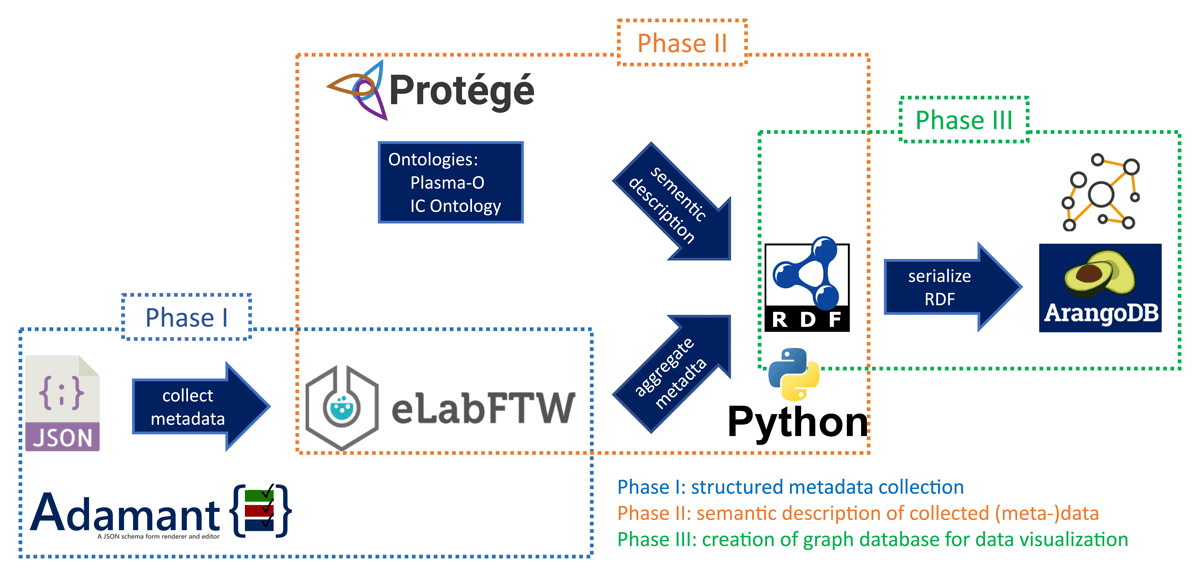
Title: FAIR Data Workflow Implementation and Assessment for Ion-Exchange Chromatography in Plasma Science
Author:  Robert Wagner, Ron Henkel, Kristina Yordanova, Dagmar Waltemath, Markus M. Becker
URL: http://doi.org/10.5334/dsj-2026-014