Crises rarely wait for institutions to be ready for them. Floods, epidemics, earthquakes and displacement events unfold across borders, sectors and time zones, and the organisations that respond to them succeed or fail depending on whether they can find, trust and share the right data fast enough. That simple observation sits at the heart of the Data Policies for Times of Crisis (DPTC) Toolkit, developed jointly by UNESCO and the International Science Council’s Committee on Data (CODATA), and it was the common theme of two sessions to which CODATA contributed at the 2026 Global Conference of the International Decade of Sciences for Sustainable Development (IDSSD) in Paris: the ISC session on 16 July ‘Resilient Science for Resilient Societies: Protecting Knowledge and Scientists in Times of Crisis’, and the dedicated UNESCO–CODATA thematic session on 17 July ‘Data policies for times of crisis: Enabling open science for coordinated response’.
Two sessions, one message
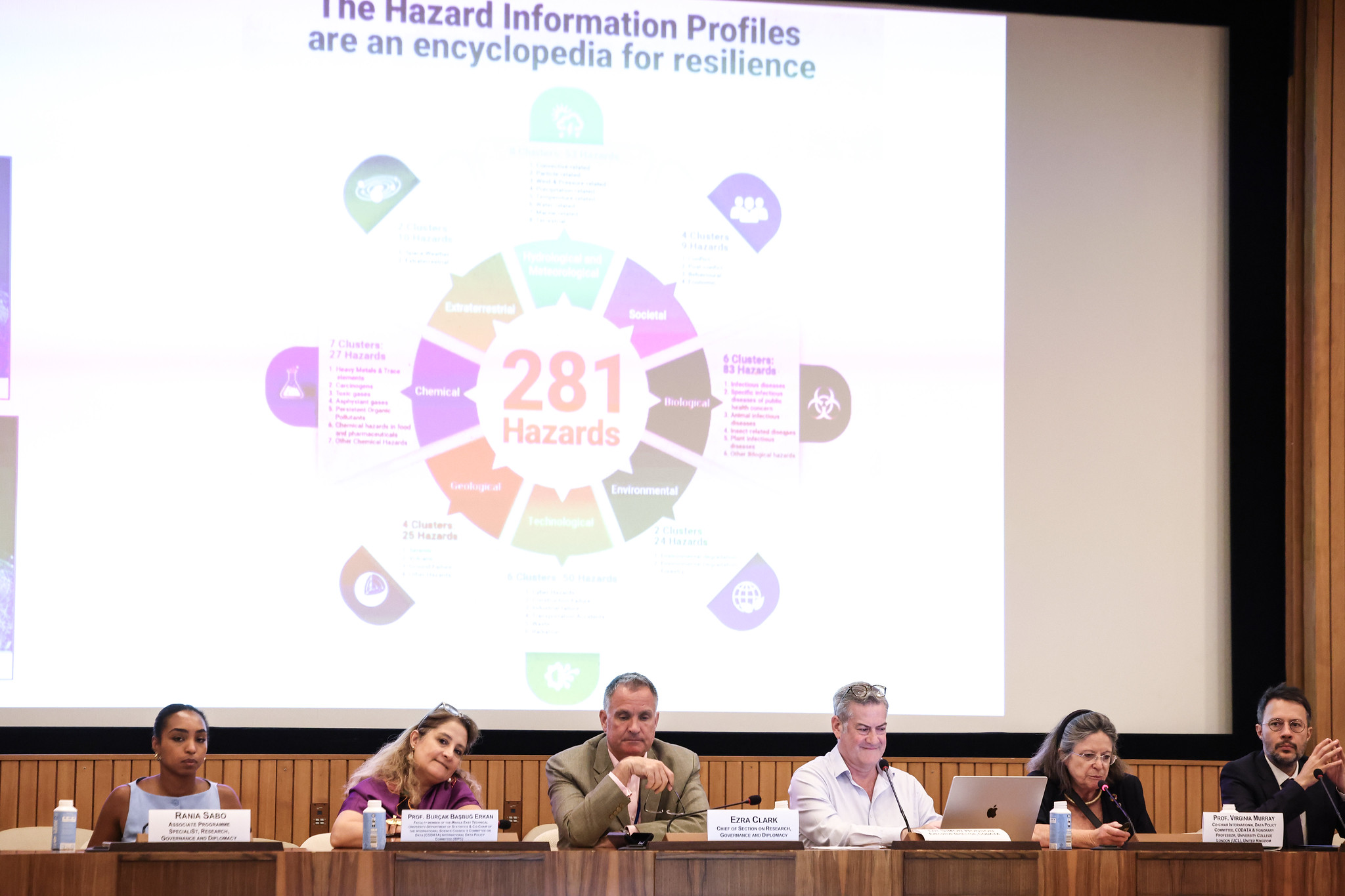 CODATA’s DPTC work was presented first at the ISC session on 16 July. In the first panel, Prof Virginia Murray, as chair of the UNDRR-ISC HIP Steering Committee, shared the UNDRR-ISC Hazard Information Profiles update 2025 (HIPs). In the second panel, Prof Burçak Başbuğ gave examples from the recovery process after the 2023 Kahramanmaras earthquakes.
On 17 July, the thematic session at UNESCO Headquarters brought the need for data in times of crises (DPTC) message to a dedicated 75-minute hybrid slot in Room XI, opened by Dr Ezra Clark (Chief of Section, Research, Governance and Diplomacy, UNESCO) and closed by Dr Simon Hodson (Executive Director, CODATA). Together, the two sessions made the case that open science is not an abstract ideal for times of crisis — it is operational infrastructure, and the DPTC Toolkit is one attempt to help build it.
The DPTC Toolkit itself — a factsheet, a guidance document and a checklist — was published as part of the UNESCO Open Science Toolkit in June 2025. It is grounded in the 2021 UNESCO Recommendation on Open Science and aligned with the FAIR (Findable, Accessible, Interoperable, Reusable), CARE (Collective benefit, Authority to control, Responsibility, Ethics) and TRUST (Transparency, Responsibility, User focus, Sustainability, Technology) principles — three frameworks that, taken together, ask not only whether data can be shared, but whether it should be, and on whose terms.
Putting the Toolkit to the test: the first global survey
The centrepiece of the 17 July session was the presentation of findings from the first global UNESCO-CODATA survey on the implementation of data policies for times of crisis, conducted between March and June 2026 and presented by Ms Rania Sabo (UNESCO) and Prof Burçak Başbuğ Erkan (METU Department of Statistics; Co-Chair, CODATA International Data Policy Committee).
The response itself was a small victory for the open science community the DPTC Toolkit is trying to serve: 146 completed responses from 60 countries, spanning all five UNESCO regions. Academic and research institutions made up the largest share of respondents (79), followed by the public sector (28), non-profit and civil society organisations (14), the private sector (12), international organisations (7) and others (5) — a spread that suggests crisis data governance is very much everybody’s problem, not a niche concern for any one sector.
One figure captured the gap between principle and practice neatly: 78% of respondents believe a crisis-data checklist would be beneficial, but only 22% report already having one. The open-ended responses filled in why. Respondents converged on capacity building and training (43%), risk governance (40%), interoperability and real-time systems (38%), ethics, TRUST and CARE (36%), operationalisation (36%), and funding and infrastructure (33%) as the areas most in need of attention.
Behind the percentages were voices that made the gap concrete.
- From Universidad Nacional, Costa Rica: the need is for training support and for researchers to be trained “in best practices for risk management.”
- From Arba Minch University, Ethiopia: “the lack of standardized data-sharing protocols across countries and agencies often delays coordinated responses.”
- From Loughborough University, UK: the opportunity is “to move from high-level principles to operational, crisis-ready data governance frameworks.”
Other respondents were even blunter. A contributor from a library and information centre in Hungary put it plainly: “we would need more money, more staff — not more regulations and plans.” The Disaster Health Institute in the United States called for academics and researchers to “always be paired with practitioners and field experts.” And from the University of Khartoum, Sudan, came perhaps the sharpest reframing of the whole exercise: the realistic entry point is not “open science” as such, but “data survival and continuity under crisis conditions.”
Three priorities, and a panel to match
From this evidence, three actionable priorities emerged: common standards (48%), training and capacity building (38%), and the value of case studies (36%) — using real examples to test whether the checklist actually holds up in practice, not just on paper. The panel that followed, moderated by Dr Simon Hodson, put these priorities in front of practitioners who live with them daily: Dr Animesh Kumar (UNDRR, Bonn, joining online), Mr Manuel Ricardo Galindo Moreno (UNESCO), Dr Paola Gonzalez Vargas (Universidad Nacional, Costa Rica, online) and Prof Virginia Murray (Co-chair, CODATA International Data Policy Committee; UCL). The discussion translated the survey’s findings — capacity gaps, interoperability gaps, resourcing gaps — into the harder question of what happens next.
Next steps
The session’s expected outcomes point in a consistent direction: identifying priority areas for capacity-building, policy development and pilot implementation tied to the DPTC Toolkit, and strengthening collaboration among the policymakers, researchers, international organisations and practitioners who will need to use it under pressure. The survey results give CODATA and UNESCO an evidence base — rather than an assumption — for where to focus that work: on common standards, on training people rather than just publishing guidance, and on testing the checklist against real case studies rather than treating it as finished. It is intended to explore these priorities through case studies and pilots, which will test the checklist, provide further feedback, and allow the toolkit to be further refined and extended.
A personal reflection, by Mehmet Ali Erkan
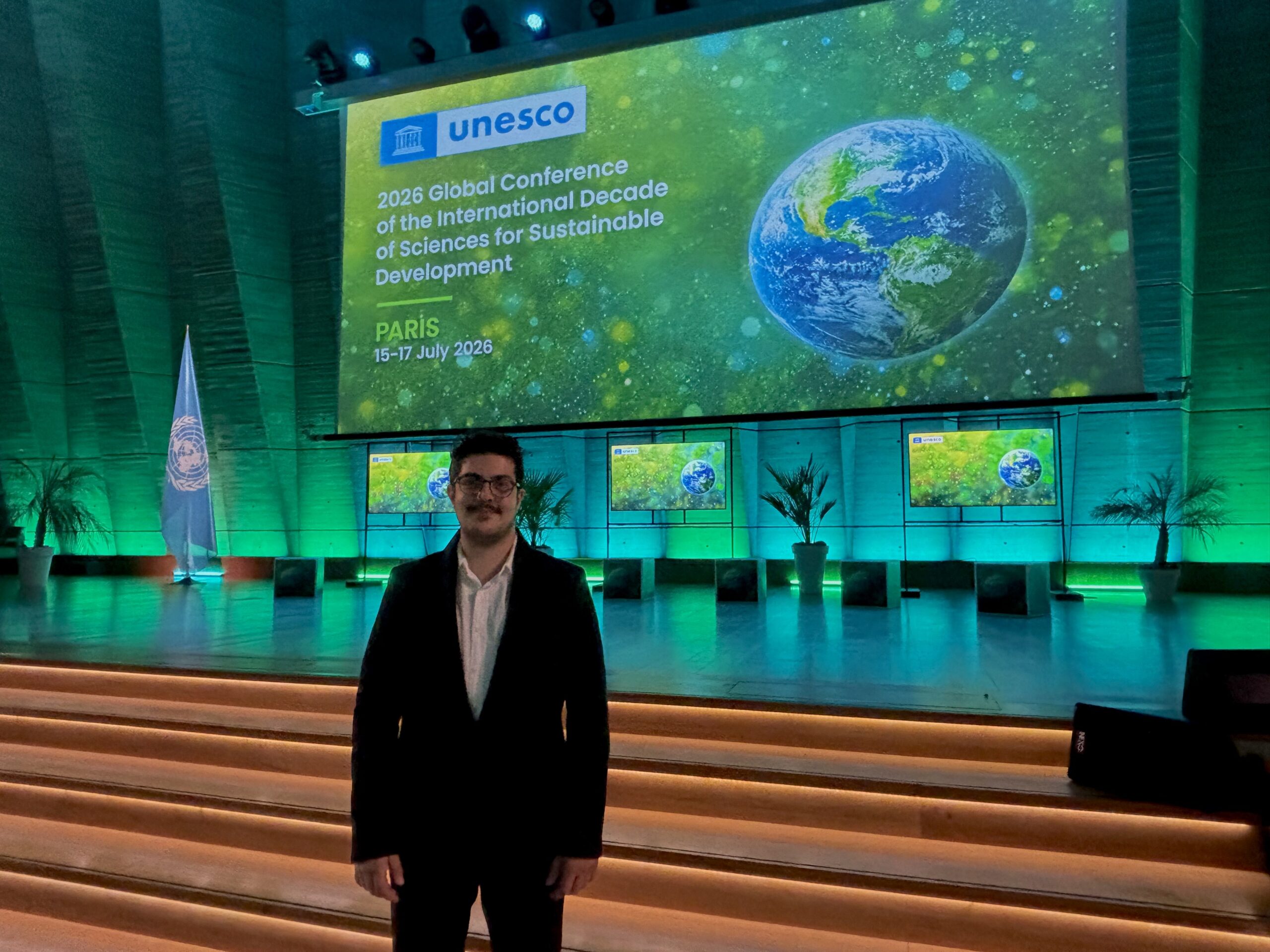
I took part in the 2026 Global Conference of the International Decade of Sciences for Sustainable Development as an Early Career Researcher, with my participation competitively selected and supported by CODATA using its own funds and an Early Career Researcher travel grant from the International Science Council. I am sincerely grateful to CODATA and the International Science Council for the support that made it possible for me to be in the room at UNESCO Headquarters for these sessions, rather than reading about them afterwards.
My own contribution to the DPTC work was on the analysis side. I reviewed the 146 survey responses quantitatively and qualitatively, and read closely through the open-ended answers to see, in respondents’ own words, where crisis data governance is still falling short. I sat with that material for weeks before the conference, noticing the recurring calls for training, for common standards, and for someone to simply pair researchers with practitioners in the field, and that made the session itself land differently. The numbers and quotes I had already spent time with were suddenly being discussed live, by the people the survey was written for.
That is, I think, what this work is really about. Building a sustainable and equitable future takes more than scientific knowledge on its own. It takes the ability to share data responsibly, collaborate across borders, and translate evidence into action. Being able to contribute to that translation, in a small way, through the DPTC survey is something I am genuinely proud of, and I hope it is only the start of my involvement in this kind of work.
Thank you
We are grateful to UNESCO’s Open Science Team, to the panellists and moderators who gave their time in Paris and online, and to the 146 respondents across 60 countries who took the time to tell us, in their own words, what crisis data governance still needs. We look forward to turning these priorities into the next phase of the DPTC Toolkit’s work.
About the authors
- Professor B. Burçak Başbuğ, Co-Chair International Data Policy Committee, CODATA and Faculty Member at the Middle East Technical University (METU), Ankara-Türkiye
- Dr. Simon Hodson, Executive Director of CODATA, the Committee on Data of the International Science Council.
- Professor Virginia Murray, Co-Chair International Data Policy Committee, CODATA and Chair of the UNDRR-ISC Hazard Information Profiles 2025 update
- Ms Rania Sabo, Associate Programme Specialist, Research, Governance, and Diplomacy Section, Sciences Sector, UNESCO
- Mehmet Ali Erkan, PhD Researcher, Research and Teaching Assistant in the Department of Statistics at the Middle East Technical University (METU), Ankara-Türkiye