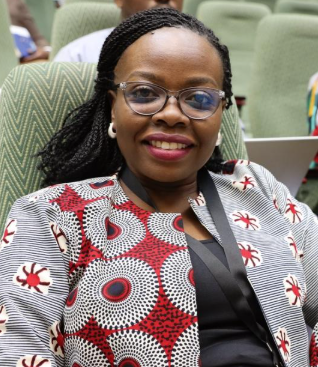
 This is the eighth in the series of short statements from candidates in the coming CODATA Elections at the General Assembly to be held on 17-18 October 2025. Agnes Kiragga is a candidate for the CODATA Executive Committee as an Ordinary Member. She was nominated by Kenya.
My name is Dr. Agnes Kiragga, a biostatistician and Research Scientist privileged to lead the Data Science Program at the African Population and Health Research Center (APHRC) in Nairobi, Kenya. I lead several multi-country and multi-year projects in the Data Science Without Borders Project and the Implementation Network for Sharing Population Information from Research Entities (INSPIRE), and I collaborate with several partners across Africa and the Global North. I serve on global committees, including the International Population Data Linkage, the Data Science and Methods Working group of the African Population Cohorts Consortium (APCC), the Scientific Committee for the International Workshop for HIV Observational Databases (IWHOD), and others. Just this week, I received the Titan Award for Community Support – in recognition for my contribution to ensuring the sustainability of the OHDSI community, where I lead the African OHDSI Chapter. I am delighted to be nominated for the CODATA Executive Committee—a role through which I aspire to strengthen Africa’s presence, leadership, and contribution in the global data science movement.
Why Africa’s Data Science Voice Matters in CODATA
Data-driven science is at a crossroads. Africa—home to some of the most dynamic health, climate, demographic, and social datasets—is often underrepresented in global data governance and standard-setting for open science and the advancement of Artificial Intelligence. Yet, Africa’s unique scientific questions, linguistic and cultural diversity (over 2000 languages), and burgeoning innovation ecosystem offer valuable solutions to global challenges. As data-intensive research becomes foundational across disciplines, African voices and expertise must shape the standards, best practices, and ethics of the international data science community.
Learning from and Enriching CODATA
CODATA is a long-term partner of African Institutions, including APHRC, and has played a transformative role in developing research data science curricula, advancing ethical and open science practices, and building learning communities—including direct support for early-career researchers in our local programs at APHRC and in Africa at large. I have seen firsthand the tremendous benefits that the CODATA network brings: collaborative training, exposure to cutting-edge research, and partnership opportunities that elevate both individual careers and institutional capacity. For Africa, these experiences yield critical lessons—especially the value of interdisciplinary peer networks, sustained mentorship, and robust infrastructures for responsible data stewardship. My presence in CODATA as an executive member will enable more African researchers to access CODATA’s global networks, while embedding Africa’s lessons more deeply within CODATA’s agenda.
Artificial Intelligence: Africa at the Frontier and in need of Global partnerships
CODATA’s work in AI fairness, standardization, and ethics is highly relevant to Africa’s local realities. I believe our region’s perspective—from data scarcity and linguistic diversity to equity and privacy priorities—can inform global AI standards and practical implementation, drawing on learnings from the CODATA community.
A Commitment to Representation, Inclusion, and Impact
If elected to the CODATA Executive Committee, my priorities will include:
- Championing African participation in global data infrastructure, from policy development to capacity-building, ensuring African data is visible and used to support research that is aligned with the global community.
- Strengthening reciprocal collaborations so that African innovation directly informs CODATA’s standards, aligned with the real-world challenges and aspirations of our communities.
- Advocating for responsible, context-appropriate, and human-centered AI—facilitating knowledge sharing on best practices and ethical dilemmas unique to Africa.
- Supporting early-career researchers, women, and underrepresented groups to thrive in international open science, building a pipeline of data leaders for tomorrow.
I am eager to work with the CODATA community to advance openness, justice, and excellence in data—ensuring Africa is not just at the table, but shaping the future.