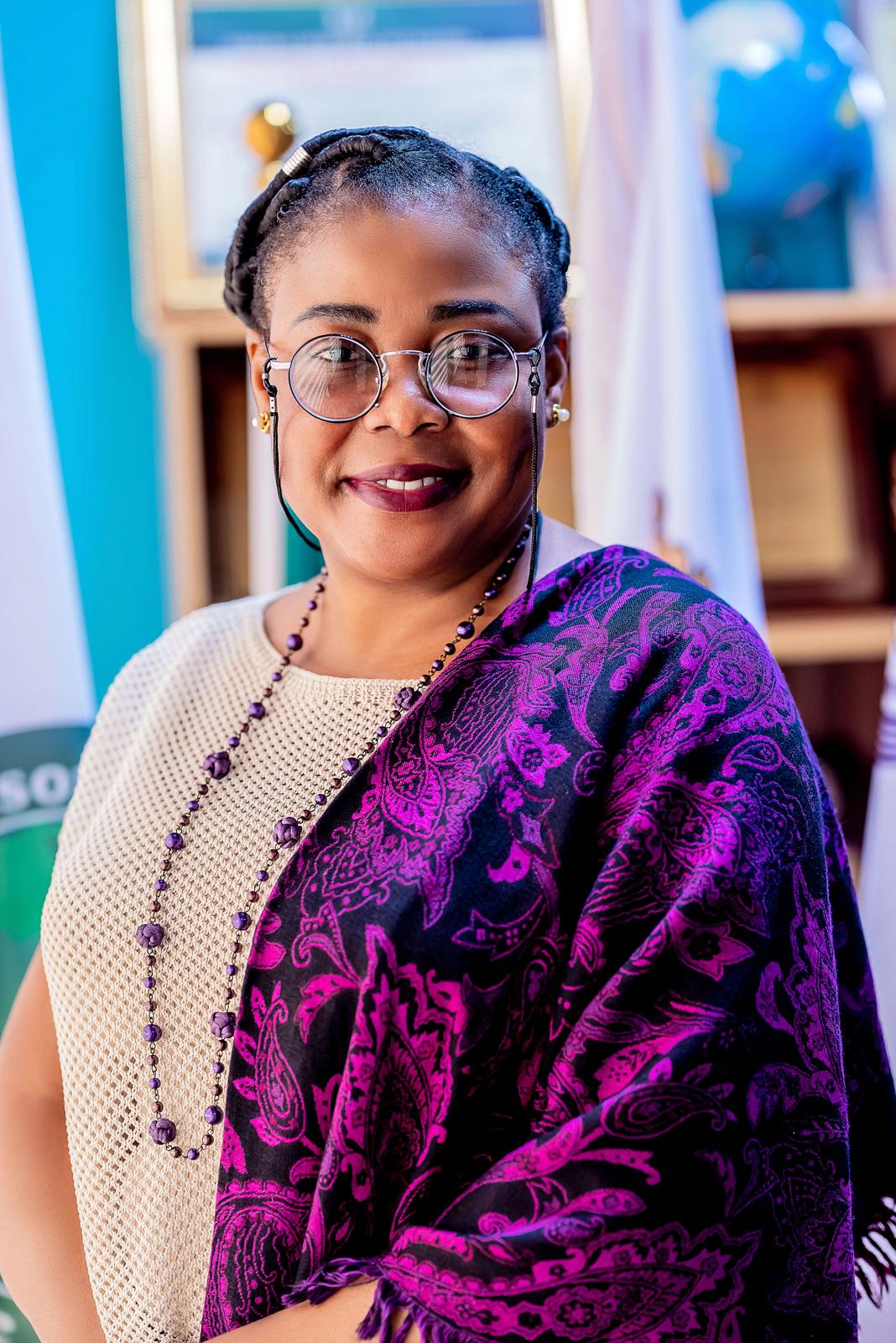
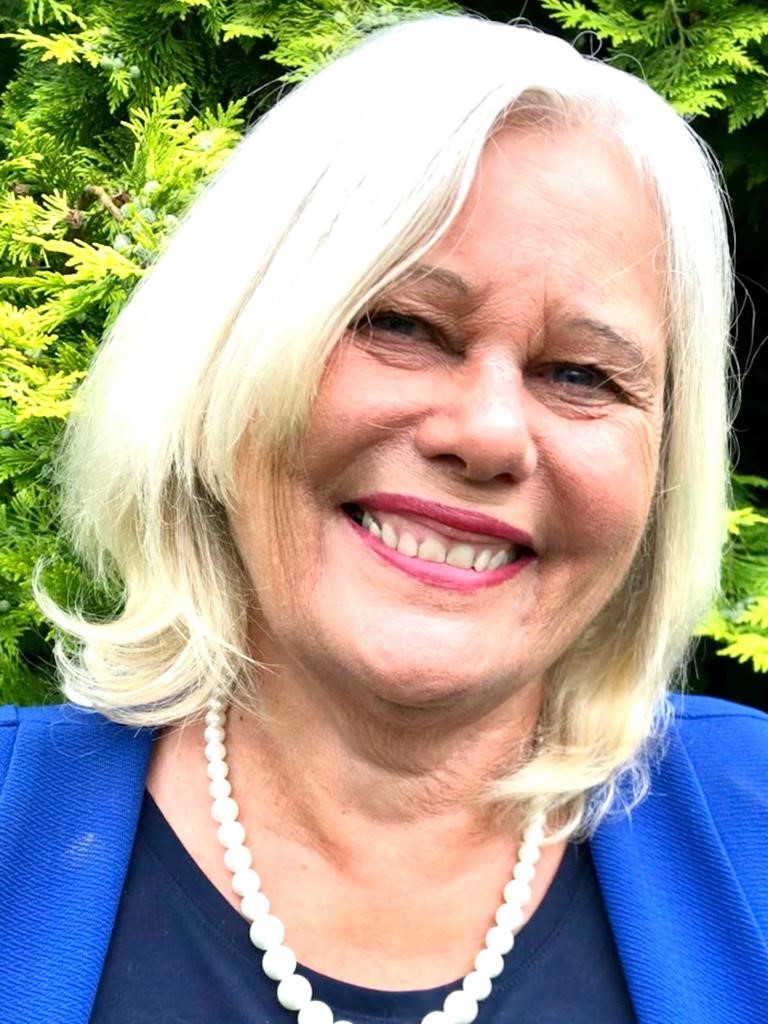
 This is the eighteenth in the series of short statements from candidates in the coming CODATA Elections at the General Assembly to be held on 17-18 October 2025. Francisca Oladipo is a candidate for the CODATA Executive Committee as an Ordinary Member. She was nominated by the GO FAIR Foundation.
Professor Francisca Oladipo is Vice-Chancellor and Chief Executive Officer of Thomas Adewumi University, Kwara State, Nigeria, and Professor of Computer Science at Federal University Lokoja. She serves as Secretary-General of the Consortium of Universities in Kwara State (KU8+) and Vice-President and Board Secretary of VODAN (Value-driven Ownership of Data and Accessibility Network), a leading international network spanning Africa, Europe, and Asia dedicated to developing Afrocentric systems that ensure data sovereignty and ownership in residence.
Bridging the Global Data Divide: An African Perspective
I am honoured to stand for election to the CODATA Executive Committee at a pivotal moment for global data science. As CODATA’s mission emphasizes connecting data and people to advance science and improve our world, my candidacy represents a critical opportunity to ensure that Africa’s voice and the perspectives of the Global South are not merely present, but influential in shaping international data policy and practice.
The data revolution cannot truly be global if it does not include the majority of the world’s population. Africa is poised to host 60% of the world’s youth population by 2050. Hosting some of the most dynamic health, climate, and demographic datasets, the continent must move from being a data source to being a data leader. My work demonstrates that when we design data systems for African contexts, we create solutions the world adopts.
Proven Leadership in FAIR Data Implementation
Between 2020 and 2024, I was the Executive Coordinator of the African Implementation Network of the Virus Outbreak Data Network (VODAN-Africa), which one of the joint activities carried out by CODATA, RDA, WDS, and GO FAIR, where I led what became the world’s first and only successful implementation of machine-actionable FAIR Data Points in the context of the COVID-19 pandemic. This was not theoretical work, but my team actually demonstrated data visiting between Africa and Europe (Leiden) in 2020. Post-COVID, we deployed functional FAIR infrastructure across 88 health facilities in 8 African countries (Ethiopia, Kenya, Nigeria, Tunisia, Uganda, Zimbabwe, Somalia, Liberia) and the Netherlands (https://aun.mu.edu.et/vodan/). In 2024, VODAN Africa rebranded to Value-driven Ownership of Data and Accessibility Network with my appointment as Vice-President and Secretary of the Board, and in 2025, I was announced the CEO with further expansion into Tanzania, Somalia, Liberia, Burkina Faso, Namibia, Rwanda, China, Indonesia, and Kazakhstan.
This initiative, recognized in UNESCO’s 2021 Engineering Report and awarded “Most Inspiring Initiative” at Leiden Science Week in May 2022, demonstrates three critical points relevant to CODATA’s mission:
- FAIR principles can be successfully implemented in resource-constrained environments when designed with local contexts in mind
- African leadership in data infrastructure development produces globally relevant solutions
- Cross-border, cross-continental data collaboration is achievable when built on principles of equity and data sovereignty
Further Proven work in FAIR Data Leadership
In 2024 (22 – 26 January 2024), @Lorentz Center@Oort in Leiden University, The Netherlands, Barend Mons, Erik Schultes and I, organised “The Road to FAIR and Equitable Science” workshop. We brough together 55 experts and stakeholders to have a broad, international expert discussion regarding the impact of the FAIR principles (Lorentz, 2014) during the first decade of implementation and to collectively design a roadmap for the next decade. Between August 18-27 August of the same year, we brought over 30 African Scientists and Researchers to Leiden University Medical Centre for the 2024 LUMC Fair Data Training.
These achievements directly align with CODATA’s Strategic Plan 2023-2027 priorities, particularly “Making Data Work for Cross-Domain Grand Challenges” and advancing FAIR data practices for trustworthy, equitable, and transparent science.
Transformative Institutional Leadership
My leadership at Thomas Adewumi University, Nigeria demonstrates the transformative power of data-driven decision making in higher education. Between 2022 and 2025, we achieved:
- 2,136% enrolment growth (from 66 to 2,676 students)
- Dramatic improvement in global rankings (from #252 to #47 in Nigeria on Webometrics)
- Over $500,000 in international research grants from Google, Dutch Ministry of Foreign Affairs, TETFund, and Philips Foundation
- Establishment of 14 specialized research centers including AI-integrated learning ecosystems and FAIR data infrastructure
This transformation was built on the same principles that guide CODATA: making data work for institutional improvement, building data literacy and skills, and creating sustainable data ecosystems that serve broader societal goals.
Building Data Capacity Across Africa
Capacity building for Open Science and FAIR data is at the heart of CODATA’s mission. My work in this area spans multiple dimensions:
Curriculum Development: I have led the development of data stewardship curricula adopted across African institutions, directly contributing to CODATA’s priority of building capacity for trustworthy, equitable, and transparent science through improved data skills and education.
International Collaboration: As PhD advisor at Tilburg University’s Network for Globalization, Accessibility, Innovation and Care (GAIC), I promote partnerships between the Africa University Network for FAIR Open Science and European universities, fostering the South-South and South-North collaborations essential to CODATA’s global mission.
Training and Mentorship: Through my roles facilitating workshops, including hosting the Deep Learning IndabaX Africa, the ExploreCSR Series, The HERtificial Intelligence Bootcamps, Women in AI Sessions, the Pan-Africa Center for AI Ethics Summer School, and organizing multiple international conferences, I have directly trained hundreds of early-career researchers in data science and FAIR principles.
Global Recognition and Networks
My international profile and networks position me to effectively represent diverse perspectives on the CODATA Executive Committee:
- Heidelberg Laureate Fellow (Germany, 2017)
- US Department of State TechWomen Emerging Leader (Google, California, 2016)
- 3× ACM Fairness, Accountability and Transparency Fellow (2019, 2020, 2024)
- MIT PostDoctoral Fellow (Massachusetts Institute of Technology, 2014)
- Multiple time recipient of the Emerging Scholar Award (only African recipient, Universitat Politècnica de València, Spain (2024), Universidad Abierta Interamericana, Buenos Aires (2024), National Changhua University of education, Taiwan (2025))
- Faculty Scholar, Grace Hopper Celebration of Women in Computing
- Grantee: Women in AI, Black in AI, Women of Colour in Computing, Widening Natural Language Processing
- Fellow of Pan-African Scientific Research Council, African Scientists Institute, British Computer Society, and Nigeria Computer Society
These fellowships and my participation in global forums like IETF, Grace Hopper Celebration, Machine Learning Summer Schools, and UNESCO workshops have provided me deep understanding of international data science ecosystems and the critical importance of inclusive global data governance.
Research Excellence and Publication Record
With over 100 peer-reviewed publications and service on 10+ international journal editorial boards, my research contributions span the full spectrum of CODATA’s interests:
- 25+ papers on FAIR data management and FAIR principles published in Data Intelligence and leading conferences
- Pioneering work on machine learning, AI ethics, natural language processing for African languages
- Studies on data quality, interoperability, and ethical AI which directly aligned with CODATA’s Data Ethics Task Group priorities
- Research on curriculum development for data science education in emerging economies
What I Bring to CODATA
If elected to the Executive Committee, I will contribute:
- Authentic Global South Perspective
Not as a token voice, but as a proven leader who has successfully implemented international data initiatives in African contexts. I understand both the challenges and the immense opportunities of extending CODATA’s reach across diverse economic and technological landscapes.
- Practical Implementation Experience
Beyond policy documents and strategic plans, I have hands-on experience deploying FAIR infrastructure, building data literacy programs, and creating sustainable data ecosystems in resource-constrained environments. This practical knowledge is invaluable for CODATA’s mission to connect data and people.
- Bridge-Building Capacity
My roles spanning African, European, and North American institutions position me to facilitate the South-North and South-South collaborations essential to CODATA’s global mission. I can help ensure that CODATA’s strategic priorities resonate across diverse contexts.
- Focus on Equity and Inclusion
My work consistently emphasizes that Open Science and FAIR data must be truly open, not just technically accessible, but equitable, culturally appropriate, and respectful of data sovereignty. This aligns with CODATA’s commitment to trustworthy, equitable, and transparent science.
- Youth and Innovation Champion
As Vice-Chancellor of a rapidly growing university and mentor to hundreds of early-career researchers, I bring insights into how we can better engage the next generation of data scientists and ensure CODATA remains relevant to emerging leaders.
Vision for CODATA’s Future
CODATA stands at a critical juncture. The data challenges of our time (from pandemic response to climate action, from AI ethics to digital sovereignty) demand that we move beyond traditional power structures and genuinely globalize data governance.
I envision a CODATA that:
- Actively works to decolonize data science by ensuring African and Global South innovations inform global standards, not just adopt them
- Prioritizes implementation support for FAIR principles in diverse contexts, not just advocacy
- Strengthens connections between CODATA’s strategic priorities and the UN Sustainable Development Goals
- Builds robust South-South collaboration networks that complement North-South partnerships
- Champions data sovereignty alongside data sharing, recognizing these as complementary rather than contradictory goals
Commitment to CODATA’s Mission
I am deeply committed to CODATA’s mission of connecting data and people to advance science and improve our world. My track record demonstrates that I do not just articulate vision, I deliver results. From the over 88 health facilities running FAIR Data Points across Africa, to the 2,676 students now studying at Thomas Adewumi University with AI-integrated curricula, to the hundreds of early-career researchers I have mentored, my work has consistently transformed aspiration into achievement.
The challenges facing global science require diverse perspectives, practical expertise, and proven leadership. I offer all three, grounded in a commitment to equity, excellence, and the transformative power of open, FAIR data.
I respectfully ask for your support in this election, not as a favour to African representation, but as an investment in CODATA’s future relevance and impact across all regions of our interconnected world.

 This is the eleventh in the series of short statements from candidates in the coming CODATA Elections at