Monthly Archives: October 2025

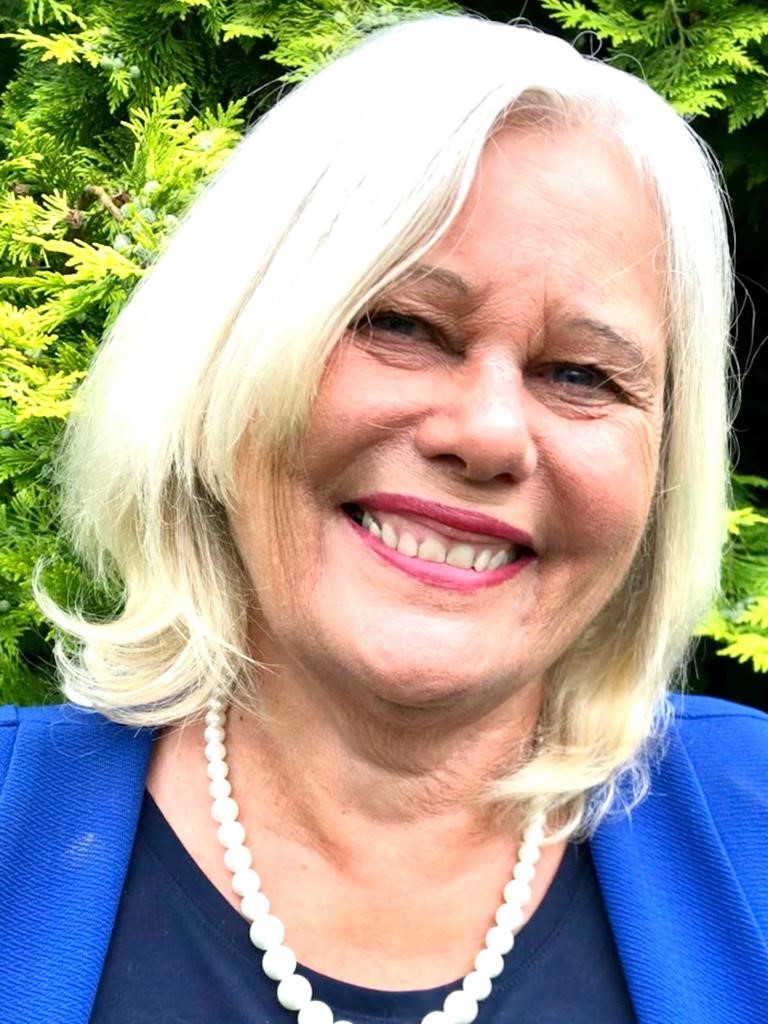
Pam Maras: Candidacy for CODATA Executive Committee Ordinary Member

This is the fifteenth in the series of short statements from candidates in the coming CODATA Elections at the General Assembly to be held on 17-18 October 2025. Pam Maras is a candidate for the CODATA Executive Committee as an Ordinary Member. She was nominated by the International Union of Psychological Science.

Pam Maras PhD, CPsychol FBPS, CSci

I am delighted to be nominated by the International Union of Psychological Science (IUPsyS) as a nominee for a second term as an ordinary member of CODATA Executive Committee 

IUPsyS is a full and active member of the International Science Council (ISC), and is the global body for psychology and is unique in its convening power. Over two million  psychologists are represented by IUPsyS national and regional members, all of whom use and/or collect data. I was elected the first female President of IUPsyS 2018-2022 and currently serve as Past President on its Executive Committee. My time working with IUPsyS, has included work on capacity building across regions, publications and communications, responses to public issues and more widely IUPsyS responses to disaster and other humanitarian situations. 

In this short statement, I have briefly outlined my background, philosophy and potential contribution to CODATA.

BACKGROUND

Academic/Professional background

I am a Chartered Scientist, Chartered Psychologist and Fellow of the British Psychological Society. I am Emerita Professor of Social and Educational Psychology at University of Greenwich, London where I held senior and national roles including Director of Research and Enterprise and Chair of an  independent committee for research integrity and ethics. 

Research

Initially an experimental social psychologist, my research activity for the last 15 years has mainly been on the application of psychological science  in education including on the cross cultural relevance of psychometric tests and interventions for adolescents with behaviour problems and large cross national studies in Africa, Asia, China, Europe, Latin America and New Zealand as well as interdisciplinary collaborative projects including with engineers for example, on the involvement of young people in STEM subjects at University; computer scientists for example on  gender; climate scientists for example, on behaviour following interventions  to reduce carbon in domestic situations; economists for example on young people’s attitudes to money and neuroscientists on AD/HD. I have obtained significant research funding including from the EU and UK Research Councils and Charities including Leverhulme, Nuffield, charity arms of Football Cubs and multinational companies and Government agencies. I have had policy involvement arising from my research and expertise. My publications were  ranked excellent/outstanding in the last UK research assessment exercise. I am currently advising on a global project in eight  geographic areas across continents on interoperability and curation of data and measures of young people’s anti-social behaviour and its impact.

PHILOSOPHY 

I take a principled approach to equality in science; ethical open access and interdisciplinary collaboration is best achieved by cooperation, making high quality data work for cross-domain grand challenges. I am Committed to Open Science and research integrity in all areas of science, including  the Social Sciences. The promotion of data policy and interoperative solutions that ensure rigour and policy for data use, maximises the combined resources of different disciplines and is essential to Science led policy in our current fragile eco/geopolitical world. 

CONTRIBUTION TO CODATA

If re-elected I would expect to continue to engage positively to ensure CODATA meets its mission at the disciplinary, interdisciplinary and public and policy levels.

Disciplinary level

If re-elected I would hope to facilitate the involvement of psychology with CODATA through IUPsyS on projects related to the CODATA mission particular on Cross Domain Challenges; it is here where the involvement of social science disciplines, especially psychology will add value to outcomes. Specific examples include AI and issues including bias, fairness, transparency, accountability, and ethics; interoperability, in particular where data are not “conventional”, and  other data issues that are pertinent to psychology and many other scientific disciplines including replicability and the potential loss of validity unless clear principles are taken on and underpin data across disciplines.

Interdisciplinary level 

The involvement of psychology and other social sciences in CODATA can only add to CODATAs considerable achievements so far. For example, the adoption and use of FAIR principles in social sciences is mixed, this is particularly problematic when interventions and policy comes from the social sciences. Psychology and psychologists including myself are already collaborating with scientists in other areas of basic and applied science and policy. My experience in this area will allow me to further support CODATA in increasing the number of ISC Scientific Unions that engage with CODATA. In my current tern on CODATA I have been involved with setting up the Scientific Unions Forum, I would hope to continue with this activity. 

Public and policy 

My experience and work in developing policy and in behaviour change will allow me to contribute to  CODATA  to maximise the implementation of policy on data. The engagement and ‘buy in’ by those outside the “scientific community” or that are in disciplines not engaged with CODATA could be advanced by simple strategies. For example, via simple Policy Briefs for ‘non-experts,’ in which outcomes are accessible, relevant and useful for public good. 

CONCLUSION

In this brief statement I have summarised my background, my philosophy and a few of the areas where I might serve CODATA. 

In my  current term, as a member of a large Scientific Union, I was one of the few social scientists on the Executive  Committee. It would be a privilege to serve CODATA again and support the continuation of its important work. I look forward to attending International Data Week and meeting colleagues in Brisbane.
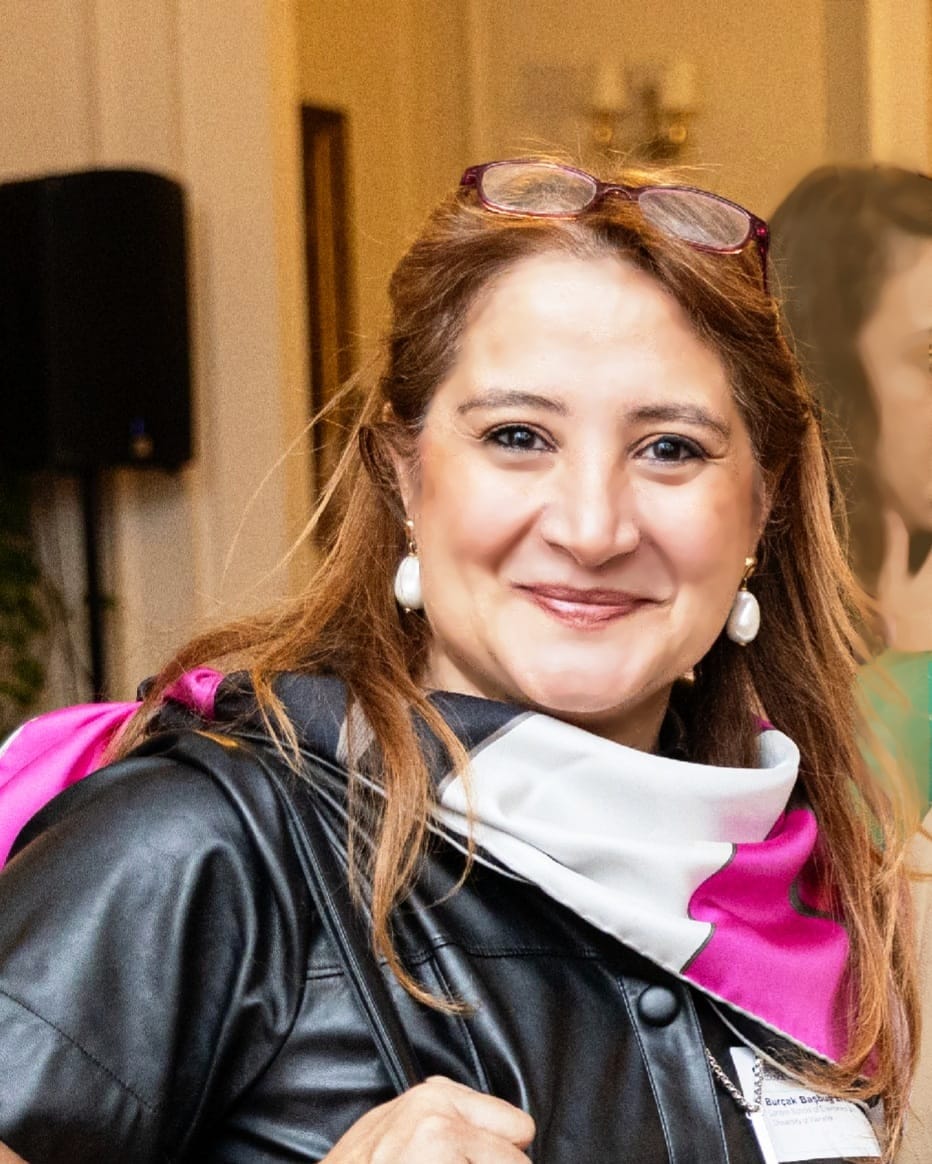
Burçak Basbug: Candidacy for CODATA Executive Committee Ordinary Member

This is the fourteenth in the series of short statements from candidates in the coming CODATA Elections at the General Assembly to be held on 17-18 October 2025. Burçak Basbug is a candidate for the CODATA Executive Committee as an Ordinary Member. She was nominated by the Middle East Technical University.

It is an honour and privilege to be nominated to be part of the CODATA Team, who are dedicated to connect people and science to address global challenges!

‘Knowledge grows, when it is shared!’ 

I am very passionate and enthusiastic as a scientist, as a woman, as a mother to provide a safer world to people in need. I strongly believe we, if we unite, can reduce the impacts of any disaster in anywhere in the World. We can create safer communities, safer nations, safer Globe for the humanity. It is our responsibility to leave a better World to our children, grandchildren, grand grandchildren… and for all of us!

On my current role, I work a Professor of Statistics and Disaster Science, at the Middle East Technical University (METU), Ankara-Türkiye. I graduated from METU Department of Statistics in June 1999. My appointment to academia as a research and teaching assistant is 16 August 1999, which is the day before the devastating 17 August 1999 Marmara earthquake.  So, it was meant for me to work in disaster statistics. Since then, I have been working hard to understand disaster related data, use it to generate strong policies so that we can reduce disaster risks. 

In 2000, I moved to the UK to persuade my graduate studies at the University of Warwick (MSc.in Statistics-2001) and London School of Economics and Political Science (Ph.D. in Statistics-2007). I worked under the supervision of the late Emeritus Professor Henry. P. Wynn, who was the president of the Royal Statistical Society UK (https://rss.org.uk/news-publication/news-publications/2024/general-news/henry-philip-wynn,-1945%E2%80%932024/ ). I learnt a lot from him in the World of Statistics. 

I have been teaching, researching and developing for 26 years at international level as well as national level on disaster risk reduction, earthquake insurance, applied statistics, linear models, statistical design of experiments, survey and sampling methods, disaster risk governance. I had opportunity to merge theoretical knowledge with field experience in the following events:

  • Covid-19 response in the UK and in Türkiye
  • 13 May 2014 Soma Mine Disaster
  • 23 October 2011 Van Earthquake in Türkiye
  • 2009 Urban Disaster Risk Reduction Training in Japan at Kobe City, Hyogo Prefecture in Japan, then follow-up visits in 2011 and 2015.
  • Syrian Refugee Response Evaluation of UNICEF 2015
  • August 2020 Giresun Flood in the Black Sea Coast of Türkiye
  • 30 October 2020 Earthquake in Izmir as a result of the Sisam Fault Rupture
  • 6 February 2023 Kahramanmaras Earthquakes 

I was the project coordinator of the Turkish Disaster Data Bank (TABB in Turkish acronym) between 2012 and 2014. I worked as the Course Director of MSc Disaster Management and Resilience at Coventry University-UK between 2019 and 2020. Prior to this, I was the Director of the METU Disaster Management Centre between 2008 and 2018.  I am a full member of the Chatham House-UK. I serve as an editorial board member of the ODI journal ‘Disasters’. 

I am a co-chair of the CODATA International Data Policy Committee (IDPC) since 2022 as well as the UNESCO-CODATA Data Policy for Times of Crisis Facilitated by Open Science (DPTC) Toolkit Project. 

I believe in multidisciplinary, multi-hazard approach where theory and practice meet to create disaster resilient individuals, communities, nations and globe. I have experience working with the high-level policy makers at the institutions such as the World Bank, UNESCO, UNICEF, Japan International Cooperation Agency (JICA), Disaster and Emergency Management Authority (AFAD) and more. 

In years, a lot of people asked me “What is a statistician’s role in disasters?” so many times. I used to respond them ‘You need to make the data talk, explain, tell you some scientific baseline so that you can generate policies to help people live in safer and better conditions, with reduced risks!’

If elected, I will work very hard to contribute the CODATA Team to achieve CODATA’s vision with my networks, experience, willingness to learn and share, research and data skills, energy, dedication, loyalty and passion! Thank you so much! 

Leo Lahti: Candidacy for CODATA Executive Committee Ordinary Member

This is the thirteenth in the series of short statements from candidates in the coming CODATA Elections at the General Assembly to be held on 17-18 October 2025. Leo Lahti is a candidate for the CODATA Executive Committee as an Ordinary Member. He was nominated by Finland.

Data comes to life through user communities to advance science and improve our world. This principle has guided my data science research and advocacy work for over two decades. As a professor of Data Science at the University of Turku, Finland, I share CODATA’s mission to connect data and people towards these goals.

I earned my doctoral degree at the Department of Information and Computer Science, Aalto University, Finland, in 2010. I have also spent nearly a decade abroad working on data-intensive research in e.g. European Organization for Nuclear Research CERN, European Bioinformatics Institute, and Croatian Meteorological Institute. My research team now focuses on the analysis of complex natural and social systems, and open data science has become fundamental for such research.

At the national level, I have contributed to open science policy work as Vice Chair of Finland’s national coordination on open science. I led the development of the National Policy on Open Access to Research Methods and Infrastructures (2023). I also serve on the board of Open Knowledge Finland, and participated in the Ministry of Justice working group reforming the Public Information Act, focusing on transparency of data and algorithms in a digital society. I received the National Open Science Award (2021) from the Federation of Finnish Learned Societies. This national work parallels many international developments and could inspire and inform related policy development within CODATA.

At the international level, I have participated in global research and training networks, such as the Bioconductor Community Advisory Board, and coordinated international research software development and data science training events as a certified instructor for Data Carpentries, a global network for evidence-based data science pedagogy. Within CODATA, I have led the Finnish national branch since 2022, acted as a liaison for the Data Ethics Task Group and served in the Executive Committee 2023–2025. My work builds on this experience as a data science researcher, educator, and community builder. 

As a member of the CODATA Executive Committee, I will be looking forward to build on these networks and on my experience from the first term. I will particularly focus on the following:

  • advance international policy work towards responsible data science standards
  • strengthen international training networks on data science 
  • expand CODATA’s work and visibility in Northern Europe and globally by developing connections with other relevant networks

Through these and other activities, we can continue to promote the CODATA mission towards open, responsible, and globally connected data science.

Cyrus Walther: Candidacy for CODATA Executive Committee Ordinary Member

This is the twelfth in the series of short statements from candidates in the coming CODATA Elections at the General Assembly to be held on 17-18 October 2025. Cyrus Walther is a candidate for the CODATA Executive Committee as an Ordinary Member. He was nominated by the International Union of Pure and Applied Physics.

My name is Cyrus Walther and I am excited to stand for re-election as an incumbent Member of the CODATA Executive Committee, nominated by the International Union of Pure and Applied Physics and representing Early-Career scientists. 

In my candidacy statement, I am thrilled to introduce you to my background and expertise for this position, discuss my work and engagements in CODATA during this term, and outline plans and perspectives I have for the upcoming term. 

So, let’s get started! 

Being nominated by the International Union of Pure and Applied Physics, my proficiency lies in experimental astroparticle physics and databases on which I am researching in my Ph.D. at TU Dortmund University and the LAMARR Institute for Machine Learning and Artificial Intelligence in Germany.

Moreover, my passion lies with raising the voice of Early-Career researchers and bringing their perspectives on humanities cross-domain grand challenges to the table.
Based on my experience from two presidential terms for the International Association of Physics Students, I was awarded the Fellowship of the International Science Council, serving as a Fellow to champion science as a global public good with a core focus on Early-Career scientists. Together with my engagements in the International Union of Pure and Applied Physics, the Coalition for the Advancement of Research Assessment, and the Forum of International Physics of the American Physical Society, I am putting my international early-career-focussed network fully in the service of CODATA and its initiatives.

Since 2023, I have had the honor of serving CODATA on its mission to connect data and people to advance science and improve our world. During my time on the Executive Committee, I engaged with various initiatives and tasks, for example, in the selection committee for the new CODATA Connect Early-Career leadership and in the work as their contact person in the Executive Committee. Together with our three new CODATA Connect Co-Chairs, I developed initiatives to further CODATA’s engagement with the young generation of researchers, two of which you will be able to experience during International Data Week 2025, with the sessions:

  •  “Early Career Researcher perspectives on data repositories across disciplines, geographies and cultures”  
  • “Pitch Your Research: 3-Minute Scientific Research Pitch Competition”

which are proposed, planned, and executed by Early-Careers. 

Furthermore, I represented CODATA at the Opening of the International Year of Quantum Science and Technology at UNESCO, raising awareness for CODATA’s vision and values as well as its importance for the global scientific community. This connects to my overall engagement actively supporting the CODATA secretariat and Executive Committee in my role as a member of the Executive Committee, working on initiatives, projects, and day-to-day tasks, by utilizing my skill set in the best possible way.

With the new term ahead, I am thrilled to continue my engagement in the CODATA Executive Committee, expanding on this term’s successes but also tackling open tasks and fields of improvement for CODATA. Herein, I would like to approach three central spheres of action: 

  • CODATA & Early-Careers
  • CODATA Reach & Communication 
  • CODATA – Increasing Membership Engagement

CODATA & Early-Careers: Continuing my engagement for CODATA Early-Careers, I will empower our CODATA Connect Chairs by identifying necessary resources to advance and broaden our Early-Career offers. Additionally, I will strengthen our CODATA-RDA Schools with close contacts to our hosts, the International Center of Theoretical Physics, working towards a continuation and possible expansion of our schools, which will strengthen the development of an engaged Early-Career alumni community, happy to join CODATA groups and committees. 

CODATA Reach & Communication: Approaching the reach and communication of CODATA, I will work on increasing the reach of CODATA and CODATA’s offerings, promoting CODATA, especially to young researchers and key stakeholders. By engaging Early-Career researchers in the content creation and utilizing a broad network of Early-Career contacts, we will be able to reduce the workload of the CODATA secretariat and allow CODATA to increase its reach to new target groups and enhance its promotional capacities.

CODATA – Increasing Membership Engagement: Working on the partnership of CODATA and the International Union of Pure and Applied Physics as a pilot project for further unions, I will bridge both associations closer by identifying synergies in their Working and Task Groups, such as the CODATA Task Group on Big Data and the Open Science Working Group of IUPAP. This will increase awareness of the capabilities in the respective other association and rigorous exchange of knowledge and engaged individuals between both bodies. This way, CODATA will fuel its Task Groups and initiatives with larger numbers of engaged researchers, not only in physics but also from various disciplines.

With these three areas of engagement, I believe I will utilize the strengths of my skill set to serve CODATA in its Mission and Vision with putting data science and AI in service of science, promoting data, and making data work for cross-domain grand challenges. 

I am looking forward to engaging with all of you during the International Data Week 2025 in Brisbane and the CODATA General Assembly and to dive deeper into our ideas and expand on initiatives and projects.

I hope for your support and thank you for considering my candidacy!

Yours sincerely,
Cyrus Walther


______

For further information, feel free to reach out to me via e-mail (cyrus.walther(at)iaps.info) or connect with me on LinkedIn (www.linkedin.com/in/cyrus-walther/).

Steven McEachern: Candidacy for CODATA Treasurer

This is the eleventh in the series of short statements from candidates in the coming CODATA Elections at the General Assembly to be held on 17-18 October 2025. Steven McEachern is a candidate for CODATA Treasurer; incumbent and standing unopposed. He was nominated by the DDI Alliance.

My name is Dr. Steve McEachern, and I currently serve as Director of the UK Data Service. I commenced in this role at the University of Essex in August 2024, following 15 years as Director of the Australian Data Archive (ADA) at the Australian National University (ANU) in Canberra, Australia. As Director of UKDS, I am responsible for the strategic development and direction of the UK Data Service, leading a partnership of 5 organisations delivering the UKDS award from the Economic and Social Research Council from 2024-2030.

Over the last 25 years, I have been actively involved in the development and application of new methods, and technological advancements, in data archiving and social survey data collection, and in the teaching of research methods in the social sciences. Over the last few years, I have lead work packages in major projects in social science data infrastructure, within Australia, the UK and Europe, including WorldFAIR and the Humanities, Arts and Social Sciences Research Data Commons.

I have had an active role in CODATA activities since first engaging with CODATA through the Dagstuhl workshop series in 2017. Since 2017 I have co-convened the CODATA-DDI Alliance Dagstuhl workshops, and facilitated the associate membership and Memorandum of Understanding between the DDI Alliance and CODATA. I subsequently lead the Social Surveys work package in the recently completed WorldFAIR project lead by CODATA.

I was elected as the treasurer of CODATA, nominated by the Australian National Committee, in 2021, and served on the Australian Academy of Science’s National Committee on Data in Science (the National Committee responsible for CODATA participation) from 2021-2024. Since that time I have moved to the UK to take up my new role, and joined the UK International Research Data Initiatives Forum, which serves as the UK National Committee, in 2024. Thus I bring experience of membership from 2 national committees and 2 associate members to my role.

Alongside my CODATA participation, I am also vice-chair of the DDI (Data Documentation Initiative) Alliance Executive Committee; co-chair of the Research Data Alliance Social Science Interest Group, and member of the Service Directors group of CESSDA, the Consortium of European Social Science Data Archives.

During my tenure as Treasurer, in collaboration with the CODATA Secretariat and Officers, we have been able to maintain and strengthen CODATA’s strong financial footing. I am therefore very keen to continue my role as CODATA Treasurer to continue the development of CODATA’s strategic goals and support the operational and financial activities of the organisation, and put forward my candidacy for your consideration.

Christine Kirkpatrick: Candidacy for CODATA Secretary General

This is the tenth in the series of short statements from candidates in the coming CODATA Elections at the General Assembly to be held on 17-18 October 2025. Christine Kirkpatrick is a candidate for CODATA Secretary General; incumbent and standing unopposed. She was nominated by the USA. 
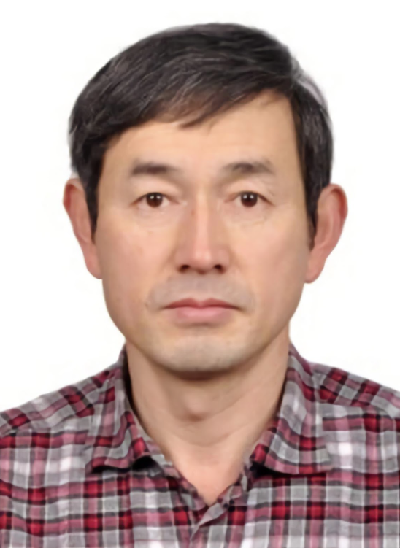
Greetings, CODATA Community! It has been my honor to serve as Secretary General for the past four years. Over that time, I’ve learned much about our organization and forged bonds to work with individual members, the International Science Council, other national committees, affiliated organizations, and unions. 

In my first term, I was active in strategic planning, supporting the Secretariat in challenges large and small, and brought my background as a Computer Scientist and data person together to inform our AI strategy. That work resulted in a concept paper co-authored with my fellow executive committee member, Prof. Tyng-Ruey Chuang. I took part in one of the working groups for the Global Open Science Cloud (GOSC), and served on the advisory boards for the Cross Domain Interoperability Framework (CDIF) and the CODATA-RDA School of Research Data Science (SORDS). I engaged with members formally and informally, contributed to CODATA’s positive culture and harmony, liaised with task groups, wrote letters of collaboration, forged new partnerships, spoke at member events, and was part of a podcast series spearheaded by the head of CODATA’s early career initiative. In May 2024, I represented the UNESCO-CODATA Data Policy in Times of Crisis WG at the UN Science and Technology & Innovation (STI) Forum for the Sustainable Development Goals (SDGs). I was put forward by the ISC to speak to the Group of Friends on Science for Action at the UN, a coalition of ambassadors using direct engagement with scientists to inform policy.  

My home institution is the San Diego Supercomputer Center where I lead the Research Data Services division and head GO FAIR US. I am a founding faculty of University of California San Diego’s School of Computing, Information and Data Sciences. Aside from my work in research data and Computer Science, I am also a part of the Stakeholder Alignment Collaborative – a team of interdisciplinary scholars led by Prof. Joel Cutcher-Gershenfeld. This past year we released a book, “The Consortia Century” that examined ways individuals join to achieve together what they can’t do alone, particularly related to challenges around data-driven research. In looking across hundreds of consortia, I can say with confidence that CODATA is a very special, very successful organization. It is imperative that we link arms – both with old friends and making room for new members, to continue to ensure CODATA is a forum for identifying pain points and opportunities, for experimentation and practical solutions, and for advancing science in the long tradition of our sister organization the International Science Counci,l and the unions and national committees represented.

I feel confident in my ability to serve CODATA for another term. I pledge to all of you to be available, to work on behalf of you and the groups that you represent so that your voices are heard and your goals and CODATA’s are aligned for positive impact. 

Lianglin Hu: Candidacy for CODATA Executive Committee Ordinary Member

This is the ninth in the series of short statements from candidates in the coming CODATA Elections at the General Assembly to be held on 17-18 October 2025. Lianglin Hu is a candidate for the CODATA Executive Committee as an Ordinary Member. He was nominated by China.
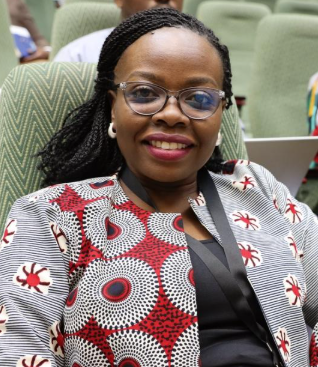
Professor Hu Lianglin currently serves as the Deputy Director of the Big Data Department at the Computer Network Information Center (CNIC), Chinese Academy of Sciences (CAS). He is also the Secretary General of CODATA China and the Director of the National Basic Science Data Center (NBSDC), the only national data center cross all basic science domains supported by the Ministry of Science and Technology and the Ministry of Finance of the People’s Republic of China. Additionally, he initiated and promoted CODATA’s work on data ethics. With over two decades of dedicated research and practical involvement in scientific data governance and open sharing, he has made significant contributions in areas such as the development and application of multidisciplinary data resources, data quality, data policy, data standards, data ethics, and open-sharing models, which include data publication since 2015 and new model based on trusted data spaces since 2024.

He actively participated in five consecutive CODATA conferences starting in 2004. In 2006, he took charge of organizing the China-US Roundtable on Scientific Data Cooperation. Furthermore, in 2021, he proposed the establishment of the CODATA Data Ethics Task Group, which was approved as a working group in 2022 and upgraded to a task group in 2023. Since then, he has been collaborating with Prof. Johannes John Langba, Dr. Andrew M. Cox, Dr. Louise Bezuidenhout, and others to promote research in this area. Additionally, serving as Secretary General of CODATA China since 2021, he has efficiently organized five successful China Science Data Conferences, with a total attendance exceeding 3,000 participants. During his tenure, the China Scientific Data Conference was restructured to facilitate discussions related to CODATA’s strategies, the implementation of FAIR principles, and other priorities proposed by the international data community. The latest conference, themed Scientific Data and Sustainable Development, attracted more than 500 data experts in China, including executives from 90% of national science data centers. Moreover, his dedication extends to promoting the work of GOSC’s data interoperability group, where he serves as secretary.

He conducted extensive research and practical work on the development and application of multidisciplinary data resources, data open-sharing service models, data quality, data standards, and data policy.

Multidisciplinary Data and its Cross-domain Applications. The NBSDC, which he leads, has gathered and managed basic science data across fields such as physics, chemistry, materials science, zoology, botany, and information science, with a total data volume exceeding 3 petabytes. Since 2024, he has organized numerous meetings focused on interdisciplinary research driven by scientific data and has funded five projects studying urban environmental health, the impact of geographical ecology on human development, drug research on natural products, and more.

Data Open-sharing Models. He collaborated with Professor Li Jianhui to introduce the FAIR principles and data publishing in China. Together, they successfully launched China Scientific Data (http://www.csdata.org/en), the first bilingual and multidisciplinary open-access data journal. They also established the Science Data Bank (https://www.scidb.cn/en) as a supporting data repository, which later became the designated general repository for Nature journals. With the fundamental changes brought about by AI access to data and the increasing demand from data sharers to understand the subsequent utilization of their data, starting in 2024, he led his team to explore data service models based on trusted data spaces. In July 2025, NBSDC’s Basic Science Data Space was successfully selected as a 2025 Trusted Data Space Development Pilot by the National Data Administration.

Data Quality. He proposed a comprehensive framework based on the scientific data life cycle, including an evaluation index system with corresponding methods and a maturity model for assessing data quality. This model has been widely adopted in China and has contributed to the development of certification standards. Additionally, he played a key role in establishing important national standards such as GB/T 34945-2017 Data Provenance Descriptive Model, GB/T 36344-2018 Evaluation Indicators for Data Quality, and GB/T 43707-2025 Scientific Data Provenance Metadata, and his team developed a series of software to support the implementation of the standards, some of which were introduced in last year’s training class for developing countries.

Data standard. He proposed a comprehensive framework for the scientific data standard system and led the development of more than 40 standards covering all stages of the scientific data life cycle, including both national and group standards. The Chinese national standard “GB/T 42813-2023 Data Paper Publication Metadata, by his team, was announced on the official website of the Chinese government, and recommended for adoption as a proposed standard by ISO/TC 46 at the 52nd annual meeting in 2025. Furthermore, since 2022, he has served as China’s expert for ISO/TC 184/SC 4/WG 13 – Industrial Data Quality.

Data Policy. He led the development and implementation of a CAS-level data policy titled “Measures for Scientific Data Management and Open Sharing in CAS” in 2019. As AI increasingly accesses data, he has guided his graduate students in developing a comprehensive ethical framework that integrates data, algorithms, models, and applications into a unified four-layer structure. To address data providers’ needs regarding data usage, he led his team in establishing a feedback policy to improve data service quality.

If elected as a member of the CODATA committee, he will fully leverage his existing work foundation to advance CODATA’s activities and objectives.

As the Secretary General of CODATA China, he will continue to promote CODATA China and support Chinese scientific data experts in making greater contributions to CODATA. His efforts will particularly focus on advancing CODATA’s strategic objectives: to share China’s data resources and interdisciplinary case studies for “Making Data Work”, to promote the sharing of good practices between experts in China, other countries and regions on data policy and standards for “Promoting Data Policy”, to advance international training workshops and various conferences in China for “Data Science and AI for Science”.

As the director of the NBSDC, he will provide data resources and testing environments for CODATA’s initiative, Data Work for Cross-Domain Grand Challenges, for WorldFAIR+. The NBSDC is eager to collaborate with all scientific data centers—including GOSC, EOSC, ARDC, AOSP, MOPS, NDRIO, NFDI—and other data service institutions or platforms to collectively address challenges related to cross-border and cross-language data resource discovery and collaborative services, which will be grounded in emerging technologies such as trusted data spaces and large language models (LLMs).

As a data standards expert, he will actively promote the development of CODATA policies, including standards and ethics. Furthermore, he will collaborate with CODATA colleagues to support interoperability among standards and data infrastructures, facilitating the demonstration of open science at regional and global levels under policy guidance and ethical constraints.

Agnes Kiragga: Candidacy for CODATA Executive Committee Ordinary Member

This is the eighth in the series of short statements from candidates in the coming CODATA Elections at the General Assembly to be held on 17-18 October 2025. Agnes Kiragga is a candidate for the CODATA Executive Committee as an Ordinary Member. She was nominated by Kenya.

My name is Dr. Agnes Kiragga, a biostatistician and Research Scientist privileged to lead the Data Science Program at the African Population and Health Research Center (APHRC) in Nairobi, Kenya. I lead several multi-country and multi-year projects in the Data Science Without Borders Project and the Implementation Network for Sharing Population Information from Research Entities (INSPIRE), and I collaborate with several partners across Africa and the Global North.  I serve on global committees, including the International Population Data Linkage, the Data Science and Methods Working group of the African Population  Cohorts Consortium (APCC), the Scientific Committee for the International Workshop for HIV Observational Databases (IWHOD), and others. Just this week, I received the Titan Award for Community Support – in recognition for my contribution to ensuring the sustainability of the OHDSI community, where I lead the African OHDSI Chapter. I am delighted to be nominated for the CODATA Executive Committee—a role through which I aspire to strengthen Africa’s presence, leadership, and contribution in the global data science movement.

Why Africa’s Data Science Voice Matters in CODATA

Data-driven science is at a crossroads. Africa—home to some of the most dynamic health, climate, demographic, and social datasets—is often underrepresented in global data governance and standard-setting for open science and the advancement of Artificial Intelligence. Yet, Africa’s unique scientific questions, linguistic and cultural diversity (over 2000 languages), and burgeoning innovation ecosystem offer valuable solutions to global challenges. As data-intensive research becomes foundational across disciplines, African voices and expertise must shape the standards, best practices, and ethics of the international data science community. 

Learning from and Enriching CODATA

CODATA is a long-term partner of African Institutions, including APHRC, and has played a transformative role in developing research data science curricula, advancing ethical and open science practices, and building learning communities—including direct support for early-career researchers in our local programs at APHRC and in Africa at large. I have seen firsthand the tremendous benefits that the CODATA network brings: collaborative training, exposure to cutting-edge research, and partnership opportunities that elevate both individual careers and institutional capacity. For Africa, these experiences yield critical lessons—especially the value of interdisciplinary peer networks, sustained mentorship, and robust infrastructures for responsible data stewardship. My presence in CODATA as an executive member  will enable more African researchers to access CODATA’s global networks, while embedding Africa’s lessons more deeply within CODATA’s agenda.

Artificial Intelligence: Africa at the Frontier and in need of Global partnerships

CODATA’s work in AI fairness, standardization, and ethics is highly relevant to Africa’s local realities. I believe our region’s perspective—from data scarcity and linguistic diversity to equity and privacy priorities—can inform global AI standards and practical implementation, drawing on learnings from the CODATA community.  

A Commitment to Representation, Inclusion, and Impact 

If elected to the CODATA Executive Committee, my priorities will include:

  • Championing African participation in global data infrastructure, from policy development to capacity-building, ensuring African data is visible and used to support research that is aligned with the global community. 
  • Strengthening reciprocal collaborations so that African innovation directly informs CODATA’s standards, aligned with the real-world challenges and aspirations of our communities.
  • Advocating for responsible, context-appropriate, and human-centered AI—facilitating knowledge sharing on best practices and ethical dilemmas unique to Africa.
  • Supporting early-career researchers, women, and underrepresented groups to thrive in international open science, building a pipeline of data leaders for tomorrow.

I am eager to work with the CODATA community to advance openness, justice, and excellence in data—ensuring Africa is not just at the table, but shaping the future.

Donald Hobern: Candidacy for CODATA Executive Committee Ordinary Member

This is the seventh in the series of short statements from candidates in the coming CODATA Elections at the General Assembly to be held on 17-18 October 2025. Donald Hobern is a candidate for the CODATA Executive Committee as an Ordinary Member. He was nominated by Australia.
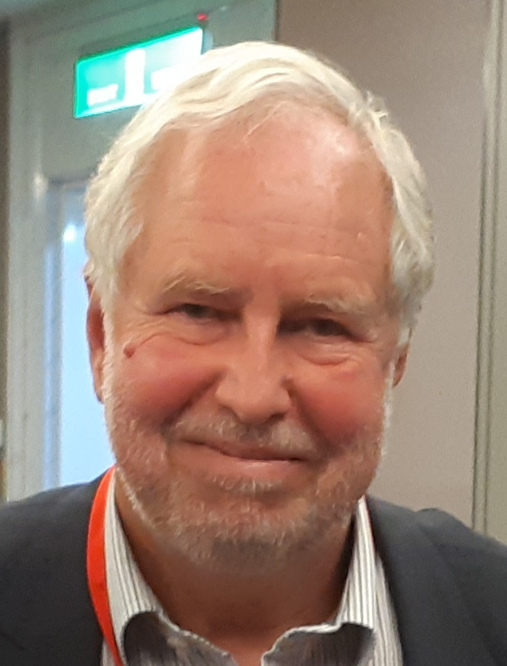
I hold a degree in Classics and worked for IBM for 16 years as a software engineer and then data architect. I have worked since 2002 in research data management, much of this in the field of biodiversity informatics, first as a Programme Officer for the Global Biodiversity Information Facility (GBIF) with responsibility for its data standards (including work on the earliest versions of Darwin Core) and data architecture, and subsequently as Director first for the Atlas of Living Australia and then for seven years for GBIF. From these roles, I learned the intertwined nature of technological and sociological aspects of research infrastructure and the importance and benefits of maximising international perspectives and collaboration. In association with these positions, and then following my return to Australia in 2019, I have also contributed to data standards, data management, infrastructure delivery and working groups for Biodiversity Information Standards (TDWG), Encyclopedia of Life, GEO BON, Catalogue of Life and the International Barcode of Life Consortium and provided inputs to many national and international biodiversity data activities.

I am currently employed as Data Management Director for the Australian Plant Phenomics Network (APPN), a government-funded network of nine research facilities supporting phenotyping studies for crops and other plants in both controlled and field environments. I lead a team working to development end-to-end FAIR data management for this network, using RO-Crate as a consistent packaging framework for all APPN-supported studies and enhancing the Mininum Information About a Plant Phenotyping Experiment (MIAPPE) model with SSN/SOSA and other shared ontologies in order to provide both human and machine interoperability. Our focus is both on pragmatic solutions that minimise complexity for plant scientists or facility technicians and on ensuring that all datasets contribute seamlessly to a richly connected linked-data graph for both domain and transdisciplinary uses. Data patterns from each domain can readily inform solutions in other fields. I believe that this APPN work aligns well with data management requirements in many other earth science and life science domains.

Robust data engineering and mainstreaming all aspects of the FAIR data principles are critical if we wish to maximise benefits from research activities and other data collection efforts. Even within a single research domain, low interoperability and reusability make meta-analysis or time-series studies extraordinarily expensive. Linking data across domains is essential if we are to provide the evidence base for modeling complex systems and addressing interconnected sustainability challenges, but every linkage multiplies the impact from poorly described and structured data. The recommendations from the WorldFAIR project and particularly the Cross-Domain Interoperability Framework (CDIF) are invaluable pointers for how to proceed. Simplifying publication and reuse of vocabularies (conceived as a vehicle for transfer and adoption of expert knowledge) is an important and achievable component that needs more attention.

The continued and growing global focus on artificial intelligence and machine learning solutions also underscores the importance of coordinated effort to describe and document data. Better standardisation and richer metadata will increase the volume of data suitable for any AI/ML applications and reduce the probability of serious misuse. Perhaps more importantly, the same improvements, particularly with appropriate attention to data provenance and transformations, are necessary to ensure that data collected by human and machine observations and data modeled from these using deterministic algorithms can be separated from synthetic data from other models and sources. Clarity on data sources is in effect a cybersecurity issue to prevent pollution of key information resources. 

I champion open sharing of data wherever feasible and collaborate to ensure that data from different instutions and different regions can readily be combined and reused to expand understanding across time and space and to enable evidence-based research and policy responses. 

CODATA has a central role to play in advocacy and developing best practice for modern data management and data-driven products. I would be excited to be able to contribute what I can to help achieve its mission.

Marc Nyssen: Candidacy for CODATA Executive Committee Ordinary Member

This is the sixth in the series of short statements from candidates in the coming CODATA Elections at the General Assembly to be held on 17-18 October 2025. Marc Nyssen is a candidate for the CODATA Executive Committee as an Ordinary Member. He was nominated by the International Union for Physical and Engineering Sciences in Medicine.

The importance of sharing high quality data among scientists cannot be underestimated, therefore the data committees such as CODATA, especially in the ISC context are instrumental to improve data sharing, primarily in the scientific community but with impact on the whole world.

In my field “medical informatics”, I see three major challenges regarding data that could be addressed:

  • the appropriate sharing of medical data, while protecting the privacy of the individual;
  • the rewarding of scientists who share quality and well documented data, resulting from their research;
  • the data quality, interoperability and ethical aspects surrounding “artificial intelligence” applications, especially in health care.

To illustrate the importance of the first of these challenges just think of the way tests of new medication are performed: it would not be possible to include millions of patients; therefore potential rare side-effects cannot be detected; well controlled follow-up via appropriately encoded medical records would potentially save lives and hardship when carried out, perhaps over many years. But with respect of the privacy of the participants and their right to retract their data.

In this field, collaboration with the WHO (where I am the “focal point” WHO liaison in the International Federation for medical and biological engineering) would be a very interesting factor, possibly leading to a breakthrough.

After first contacts established in 2025, it is our hope that WHO will adopt CODATA’s CDIF interoperability guidelines and methodology in their different publicly available repositories, facilitating multidisciplinary research, based on high quality data.                                                                                                                                                      

Scientists currently are judged mainly by the impact factors of their publications. Would it not be good to include an impact factor, related to the well documented quality data they provide to the scientific community, not only to thoroughly sustain their own research, but also enabling others to enrich the available datasets.

I will gladly contribute to these and other matters regarding FAIR and Open data and CODATA, with its projects, publications and working groups is the greatest place to realize that, as a volunteer surrounded by colleagues from different fields and continents, as well as the staff, driven by the same goals, especially in challenging times.